Telangana, India’s youngest state, is a land where history breathes through ancient rocks and culture flows like the Godavari River. From the imposing grandeur of the Golconda Fort to the intricate carvings of the Ramappa Temple, the region is a testament to the architectural brilliance of the Kakatiya and Qutb Shahi dynasties. But beyond its stone monuments, Telangana holds a vibrant, living heritage woven into threads of silk and cotton.
What truly sets Telangana apart is its mastery of geometric precision and bold artistry in textiles. This is the home of the world-renowned Pochampally Ikat, where mathematics meets the loom to create mesmerizing patterns, and the regal Gadwal saree, a marvel of weaving ingenuity. The state’s semi-arid climate, with its sweltering summers, has historically dictated a preference for lightweight, breathable fabrics that do not compromise on elegance.
The textile traditions here are deeply influenced by a unique convergence of cultures—the rustic strength of tribal communities and the refined opulence of Persian-influenced royal courts. Today, the distinct aesthetic of Telangana is making waves in the global fashion scene. Designers are reimagining these ancient weaves for contemporary silhouettes, proving that the sharp lines of Ikat and the vibrant borders of Gadwal are as modern as they are traditional.
Traditional Clothing & Ethnic Wear
The traditional attire of Telangana is a celebration of skill and adaptability. It reflects a lifestyle that values both the durability required for daily labor and the splendor demanded by festivals and weddings.
Women’s Attire
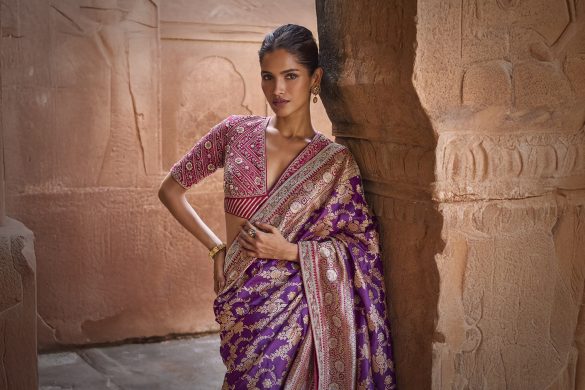
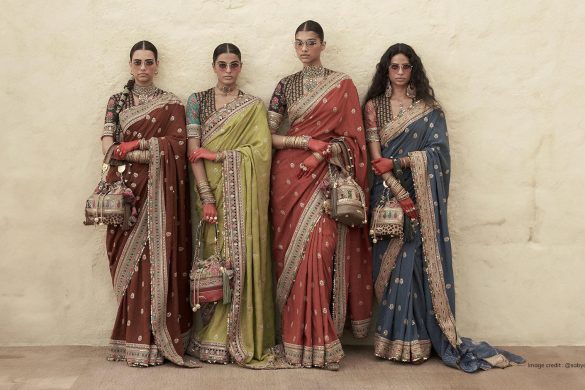
The saree is the canvas upon which Telangana’s weavers display their genius. These garments are more than just clothing; they are works of art that tell a story of heritage and skill.
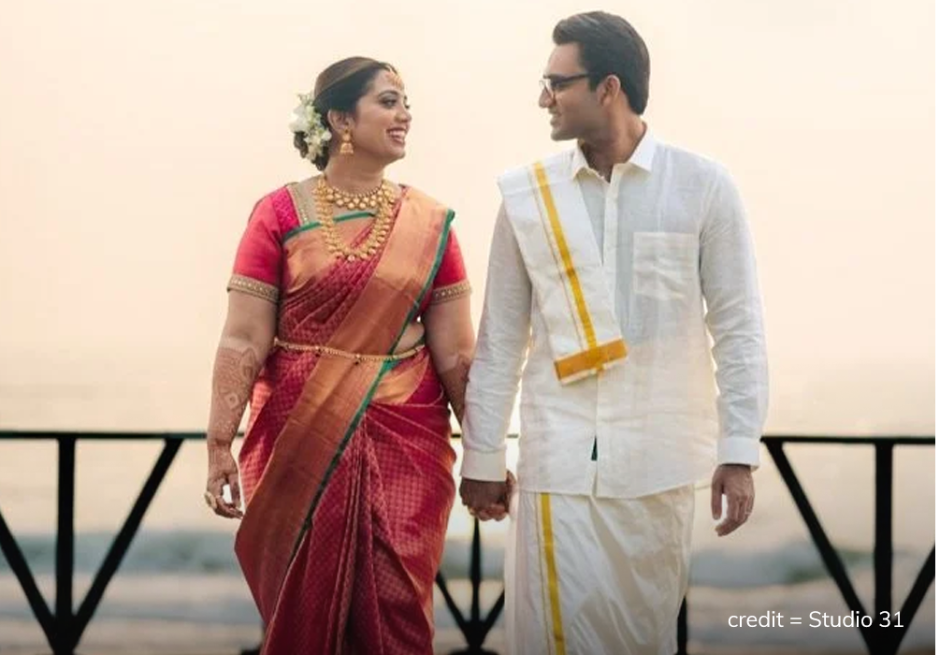
Gadwal Sarees: Originating from the town of Gadwal, these sarees are a brilliant engineering feat. They feature a cotton body for comfort and a pure silk border and pallu (end piece) for grandeur. The two parts are joined together using a specialized technique called the Kutu (interlocking) weave, which is so seamless it is often invisible to the naked eye.
Pochampally Ikat Sarees: These are the crown jewels of Telangana’s handloom sector. Known locally as Chitki, these sarees are famous for their bold, geometric Ikat patterns. The yarn is tie-dyed before weaving to create distinct "stepped" patterns in vibrant colors like parrot green, bright yellow, and deep red.
Langa Voni: Young girls and unmarried women traditionally wear the Langa Voni, a two-piece outfit consisting of a long skirt (Langa), a blouse, and a draped cloth (Voni) worn diagonally over the shoulder. This ensemble is especially popular during festivals like Bathukamma.
Fabrics: While silk is favored for weddings, fine cottons and silk-cotton blends are the staples for everyday wear, offering respite from the heat.
Men’s Attire
Men’s traditional fashion in Telangana is understated, focusing on dignity and comfort.
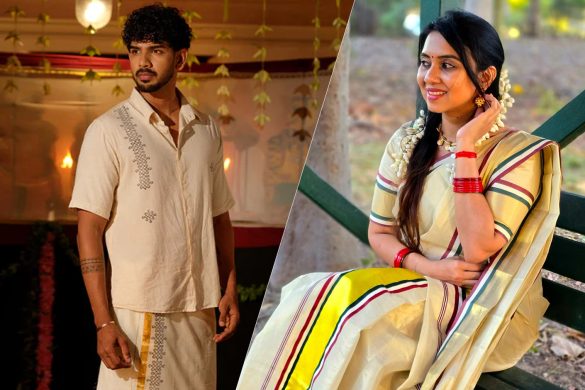
Dhoti (Pancha): The Pancha or dhoti is the standard lower garment, typically white or cream, wrapped around the waist and legs. In rural areas, it is often worn comfortably above the ankles.
Kurta and Angavastram: The dhoti is usually paired with a cotton Kurta. On formal occasions, men drape an Angavastram (a silk stole with a gold border) over their shoulders as a mark of respect and status.
Headgear: In rural and tribal communities, men often wear a turban or head wrap, which serves as protection against the harsh sun.
Jewelry & Accessories
Jewelry in Telangana is bold and often reflects the region's rich tribal heritage and royal history.
Guttapusalu: A famous necklace design that originated in this region, featuring strings of pearls clustered together to resemble bunches of small fish (gutta means shoal of fish, pusalu means beads).
Silver Jewelry: The Lambada and Banjara tribal women are known for their heavy, oxidized silver jewelry, including chunky anklets, ivory or bone bangles, and elaborate nose rings.
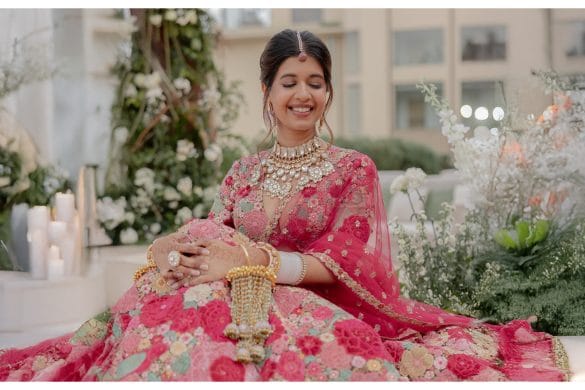
Temple Jewelry: Gold jewelry with intricate carvings of deities and nature motifs is popular for weddings, reflecting the deep spiritual roots of the region.
Crafts, Textile Techniques & Prints
The soul of Telangana’s aesthetic lies in its indigenous crafts, which are protected and celebrated globally. These techniques have been passed down through generations of artisans.
Pochampally Ikat Weaving
Pochampally Ikat is a "double ikat" technique, meaning both the warp (vertical) and weft (horizontal) threads are tie-dyed before weaving. This requires immense mathematical precision to ensure the colors line up perfectly on the loom to form the pattern. The result is a fabric with a unique, hazy distinctness that is impossible to replicate by machine. In 2005, Pochampally Ikat received a Geographical Indication (GI) tag, cementing its status as an intellectual property of the region.
Gadwal Weaving
The Gadwal saree is famous for its "interlocked weft" technique. The body is woven with unbleached cotton yarn, while the border and pallu are woven with mulberry silk and pure zari (gold thread). The weaver must skillfully join these different yarns during the weaving process, creating a garment that is lightweight yet rich in appearance—perfect for the Telangana climate.
Nirmal Painting and Toys
Beyond textiles, the town of Nirmal is famous for its paintings and wooden toys. Nirmal art uses natural dyes and gold powder to create scenes from Indian epics like the Ramayana and Mahabharata against a dark background. This distinctive style often influences motif designs in local textiles as well.
Cultural Context – Lifestyle, Tradition & Heritage Influences
The fashion of Telangana is a direct response to its geography. The Deccan Plateau’s semi-arid climate means scorching summers, making the breathable cotton body of the Gadwal saree a practical necessity. The clothing is designed to allow air circulation while protecting the skin from the sun.
Culturally, Telangana is a melting pot. The influence of the Nizams of Hyderabad introduced Persian aesthetics—seen in the love for pearls (Hyderabad is the City of Pearls) and intricate embroidery like Zardozi. In contrast, the vast tribal belts of Adilabad and Warangal have preserved a raw, earthy aesthetic characterized by bold colors, mirror work, and silver ornaments. Modesty and tradition play significant roles. The Langa Voni ceremony, which marks a girl’s coming of age, is a major cultural event where traditional attire is mandatory. Festivals like Bonalu and Bathukamma are riotous displays of color, where women dress in their finest silks to honor the Mother Goddess.
When & How These Styles Are Worn Today
While Hyderabad is a bustling IT hub where western wear is common, traditional textiles remain deeply ingrained in the social fabric.
Everyday vs. Special Occasions: For daily wear, working women often choose simple cotton Pochampally or Gollabama sarees (another famous weave featuring small human motifs). However, for weddings, the heavy silk Gadwal with its contrasting heavy border is the gold standard.
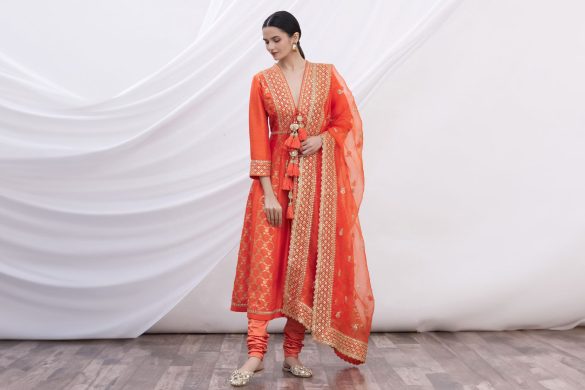
Modern Reinterpretations: Telangana’s textiles are undergoing a renaissance. Designers are using Pochampally Ikat fabric to create structured blazers, tote bags, and even footwear. The geometric patterns of Ikat fit perfectly with modern, minimalist aesthetics.
Styling Tips:
- Corporate Chic: Pair a cotton Pochampally saree with a solid black or white collar blouse for a sharp, professional look.
- Fusion Style: Wear a long Ikat jacket over jeans and a tank top for an artsy, bohemian vibe.
- Accessory Focus: Use a heavy Lambada silver necklace to add a statement tribal touch to a plain monochrome dress.
Why It Matters – Heritage, Identity & Fashion Inspiration
Preserving the craft traditions of Telangana is about saving a unique artistic vocabulary. Every time you purchase a handloom saree, you are supporting a weaver’s livelihood and ensuring that the rhythmic clacking of the loom continues in villages like Bhoodan Pochampally.
In a world of fast fashion, the slow, calculated art of Ikat and the dexterous skill of Gadwal weaving offer a lesson in patience and quality. These traditions inspire global fashion by showing how complex geometry and vivid color can coexist harmoniously. They remind us that true luxury is handmade, sustainable, and rooted in history.
Conclusion
Telangana’s stylistic heritage is a compelling narrative of geometry, ingenuity, and vibrant color. From the mathematical genius of Ikat to the structural brilliance of the Gadwal saree, the state offers a treasure trove for the textile enthusiast. We encourage you to explore the weaves of Telangana. Whether it’s draping a six-yard wonder of precision art or adorning a piece of tribal silver, you are embracing a legacy that is as resilient as the granite rocks of the Deccan.