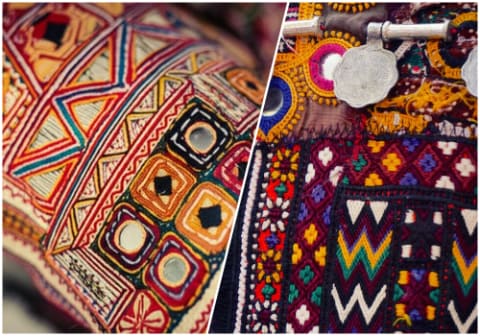
In the vast landscape of Indian tribal art, few crafts are as instantly recognizable and visually stunning as Banjara embroidery. This is not just needlework; it is a riot of color, a symphony of textures, and a living chronicle of a nomadic people. Created by the women of the Banjara (or Lambani) community, this embroidery is famous for its bold geometric patterns, vibrant threads, and dazzling embellishments like mirrors, shells, and beads.
This article will journey into the heart of the Banjara world. We will explore the nomadic origins of this unique Lambani craft, uncover the meaning behind its intricate patterns, and admire the sheer artistry that turns simple fabric into a masterpiece. From traditional garments to modern fashion, you will discover why Banjara embroidery continues to captivate the world with its untamed spirit and colorful soul.
Nomadic Roots: A History Woven on the Move
The story of Banjara embroidery is the story of its people. The Banjaras are a nomadic community, historically believed to have originated in Rajasthan, who migrated across the Indian subcontinent for centuries as traders and transporters. Their constant movement shaped their culture, traditions, and, most visibly, their art.
Living a life on the move meant that their wealth was often portable. Women adorned themselves and their families in richly decorated clothing that served as a display of their status, identity, and savings. The embroidery was a way to carry their heritage with them, a visual language that connected them to their roots no matter where they traveled. The craft was passed down from mother to daughter, a vital thread in the fabric of their community, preserving stories and symbols through generations.
The Hallmarks of Banjara Embroidery
What makes Banjara embroidery so distinctive is its maximalist approach. It is an art form that celebrates abundance, with every inch of fabric often covered in detailed work. This "more is more" philosophy is reflected in its key characteristics.
A Riot of Color and Embellishments
The first thing that strikes you about this craft is its vibrant color palette. Artisans use a stunning array of bright threads—reds, yellows, blues, and greens—often set against a dark or red cotton base. This contrast makes the intricate stitch work and embellishments pop.
The true magic, however, lies in the embellishments:
Mirror Work (Shisha): Tiny mirrors are meticulously stitched onto the fabric. This iconic mirror work embroidery not only adds a dazzling sparkle but was also traditionally believed to ward off the evil eye by deflecting negative energy.
Cowrie Shells (Kawdi): These small, white shells are symbols of prosperity and fertility. They are often stitched along the edges of garments, adding a unique texture and a gentle rattling sound.
Beads and Coins: Colorful beads and old coins are incorporated into the designs, adding weight, texture, and a sense of history to the piece.
Bells (Ghungroo): Tiny bells are sometimes attached, creating a musical jingle with every movement, further animating the garment.
Bold Geometric Patterns
Unlike the delicate floral motifs of some other embroidery styles, Banjara work is characterized by strong, geometric patterns. You will see a profusion of triangles, squares, diamonds, and chevrons arranged in bold, repeating designs. These shapes are not just decorative; they are part of a symbolic language that communicates themes of identity, community, and spirituality.
The Language of Stitches
The texture and richness of Banjara embroidery come from the wide variety of stitches used. Artisans employ over a dozen different types of stitches to create their complex designs. While the list is extensive, some of the key stitches include:
Chain Stitch: Used for outlining shapes and creating flowing lines.
Herringbone Stitch: A cross-stitch variation that is often used to fill in patterns and attach mirrors.
Running Stitch: Simple yet effective, used to create detailed patterns and quilting effects.
Blanket Stitch: Used to finish edges and secure appliqué work.
The combination of these stitches creates a dense, highly textured surface that is both visually and tactilely rich. It is a freehand art form, and the slight variations in the stitch work give each piece a unique, handmade character.
Motifs: A Reflection of Nomadic Life
The motifs found in Banjara embroidery are a direct reflection of the community's nomadic lifestyle and their close connection to nature. The patterns often depict the world around them, imbued with symbolic meaning.
Common motifs include stylized representations of animals like peacocks and elephants, natural elements like the sun and flowers, and symbols of good fortune. These designs are not just pretty pictures; they are a form of storytelling, weaving in elements of folklore, daily life, and spiritual beliefs. The embroidery on a woman's clothing could signify her marital status, the number of children she had, or the clan she belonged to.
Traditional Uses and Modern Adaptations
Traditionally, this elaborate embroidery was used to decorate every aspect of a Banjara woman's life. It was found on their voluminous skirts (ghagras), blouses (cholis), and head-coverings (odhanis). These garments were not just for special occasions; they were part of their daily identity. The craft was also used to create bags (jholas), decorative pieces for their bullocks, and textiles for their homes.
In recent decades, the beauty and vibrancy of Lambani craft have caught the eye of the fashion world and design enthusiasts. This has led to a wonderful evolution of the art form. While preserving its traditional techniques, artisans have started applying their skills to a wide range of contemporary products.
Today, you can find Banjara embroidery on:
Fashion Apparel: Jackets, dresses, and blouses featuring panels of authentic Banjara work.
Accessories: Handbags, clutches, belts, and footwear that add a bohemian flair to any outfit.
Home Decor: Cushion covers, wall hangings, table runners, and quilts that bring a touch of tribal chic to modern interiors.
This adaptation has been crucial for the economic empowerment of Banjara women. It has provided them with a sustainable livelihood, allowing them to earn an income from their traditional skills while keeping their rich cultural heritage alive and relevant.
A Legacy of Color and Resilience
Banjara embroidery is so much more than a decorative craft. It is a powerful symbol of a community's identity, resilience, and artistic spirit. It is a language spoken in thread and mirror, a history book written in stitches. Each piece is a testament to the skill and creativity of the women who have kept this vibrant tradition alive through centuries of change.
By supporting authentic Banjara craftsmanship, we are not just buying a beautiful object. We are helping to preserve a precious piece of Indian tribal art, honor the legacy of a remarkable community, and ensure that their colorful story continues to be told for generations to come.