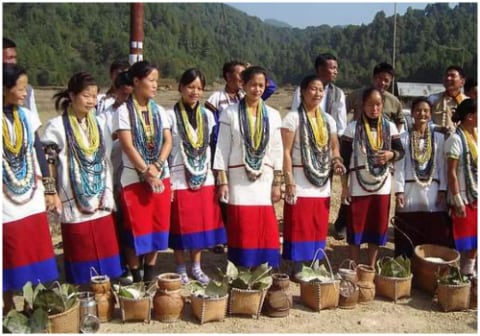
Deep in the verdant Ziro Valley of Arunachal Pradesh, nestled among pine hills and rice fields, lives the Apatani tribe. Known for their distinct culture and sustainable way of life, they are also the creators of one of India's most fascinating textile traditions: the Apatani weave.
Unlike the flashy silks or heavy embroideries of other regions, Apatani textiles are known for their geometric precision and bold simplicity. They are not just clothes; they are a canvas that reflects the tribe's relationship with nature. From the natural dyes sourced from local plants to the rhythmic clacking of the back-strap loom, every thread tells a story of heritage.
In this post, we will journey to the North East to understand the history of this unique craft, the sustainable methods used to create it, and why it is now gaining global recognition.
Who Are the Apatani Weavers?
The Apatani textile tradition originates from the Apatani tribe, who reside primarily in Ziro, the headquarters of the Lower Subansiri district in Arunachal Pradesh.
Weaving is almost exclusively the domain of women in this community. It is a skill passed down from mothers to daughters, an essential part of their cultural identity. These textiles are not just for daily wear; they hold immense significance during major festivals like Dree (an agricultural festival) and Myoko (a festival celebrating friendship and prosperity), as well as weddings and rituals.
Some of the most famous items produced include:
- Jig-jagro or Jilan: Traditional shawls.
- Supuntarii: Traditional jackets.
Tracing the History: Myths and Migung
Like many indigenous tribes in Arunachal Pradesh, the Apatani do not have a written history book. Instead, their past is preserved through a rich oral tradition.
The history of their weaving is often told through two main oral genres:
- Miji: These are ritual chants performed by priests during sacrifices. They connect the tribe to the spiritual world and explain their origin myths.
- Migung: These are prose narratives that function more like historical records. They recount the tribe's genealogy, migration to the Ziro valley, and urban legends related to their occupations, including the art of weaving.
Through these stories, we learn that weaving has been central to the Apatani way of life for centuries, serving as a marker of identity and social standing.
The Art of Sustainable Weaving
The Apatani tribe is famous for its sustainable forestry and agricultural systems, and this respect for nature extends to their weaving. They rely heavily on plant-based resources for everything from the yarn to the dyes.
1. From Cotton to Yarn
The process begins with Empya, the local name for cotton, which grows abundantly in the region.
- Ginning: The fibers are separated from the seeds using a thin stick called a lekho.
- Spinning: The clean fibers are shaped into a ball using a tafo (spindle) and then spun into thread.
- Looping: A bamboo frame called hornanii is used to make loops of yarn, preparing them for dyeing.
2. Nature's Palette: Natural Dyes
One of the most beautiful aspects of Apatani textiles is the use of natural dyes. The weavers use leaves, roots, and barks found in their forests to create vibrant colors.
- Tamin: A plant used to create a rich red-orange color.
- Sankhii: A plant that produces a warm brown-yellow shade.
Once dyed, the yarn is spun into balls using a spinning wheel called piirii-e, ready for the loom.
3. The Back-Strap Tension Loom
The actual weaving is done on a simple yet ingenious device: the back-strap tension loom. Unlike large, stationary floor looms, this is a portable setup made of bamboo and wooden sticks.
- The Warp: The yarn is stretched between two parallel bamboo sticks to create the base (warp).
- The Weave: One end of the loom is attached to a fixed object (like a wall or post), and the other end is strapped around the weaver's waist. By leaning back or forward, the weaver controls the tension of the yarn with her own body weight.
- The Shuttle: A bamboo tube called a lokho is used to pass the weft thread through the layers, slowly building the fabric inch by inch.
Design Elements: The Beauty of Geometry
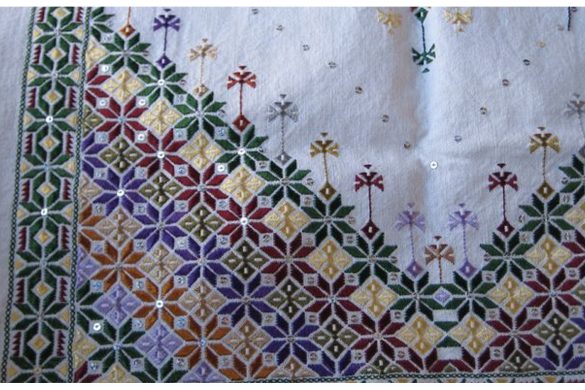
If you look at an Apatani shawl, you won't usually see curves or ornate flowers. The signature style of Apatani design is geometric and angular.
- Straight Lines: The most defining characteristic is the use of straight lines and bands of varying widths running along the borders.
- Zig-Zags: Angular zig-zag patterns are common, representing the mountainous terrain of their homeland.
- Minimal Curves: Curved lines are rare, though priests sometimes wear shawls featuring special spiral designs.
Colors:
The color palette is striking. While they use earthy tones, you will frequently see bold combinations of black, red, yellow, blue, and orange. The interplay of dark backgrounds with bright geometric bands makes the designs pop.
Apatani Textiles Today: Challenges and the GI Tag
Despite its beauty, the craft faces modern challenges. The younger generation is moving towards urban jobs, leading to a decline in the number of skilled weavers. Furthermore, the market is often flooded with cheap, power-loom imitations that threaten the livelihood of traditional artisans.
The GI Tag Victory
To protect this heritage, the Apatani tribe applied for Geographical Indication (GI) status, which was granted recently. This tag acts like a trademark, certifying that only textiles woven by the Apatani community in their specific region can be sold under the name "Apatani."
- Legal Protection: It prevents unauthorized use and fake copies.
- Economic Boost: It helps boost exports and ensures the weavers get a fair price for their labor.
Several NGOs are also stepping in to conduct workshops and research, ensuring that the knowledge of natural dyeing and back-strap weaving is not lost to time.
Conclusion
Apatani textiles are a perfect example of how fashion can be sustainable, cultural, and beautiful all at once. When you hold a piece of Apatani fabric, you are holding the result of sustainable forestry, natural chemistry, and generations of oral history.
By supporting authentic Apatani weaves, we don't just buy a shawl or a jacket; we help preserve the unique identity of the Ziro Valley and ensure that its geometric tales continue to be woven for generations to come.