
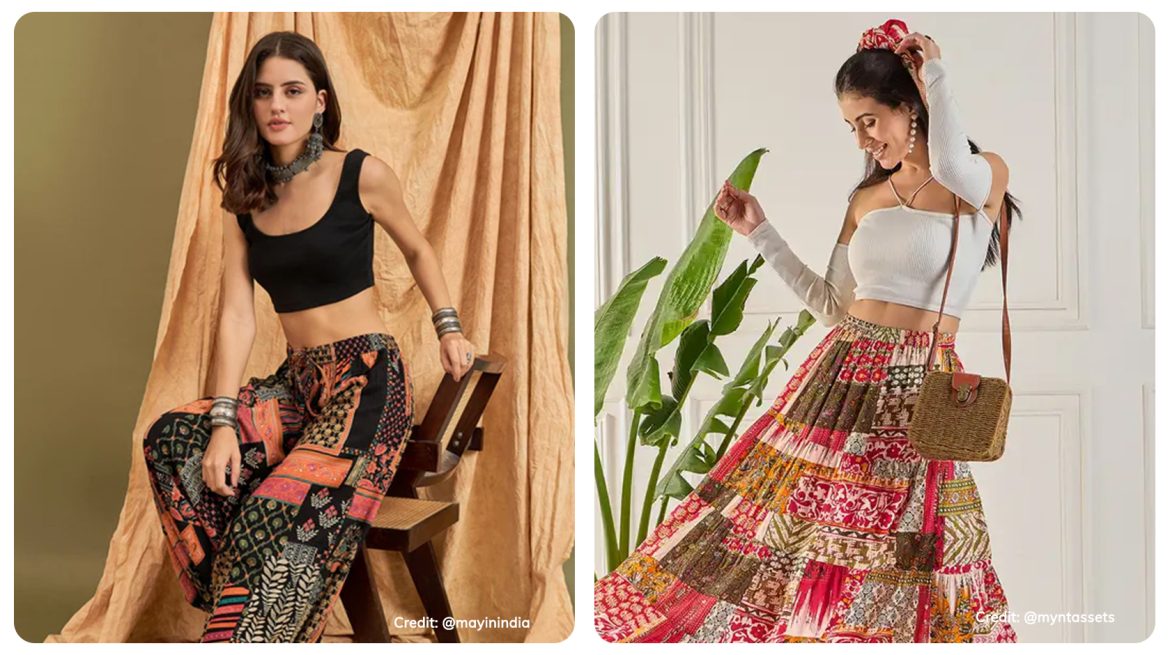
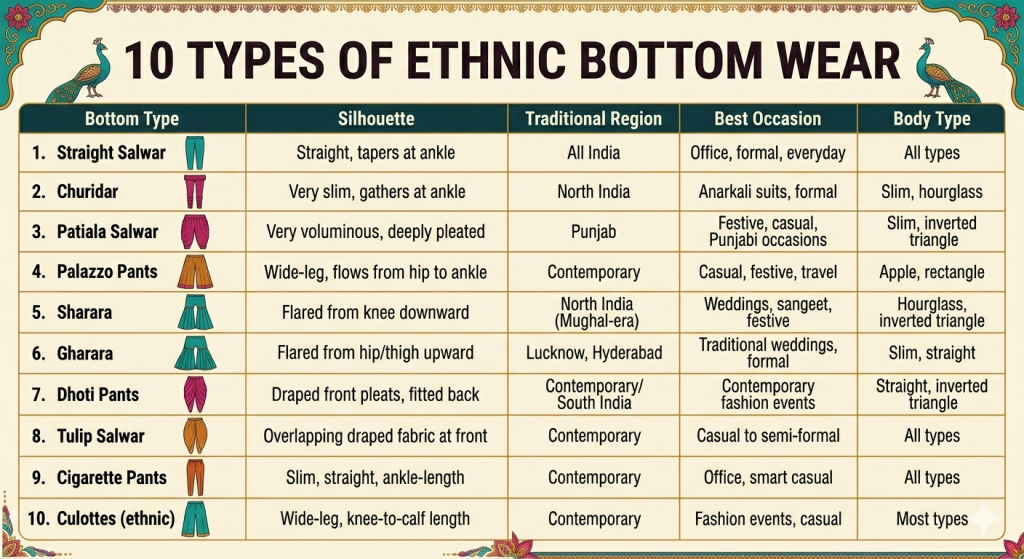
There are ten main types of ethnic bottom wear for Indian women: straight salwar, churidar, patiala salwar, palazzo pants, sharara, gharara, dhoti pants, tulip salwar, cigarette pants, and culottes (ethnic version). Each style has a distinct silhouette, regional tradition, and occasion suitability
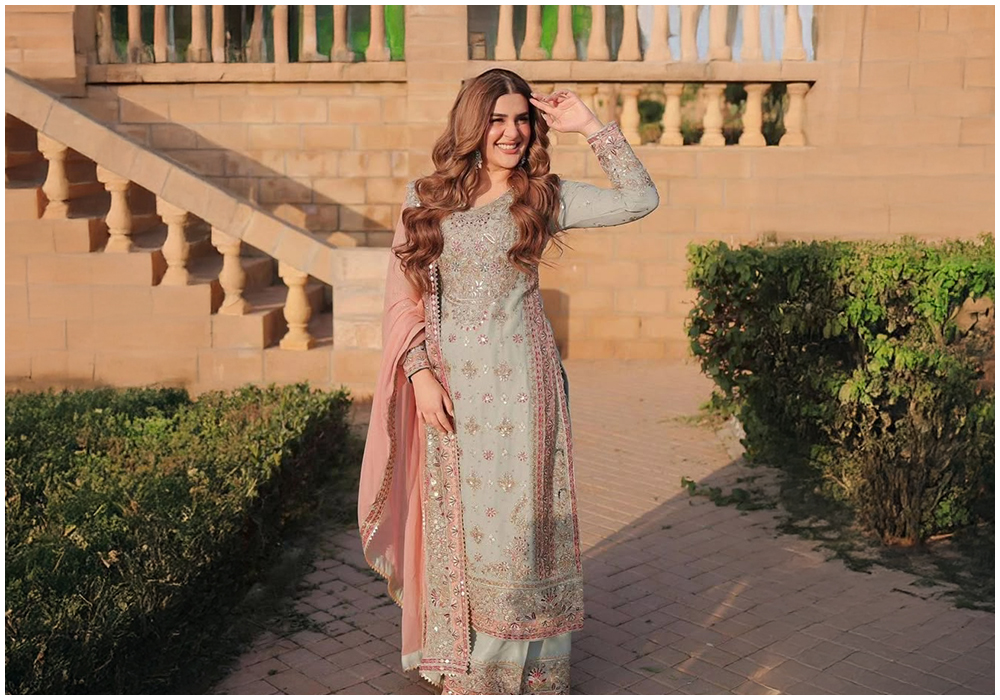
Detailed Guide to Each Ethnic Bottom Wear Type
1. Straight Salwar
The most classic and versatile ethnic bottom. Straight-cut from hip to ankle, tapering slightly at the ankle for a clean, structured look. Suits all body types and all occasions.
2. Churidar
The churidar is a very slim, fitted pant that gathers in horizontal folds at the ankle. Most beautiful when paired with floor-length Anarkali suits. Suits slim and hourglass figures best.
3. Patiala Salwar
Deeply pleated, voluminous, and gathered at both the waist and the ankle. A traditional Punjabi ethnic bottom colourful, comfortable, and festive. Most flattering for slim, rectangle, and inverted triangle body types.
4. Palazzo Pants
Wide-leg, flared pants that flow from the hip to the ankle. One of the most popular contemporary ethnic bottoms extremely comfortable, versatile, and appropriate for casual to semi-formal occasions.
5. Sharara
A flared ethnic pant that begins flaring dramatically from the knee downward, with a fitted section above the knee. Traditional North Indian festive and bridal bottom.
6. Gharara
The gharara begins flaring at or above the thigh creating an even more voluminous silhouette than the sharara. Traditional Lucknawi and Hyderabadi occasion wear with Mughal origins.
7. Dhoti Pants
Inspired by the traditional dhoti, dhoti pants feature draped front pleats with a fitted seat and tapered ankle. They create a structured, contemporary ethnic silhouette.
8. Cigarette Pants
Slim, straight, ankle-length pants the most western-influenced ethnic bottom. Pair beautifully with longer kurtas and anarkalis for a contemporary ethnic look.
Frequently Asked Questions
Q: What is the difference between palazzo and patiala?
A: Palazzo pants are wide-leg, unpleated, flowing trousers that drape from the hip to the ankle in a smooth, straight silhouette. Patiala salwars are deeply pleated at the waist and ankle the voluminous pleating creates a distinctive gathered, puffy appearance quite different from palazzo's clean drape.
Q: What is the difference between sharara and gharara?
A: A sharara begins flaring from the knee downward, with a fitted section from hip to knee. A gharara begins flaring from the hip or upper thigh making it significantly more voluminous throughout the leg. Both are traditional North Indian festive bottoms, but the gharara has deeper historical roots in Lucknawi and Hyderabadi culture.
Q: Which ethnic bottom wear is most comfortable for everyday wear?
A: Palazzo pants and straight salwar are the most comfortable ethnic bottoms for everyday wear. Both have relaxed fits that don't restrict movement, are easy to care for, and look appropriate for most daily occasions.
Q: Which ethnic bottom suits a pear-shaped body?
A: For a pear-shaped body (fuller hips than bust), a straight salwar or cigarette pants are most flattering they don't add extra volume to the hip area. Avoid very voluminous patiala salwar or gharara, which add horizontal width to an already fuller lower body.
Q: What is the most trending ethnic bottom wear in Indian fashion?
A: Sharara sets, dhoti pants, and contemporary tulip salwars are among the most trending ethnic bottoms in Indian fashion. Cigarette pants paired with heavily embellished long kurtas are a popular alternative to traditional lehengas for wedding guests.
