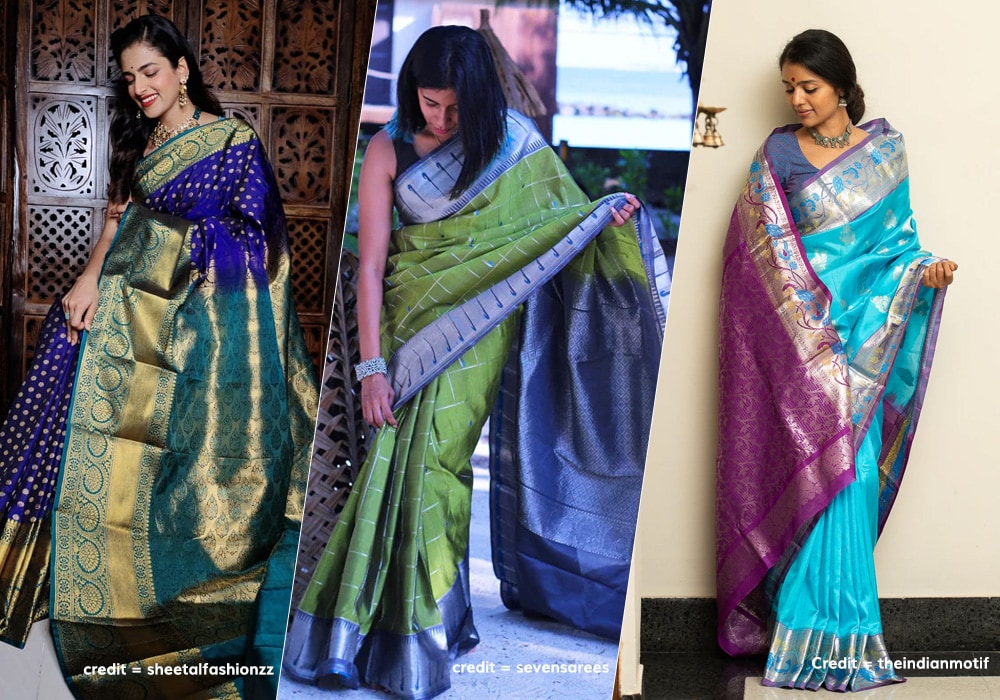
 In the rich tapestry of Indian handlooms, some weaves are known for their weight and grandeur, while others are celebrated for their lightness and grace. The Venkatagiri saree from Andhra Pradesh belongs to the second category. It is a fabric so fine and light, it feels like a whisper against the skin. Renowned for its softness, durability, and intricate Jamdani-style motifs, the Venkatagiri saree has a history as rich as its weave. For centuries, it was the exclusive attire of royalty, a symbol of sophistication and refined taste. Even today, it holds a special place in the hearts of saree connoisseurs who value its understated elegance. This guide will take you to the historic town of Venkatagiri to uncover the story of this unique saree, from its royal beginnings and meticulous creation process to its place in the modern world.
What is a Venkatagiri Saree?
Hailing from the town of Venkatagiri in the Nellore district of Andhra Pradesh, this saree is a handloom masterpiece. It is traditionally woven from fine cotton, making it incredibly lightweight and comfortable, perfect for the warm Indian climate. What makes a Venkatagiri saree instantly recognizable is its unique combination of a fine, almost translucent body and elaborate motifs woven using the Jamdani technique. Unlike printed designs, these motifs are woven directly into the fabric using an extra weft, creating a beautiful, embossed effect. The sarees are known for their signature gold bands on the pallu and a soft, crisp texture.A Weave for Royalty: Tracing Its Origins
The history of the Venkatagiri saree dates back to the early 1700s. The craft flourished under the patronage of the Velugoti dynasty of Nellore. In those days, these sarees were not for everyone. They were exclusively woven for the royal families and wealthy patrons of Southern India. The weavers, who had migrated from the Kurnool district, were masters of their craft. They were tasked with creating fabrics that were not only beautiful but also incredibly fine and light. The royals of Venkatagiri, Bobbili, and Pithapuram all patronized this art, ensuring its survival and growth. The weavers were held in high esteem, and their skill in creating these delicate textiles was considered a prized asset of the kingdom. This royal association gave the Venkatagiri saree an aura of exclusivity and luxury that it maintains to this day.The Art of Weaving: How is a Venkatagiri Saree Made?
The creation of a Venkatagiri saree is a testament to the weaver's skill and patience. The entire process is done by hand, from preparing the yarn to weaving the final six yards of elegance.1. Preparing the Yarn
The process begins with sourcing high-quality cotton or silk yarn.- Dyeing: The yarn is first dyed in the desired colors.
- Starching: It is then soaked in a rice starch solution, which gives the threads strength and a slight stiffness, making them easier to handle on the loom.
- Spinning: The starched yarn is spun into a fine thread using a 'charkha' (spinning wheel).
2. Setting Up the Loom
Before weaving, the weaver prepares the warp (the longitudinal threads). This is often done in the open space outside their home. The threads are stretched out and carefully arranged according to the design plan. The loom used is typically a traditional shuttle pit loom, where the weaver sits with their feet in a pit to operate the loom's pedals.3. The Jamdani Weaving Technique
This is where the magic truly happens. The distinctive motifs of a Venkatagiri saree are created using the Jamdani technique.- The weaver uses an extra weft thread to create the patterns. This is done without any machinery.
- The design is first drawn on graph paper. The weaver then uses this as a guide, manually inserting the motif threads into the warp with a small spool called a 'kandul'.
- This process is incredibly slow and requires immense concentration. The weaver essentially "embroiders" the design into the fabric as they weave, creating a pattern that is rich in texture and detail.
Design Elements: The Signature Style
Venkatagiri sarees are known for their traditional and symbolic motifs. The designs are elegant and well-spaced, giving the saree a graceful and uncluttered look.- The Pallu: The pallu is often the most decorative part of the saree. It features prominent gold bands called 'Variakanchu', between which the intricate Jamdani motifs are woven.
- Common Motifs: The designs are inspired by nature and geometry. You will often find:
- Parrots, peacocks, and swans
- Mangoes (paisleys) and leaves
- Lotus flowers
- Gold coins and simple dots
- Geometric patterns
Variations of the Venkatagiri Saree
Venkatagiri sarees are primarily categorized based on the fabric used and the thread count.- Venkatagiri 100: This is the most traditional and sought-after variety. It is made purely from cotton and has a thread count of 100-120. This high thread count makes the saree extremely soft, fine, and lightweight.
- Venkatagiri-Silk: This is a more modern variation where the saree is woven from silk or a silk-cotton blend (Sico). These sarees have a richer sheen and are popular for festive occasions and weddings.
- Venkatagiri-Putta: This version often features a plain body with a richly designed border and pallu, highlighting the Jamdani work.
The State of Venkatagiri Sarees Today
Despite its rich history and having a Geographical Indication (GI) tag for its authenticity, the craft of Venkatagiri weaving faces significant challenges.The Decline of a Royal Craft
In the age of power looms and fast fashion, the demand for handloom sarees has seen a decline. The painstaking and time-consuming process of Jamdani weaving makes the sarees more expensive than their machine-made counterparts. Many weavers are struggling to make a living, and the younger generation is often hesitant to take up the craft.A Ray of Hope
However, there is a growing movement to revive this art form.- Government and NGO Support: Several organizations are working to support the weaver communities by providing them with better wages, design inputs, and direct market access.
- Conscious Consumers: There is a rising awareness among consumers about the importance of supporting handloom and sustainable fashion. People are beginning to value the story and craftsmanship behind a handwoven saree.
- Modern Adaptations: Designers are collaborating with weavers to create contemporary versions of the Venkatagiri saree, with new color palettes and patterns to appeal to a younger audience. You can now find Venkatagiri dupattas, stoles, and fabrics used in modern garments.