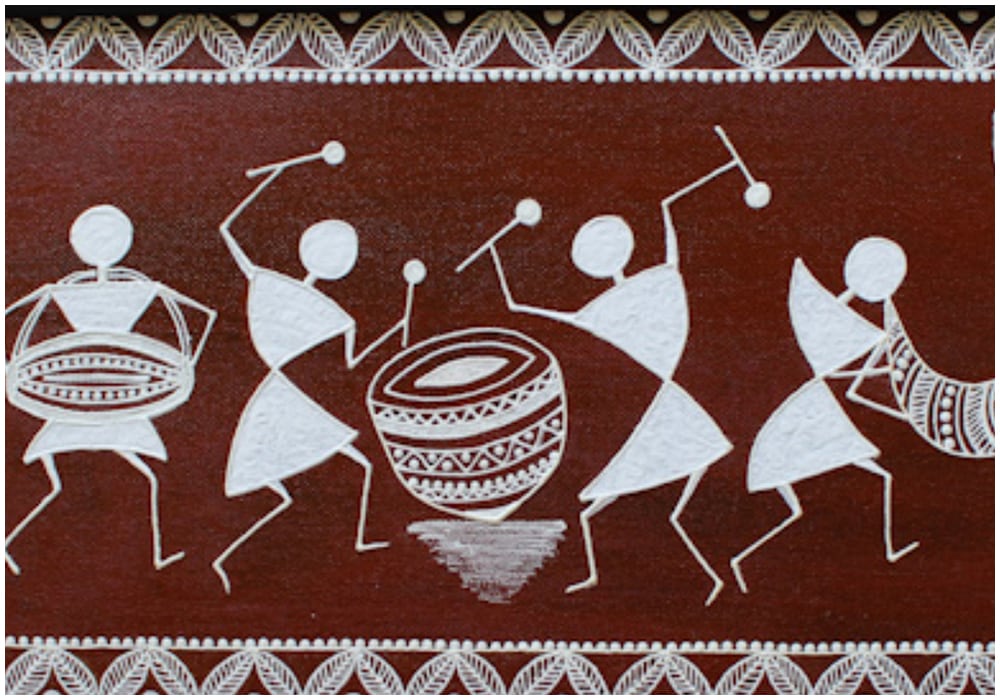
 Have you ever noticed beautiful, simple white figures dancing in circles on a red background? You might have seen them on a hotel wall, a coffee mug, or a designer saree. This is Warli art. It is one of India’s oldest and most loved forms of storytelling. While these paintings look simple, they carry deep meaning. They are not just drawings; they are the voice of a tribe that has lived in harmony with nature for thousands of years. In this guide, we will explore everything you need to know about Warli painting. We will look at where it came from, how it is made, and why it is still so popular today.
The Roots of Warli: A History Lesson
Warli art gets its name from the ‘Warli’ tribe. This is an indigenous tribe living in the mountainous and coastal areas of the Maharashtra-Gujarat border. You will find them mostly in the North Sahyadri range in India. The roots of this art form go very deep. Historians believe that the tradition of Warli painting dates back to somewhere between 2500 and 3000 B.C. To put that in perspective, this style resembles the prehistoric cave paintings found at Rock Shelters of Bhimbetka. For centuries, this art remained a secret of the tribe. It was not until the 1970s that the outside world truly discovered it. Before this, Warli art was not done for commercial reasons. It was a ritual. Women of the tribe, known as suvasinis, would paint the walls of their homes during weddings, festivals, and harvests. For the Warli people, art was a way to celebrate life and pray for prosperity.Unique Design Elements of Warli Painting
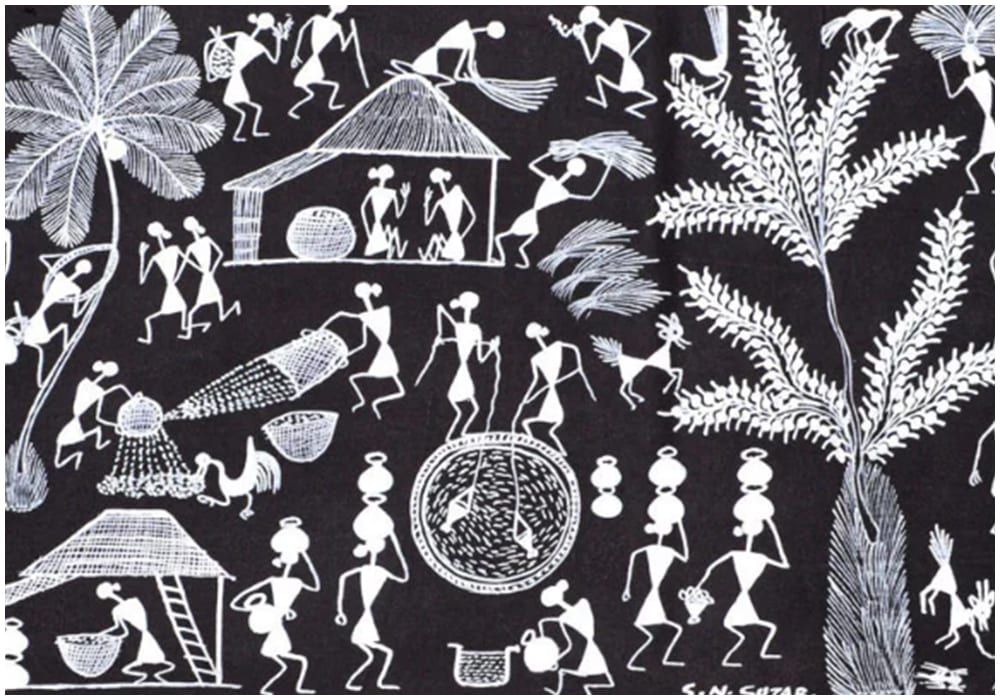 What makes Warli art instantly recognizable? It is the distinct lack of straight lines. Unlike other Indian folk art forms that use bright colors and religious deities, Warli is different. It is monochromatic (usually white on red/brown) and focuses on social life. You will rarely find drawings of gods or mythological characters in traditional Warli art. Instead, you see regular people doing regular things.