In the world of Indian ethnic fashion, few garments hold as much prestige, history, and breathtaking beauty as the Banarasi saree. It is not just a piece of clothing; it is an heirloom passed down from grandmothers to mothers to daughters. It is a symbol of royalty, a staple of Indian weddings, and a masterpiece of weaving that has survived centuries of changing trends.
But if you are new to the world of sarees, you might be wondering: what is a Banarasi saree exactly? Is it defined by the fabric, the design, or where it comes from? Why is it considered one of the finest sarees in India?
This guide is here to answer all your questions. We will take a deep dive into the fascinating world of the Banarasi silk saree, exploring its origins, the incredible skill required to make it, and why it remains a must-have for every bride. Whether you are a fashion enthusiast or a bride-to-be looking for that perfect wedding outfit, get ready to fall in love with the magic of Banaras.
What is a Banarasi Saree? The Meaning and Origin
To understand the Banarasi saree meaning, we have to look at its geography. As the name suggests, these sarees originate from the ancient city of Varanasi, also known as Banaras (or Kashi). Located on the banks of the river Ganges, Varanasi is one of the oldest living cities in the world and a historic center for weaving and trade.
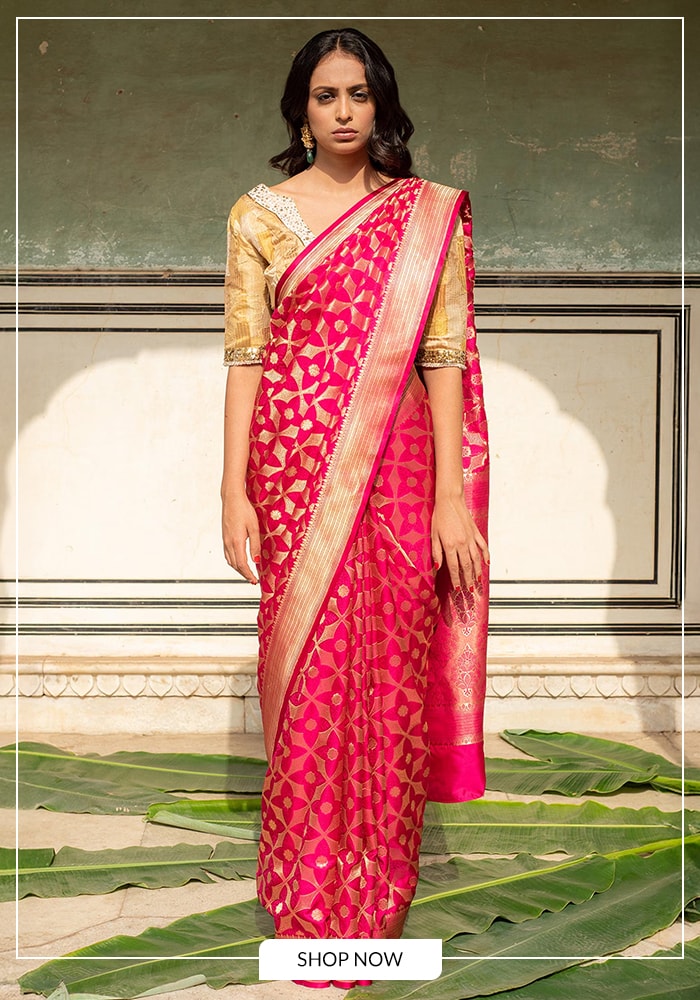
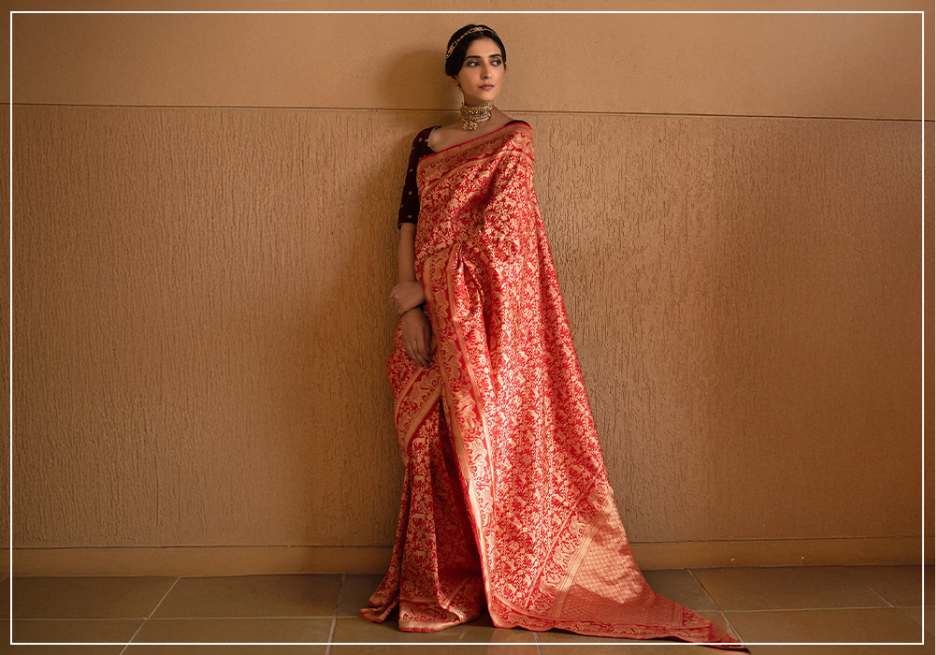
A Banarasi saree is traditionally a saree made in Varanasi, known for its gold and silver brocade or zari, fine silk, and opulent embroidery. These sarees are relatively heavy due to the intricate metal thread work, making them perfect for grand occasions.
The Banarasi saree origin dates back to the Mughal era. While weaving in Varanasi existed long before, it was during the reign of the Mughal emperors that the art form truly flourished. Persian motifs mixed with Indian designs, creating the unique floral and foliate patterns we see today. It was the preferred attire of royalty, and to this day, wearing one makes you feel nothing short of a queen.
The Art of Weaving: Craftsmanship and Materials
What sets a Banarasi saree apart is the complexity of its creation. The Banarasi saree weaving process is an intricate art that can take anywhere from a few weeks to six months to complete, depending on the complexity of the design.
How It Is Made
Traditionally, these sarees are woven on handlooms. The weavers use a special technique involving a Jacquard mechanism to create the complex brocade patterns. The base fabric is usually pure mulberry silk, renowned for its strength and luster.
However, the defining feature is the Zari work. Threads made of gold or silver alloys are woven into the silk to create the patterns. This metallic sheen against the rich silk background gives the Banarasi saree its legendary glow.
Banarasi Saree Design and Motifs
When you look closely at a Banarasi saree design, you are looking at a tapestry of culture. The motifs are heavily influenced by nature and Mughal architecture.
- Floral Patterns (Kalga and Bel): Intricate floral vines that run along the borders.
- Jhallar: Upright leaves that form a string-like pattern at the border.
- Paisley (Butis): Small, detailed mango-shaped motifs scattered across the body of the saree.
- Shikargah: Depictions of hunting scenes, often featuring animals like elephants and decorative birds.
Types of Banarasi Sarees
Not all Banarasi sarees are the same. They are classified based on the fabric and the weaving technique used.
Based on Fabric
- Pure Silk (Katan): This is pure silk fabric woven with twisted silk threads. It is durable, soft, and has a beautiful sheen. This is the classic choice for weddings.
- Organza (Kora) with Zari: These are lighter and more transparent, featuring rich gold or silver work on sheer fabric.
- Georgette Banarasi: A lighter, more fluid option. It drapes beautifully and is easier to carry than heavy silk.
- Shattir: A lighter fabric used for more contemporary and affordable designs.
Based on Design
- Jangla: Characterized by heavy vegetation motifs spreading across the entire saree. It is one of the oldest and most ornate types.
- Tanchoi: A complex weaving technique that uses satin threads to create a kaleidoscope of colors and texture, usually without heavy Zari.
- Vaskat: Known for its gap-less weaving technique, making the fabric look rich and full.
- Cutwork: A less expensive technique where the floating threads on the back of the saree are cut manually, creating a textured effect similar to Jamdani.
The Cultural Significance: Why It’s a Bridal Essential
In India, a wedding is incomplete without a Banarasi saree. But is Banarasi saree good for weddings? The answer is a resounding yes. In fact, for Bengali and North Indian brides, a red Banarasi silk saree is the traditional wedding attire.
The saree represents prosperity, fertility, and marital bliss. The heavy gold work symbolizes wealth and good fortune. Even for brides who choose a lehenga for the main ceremony, a Banarasi saree is an essential part of the bridal trousseau, often worn for the reception or post-wedding rituals.
Beyond weddings, these sarees are passed down as valuable assets. An original Banarasi saree never goes out of style. It is an investment piece that retains its beauty and value for decades, often becoming a family’s most cherished possession.
How to Identify an Original Banarasi Saree
With popularity comes imitation. The market is flooded with synthetic copies that look like silk but lack the quality and longevity of the real thing. Here is how to identify original Banarasi saree:
- Look at the Reverse Side: In a handwoven Banarasi saree, the reverse side will have floats (loose threads) between the grids of the warp and weft. Machine-made sarees will have a smooth finish on the back.
- The Silk Test: Pull a few loose threads from the saree (from an inconspicuous area) and burn them. Pure silk smells like burnt hair and leaves a powdery ash. Synthetic fibers smell like burning plastic and form a hard lump.
- The Zari Test: Scratch the Zari thread. If red silk shows underneath, it is likely real gold or silver Zari on a silk base. If white threads show, it is likely fake Zari.
- The Price: Handwoven artistry takes time and skill. If the price seems too good to be true, it is probably a power-loom copy, not a handloom masterpiece.
Frequently Asked Questions (FAQs)
Let's clear up some common confusion regarding these magnificent sarees.
1. What makes a saree Banarasi?
A saree qualifies as Banarasi if it is woven in the Varanasi region using the specific brocade techniques that integrate Zari threads into the silk to create raised, metallic patterns. It is defined by its origin and its unique weaving style.
2. What is the difference between Banarasi and Kanjivaram saree?
Both are giants of the silk world, but they are quite different.
- Origin: Banarasi is from Varanasi (North India); Kanjivaram is from Kanchipuram (South India).
- Design: Banarasi features Mughal-inspired motifs (flowers, vines) woven with Zari. Kanjivaram features temple motifs, checks, and stripes.
- Weaving: In Kanjivaram sarees, the border and pallu are often woven separately and then attached to the body. In Banarasi sarees, the entire saree is usually woven as a continuous piece.
3. Where do Banarasi sarees come from?
Authentic Banarasi sarees come exclusively from the city of Varanasi (Banaras) in Uttar Pradesh, India, and its surrounding villages.
4. Is a Banarasi saree heavy to wear?
Yes, traditional bridal Banarasi sarees can be heavy due to the pure silk and extensive Zari work. However, modern variations like Georgette or Organza Banarasi are much lighter and easier to manage for parties and festivals.
Styling Your Banarasi Saree
Styling a Banarasi saree is all about balance. Since the saree itself is so ornate, you don’t want to overdo it.
- Jewelry: Traditional gold temple jewelry or Kundan sets complement the Zari work beautifully.
- Blouse: You can go traditional with a matching silk blouse or add a modern twist with a sleeveless velvet or brocade blouse in a contrasting color.
- Hair: A classic bun adorned with fresh jasmine flowers (Gajra) is the ultimate traditional look that never fails.
Discover Authentic Banarasi Sarees at Aza Fashions
Finding a genuine, high-quality Banarasi saree can be a challenge in a market full of replicas. This is where Aza Fashions steps in. As a premier destination for luxury ethnic wear, Aza Fashions offers a curated collection of authentic Banarasi sarees from India's top designers and heritage brands.
When you shop at Aza Fashions, you are not just buying a piece of cloth; you are investing in a piece of art. Whether you are looking for a heavy red bridal saree or a lighter pastel tanchoi for a friend's wedding, you can explore a wide range of handpicked designs that guarantee quality and authenticity.
Final Thoughts: A Timeless Legacy
So, what is a Banarasi saree? It is six yards of pure elegance. It is a testament to the skill of Indian weavers and a garment that carries the weight of history in every thread.
Owning a Banarasi saree is like owning a piece of Indian heritage. It is versatile, regal, and timeless. Whether you are a bride preparing for your big day or simply someone who appreciates fine textiles, a Banarasi saree is an addition to your wardrobe that you will cherish forever.
Ready to own a masterpiece? Explore the exquisite collection of designer Banarasi sarees at Aza Fashions and find the one that speaks to your soul.