 Have you ever admired a piece of embroidery with rich, textured designs that seem to jump off the fabric? Chances are, you might have been looking at crewel embroidery. This beautiful and historic craft uses wool thread to create stunning, durable patterns. It’s a technique that has decorated homes for centuries and continues to capture the imagination of modern makers. This guide will walk you through the world of crewel embroidery. We will explore its fascinating history, the specific materials that make it unique, and the beautiful motifs that define this art form. Whether you're a seasoned stitcher or just curious about textile arts, you'll discover what makes crewel work so special.
The Story of Crewel Embroidery
Crewel embroidery is a type of surface embroidery with a history stretching back centuries. Its name comes from the specific two-ply wool yarn, called "crewel," that is used to create the designs. While the exact origins are debated, the technique gained immense popularity in England during the 16th and 17th centuries, particularly during the Jacobean era. During this period, intricate designs featuring flowing vines, exotic flowers, and stylized animals became the hallmark of crewel work. These motifs were often stitched onto heavy linen twill fabric used for home furnishings like bed hangings, curtains, and upholstery. The wool thread was perfect for these items because it was not only beautiful but also incredibly durable. The craft traveled with colonists to America, where it remained a popular form of decoration. After falling out of fashion for a time, crewel embroidery experienced a major revival in the 1970s. This resurgence brought bold colors and new designs to the forefront, reintroducing the craft to a new generation. Today, it remains a beloved technique for both its historical charm and its creative possibilities.The Essential Materials
What truly sets crewel embroidery apart from other needlework is its unique combination of materials. Understanding these components is the first step to appreciating or starting your own crewel project.Crewel Wool Yarn
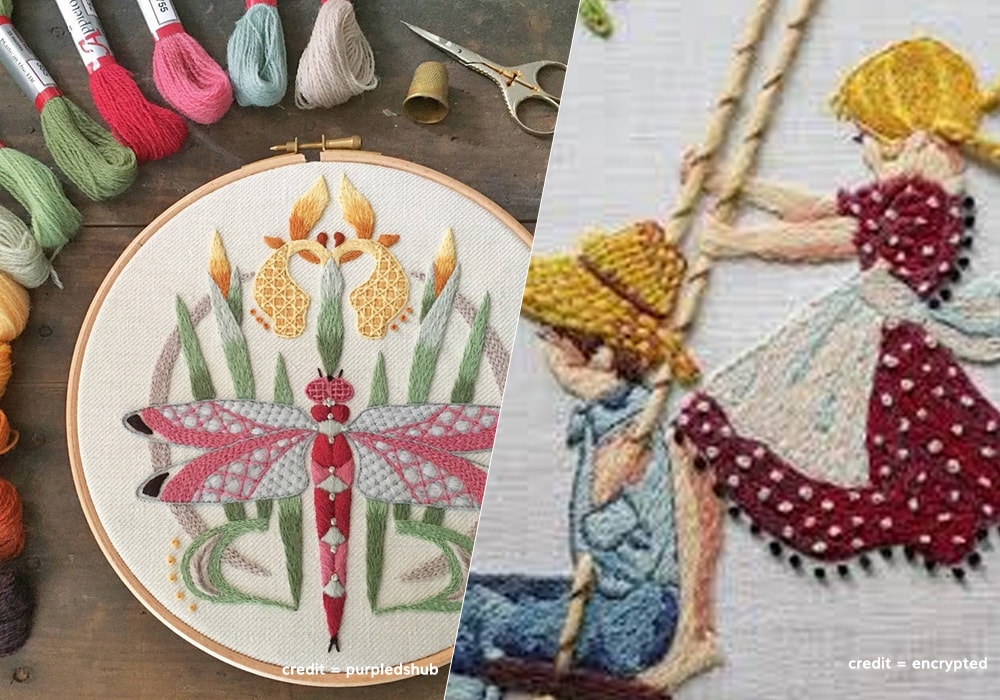
The star of the show is the crewel yarn itself. This is a fine, two-ply yarn made from long-staple wool, which makes it strong and smooth. Unlike cotton embroidery floss, which can be separated into individual strands, crewel wool is used as a single thread. This gives the stitches a distinct, slightly fuzzy texture and a raised appearance. The wool also takes dye beautifully, resulting in a vibrant and rich color palette.Foundation Fabric
Traditionally, crewel embroidery is worked on a sturdy, non-stretchy fabric that can support the weight of the wool stitches. Linen twill has always been the preferred choice. Its strong, diagonal weave provides a stable base for even the most densely stitched designs. However, other heavy fabrics like cotton, jute, or even silk can be used, as long as they are robust enough to prevent puckering.Needles and Tools
To work with wool thread, you need a needle with a large eye and a sharp point. Chenille needles are an excellent choice for crewel work. Their sharp tips easily pierce tightly woven fabrics, and their long eyes make threading the thick wool yarn simple. You will also want an embroidery hoop or frame to keep your fabric taut as you stitch. This ensures your stitches remain even and prevents the fabric from distorting.Stitches and Techniques
One of the most exciting aspects of crewel embroidery is the sheer variety of stitches you can use. There are no "crewel-only" stitches; instead, the technique borrows from a vast library of embroidery stitches to create texture and detail. A single project can feature a dozen different stitches. Some of the most common stitches used in crewel work include:- Stem Stitch: Perfect for outlining stems, vines, and other curved lines. It creates a smooth, rope-like effect.
- Satin Stitch: Used to fill in shapes with a smooth, solid block of color. It's often used for leaves and flower petals.
- Chain Stitch: This stitch forms a series of interlocking loops, creating a bold, textured line. It can be used for outlines or as a filling stitch.
- French Knots: These small, decorative knots add wonderful texture and are perfect for creating flower centers or small, dotted details.
- Long and Short Stitch: Also known as "soft shading," this technique is used to blend colors seamlessly, creating a painterly effect.
Timeless Motifs and Designs
Crewel embroidery is famous for its naturalistic and often fantastical designs. The "Tree of Life" is perhaps the most iconic motif. This design typically features a central, stylized tree or mound from which an abundance of branches, flowers, leaves, and vines grow. It often includes birds, insects, and other animals nestled within its foliage. Other popular motifs include:- Floral Patterns: From elaborate Jacobean-era flowers to simpler, more modern botanicals, flowers are a constant theme.
- Vines and Leaves: Flowing, scrolling vines are used to create borders and connect different elements of a design.
- Birds and Animals: Stylized birds, squirrels, and stags often appear, adding life and narrative to the embroidery.