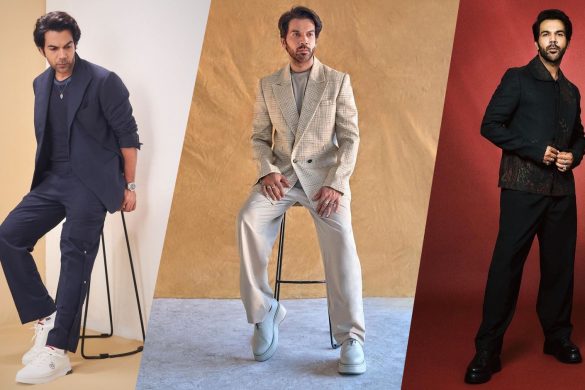
There is a moment at every Indian wedding when the groom walks in and the entire room goes quiet not because of the music stopping, but because of what he is wearing. More often than not in 2026, that moment belongs to a man in a Jodhpuri suit. Impossibly elegant yet unmistakably Indian, the Jodhpuri suit occupies a unique position in men's fashion: it is the garment that makes a man look equally at home in a Rajasthani palace and a five-star hotel ballroom, at a traditional Hindu wedding and a modern destination celebration. In 2026, as Indian men increasingly seek alternatives to both the heavy Sherwani and the Western tuxedo, the Jodhpuri suit has emerged as the definitive answer and this complete style guide covers everything you need to know to wear it perfectly.
What Is a Jodhpuri Suit?
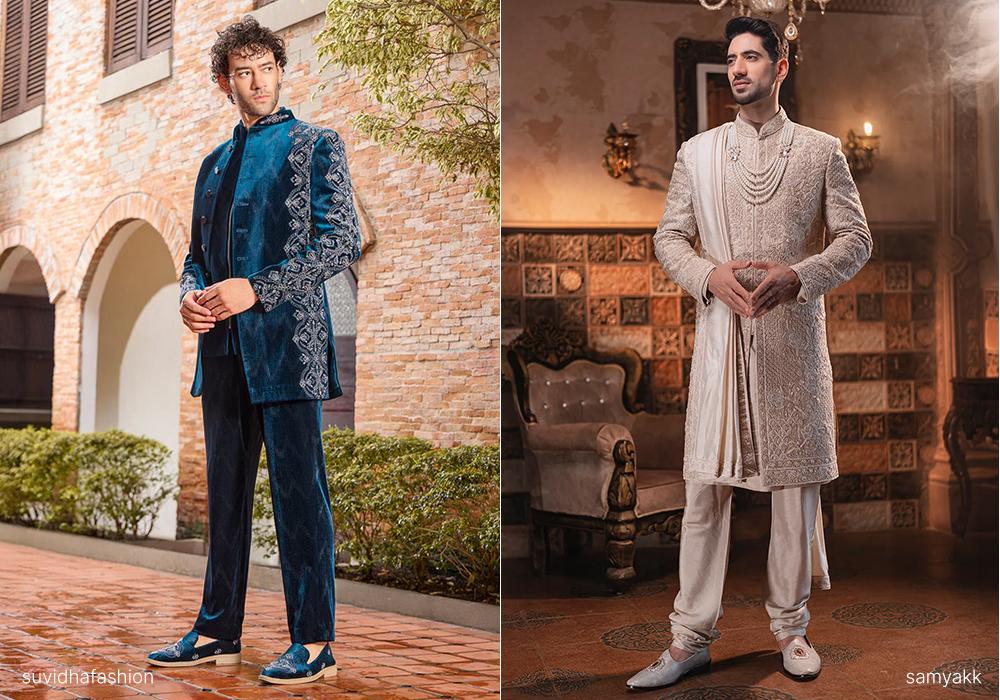
The Jodhpuri suit also called the Bandhgala suit, Prince suit, or Maharaja suit is a structured men's formal suit consisting of:
- A fitted jacket with a mandarin (stand-up) collar the defining feature that distinguishes it from Western suits
- Matching trousers typically straight-cut or slim-fit in the same fabric as the jacket
- An optional waistcoat that adds a third layer of formality for wedding occasions
The jacket typically features five to seven buttons running up the front, a clean, collarless neckline, and structured shoulders creating a silhouette that is simultaneously tailored and traditionally Indian.
The Jodhpuri suit draws its name from Jodhpur, Rajasthan where the Maharaja of Jodhpur, Sir Pratap Singh, developed a version of this tailored jacket in the late 19th century, combining the structure of British military tailoring with the mandarin collar of Indian court dress. When Sir Pratap Singh wore this style to Queen Victoria's Diamond Jubilee celebrations in 1897, it caused a sensation among European fashion circles and the style has never lost its ability to turn heads since.
Jodhpuri Suit vs Sherwani vs Bandhgala: Understanding the Difference
Before choosing, it helps to understand how the Jodhpuri compares with similar garments:
Aspect | Jodhpuri Suit | Sherwani | Western Tuxedo |
Collar style | Mandarin (stand-up) | Mandarin (stand-up) | Lapel (notch or peak) |
Length | Hip-length (suit jacket length) | Knee-length or longer | Hip-length |
Fit | Structured, tailored, fitted | Loose to semi-fitted | Structured, fitted |
Trousers | Matching fabric, slim or straight | Churidar or straight trouser | Matching trouser |
Embellishment | Minimal to moderate | Heavy to very heavy | Minimal |
Best occasion | Cocktail parties, receptions, mehendi, sangeet | Main wedding day, formal ceremonies | Black-tie events, destination weddings |
Cultural identity | Indo-Western fusion | Traditionally Indian | Western |
Weight | Light to medium | Medium to heavy | Light to medium |
The Jodhpuri suit is the sweet spot between the traditional Sherwani and the Western tuxedo it carries Indian identity without the heaviness of a full Sherwani, and it carries wedding-appropriate formality without the cultural neutrality of a Western suit.
The term Bandhgala strictly refers to the jacket alone the closed-collar jacket. A Jodhpuri suit is a complete ensemble (jacket + matching trousers). In common usage, the two terms are used interchangeably, though technically the Bandhgala jacket can be paired with different trouser styles while the Jodhpuri suit implies a matched set.
When to Wear a Jodhpuri Suit: Occasion Guide
One of the greatest strengths of the Jodhpuri suit is its extraordinary versatility across wedding functions:
As the Groom
- Engagement ceremony A pastel or ivory Jodhpuri suit signals sophistication and intention without the full ceremony of a Sherwani
- Mehendi function A bright or floral-printed Jodhpuri in cotton or linen is perfect for daytime celebrations
- Sangeet night Velvet or embroidered Jodhpuri in a rich tone; allows for dancing without the restriction of a full Sherwani
- Cocktail reception A midnight navy or deep burgundy Jodhpuri is the definitive cocktail party look for Indian men
- Main wedding day A heavily embroidered or brocade Jodhpuri with matching waistcoat serves as a compelling alternative to the Sherwani
- Day-after reception An ivory or champagne Jodhpuri is the perfect relaxed-yet-formal look for the post-wedding celebration
As a Wedding Guest
- All wedding functions A well-chosen Jodhpuri suit is appropriate for every function from mehendi to reception
- Best for: Men who want to look more dressed-up than a simple kurta but do not want the commitment of a full Sherwani
- Avoid wearing: A color that competes with or matches the groom check the groom's outfit color if possible
Jodhpuri Suit Fabrics: Choosing the Right Material
The fabric of your Jodhpuri suit determines not just how it looks but how it feels and photographs:
For Evening & Wedding Ceremonies
Velvet The most luxurious Jodhpuri fabric; creates a rich, deep color and a tactile texture that photographs magnificently. Best for: cocktail parties, receptions, sangeet nights in the cooler months (October–February).
Brocade A woven fabric with self-pattern or metallic motifs; adds textural interest without embroidery. Best for: main wedding day, formal receptions. The brocade's own pattern does the work of embellishment.
Raw Silk The most versatile Jodhpuri fabric; has a natural sheen that photographs well without being overtly formal. Best for: year-round use across all wedding functions.
Jacquard A woven patterned fabric with subtle geometric or floral designs; slightly less formal than brocade but more interesting than plain silk. Best for: receptions, engagement ceremonies.
Dupion Silk A slightly textured silk with a natural slub (irregular thread) that gives it character; more relaxed than Kanjeevaram-weight silk but still formal.
For Daytime & Summer Weddings
Linen Breathable, casual-formal; ideal for summer mehendi ceremonies and outdoor daytime events. Choose linen in earth tones or pastels.
Cotton-silk blend The best of both worlds; breathable enough for warm weather but structured enough to hold the Jodhpuri's tailored silhouette.
Khadi A natural, slightly textured fabric with deep cultural resonance; increasingly popular among men who want a sustainable, meaningful choice.
Jodhpuri Suit Colors: Complete 2026 Guide
Classic Wedding Colors (Always Appropriate)
- Ivory / Cream The most versatile and universally flattering Jodhpuri color; pairs with any safa, accessory, and occasion
- Black Formal, powerful, and photogenic; choose a textured black (velvet or brocade) rather than matte for weddings
- Navy Blue The most universally flattering dark tone for Indian skin tones; elegant without being aggressive
- Maroon / Burgundy Deep, warm, and festive; perfect for winter weddings and evening receptions
2026 Trending Colors
- Forest Green The breakout Jodhpuri color of 2026; pairs beautifully with gold accessories and ivory safa
- Slate Blue / Steel Blue A sophisticated alternative to navy; particularly striking in velvet
- Burnt Sienna / Terracotta Warm, earthy, and deeply on-trend in 2026's fashion cycle
- Dusty Rose / Blush A confident, fashion-forward choice for men who want to embrace 2026's soft pastel trend
- Champagne Gold For formal receptions and main wedding day; luxurious without being garish
- Deep Plum / Aubergine A sophisticated, less-common alternative to maroon; stands out in a crowd
Colors to Avoid
- Bridal red or bright red Risk of clashing with or appearing to compete with the bride
- Pure white Often considered inauspicious in Hindu wedding contexts
- Neon or fluorescent tones Too casual for the structured Jodhpuri silhouette
Embellishment Guide: How Much Is Too Much?
One of the most common styling mistakes with Jodhpuri suits is over-embellishment. Unlike the Sherwani which is designed to carry heavy embroidery the Jodhpuri's elegance comes from its structure and fabric quality rather than surface decoration.
For the Groom (Main Wedding Day)
- Embroidery on collar and cuffs the safest and most elegant placement
- Tone-on-tone embroidery same color thread as fabric; adds texture without loudness
- Subtle zari border along button placket a traditional touch that works beautifully in photographs
- Avoid: Full-body embroidery, heavy stone work, or sequin embellishment these belong on a Sherwani, not a Jodhpuri
For Wedding Guests
- Plain fabric in a rich color or texture the Jodhpuri's silhouette is statement enough
- Minimal pocket square embellishment let the pocket square provide the color accent
- Avoid any embroidery unless it is extremely subtle
Accessories: Completing the Jodhpuri Look
Safa (Turban)
The safa is the most important accessory for a Jodhpuri-wearing groom. In 2026, the most popular safa choices with a Jodhpuri suit include:
- Contrast safa a safa in a color that contrasts with the suit (e.g., dusty rose safa with ivory suit; gold safa with navy suit)
- Tone-on-tone safa same color family as the suit but slightly deeper or lighter
- Rajasthani-style Pagdi a high, structured turban with the distinctive Rajasthani fan
- Simple draped safa a more modern, relaxed turban style for non-groom wedding guests
Wedding guests wearing a Jodhpuri suit do not typically wear a safa this accessory is primarily reserved for the groom and close male family members in the groom's party.
Pocket Square
The pocket square is the most impactful small accessory for a Jodhpuri suit. In 2026:
- Silk pocket squares in contrasting colors (e.g., gold with navy suit, ivory with black suit)
- Embroidered pocket squares a small embroidered motif adds interest without ostentation
- Fold style: Presidential fold (flat) for formal occasions; Puff fold for slightly relaxed events
Footwear
- Mojri / Jutti the traditional Rajasthani hand-embroidered leather shoe; the most culturally resonant choice with a Jodhpuri suit
- Kolhapuri sandals for daytime or outdoor wedding events
- Leather Oxford or Derby shoe for a clean, Indo-Western look with a minimal Jodhpuri
- Monk-strap leather shoe increasingly popular with contemporary Jodhpuri suits
- Avoid: Sneakers, sports sandals, or casual footwear the Jodhpuri's formality demands appropriate footwear
Jewelry & Accessories for Men
- Brooch on the jacket a gold or embellished brooch on the collar or chest adds a royal touch
- Classic wristwatch a metal-strap watch in gold or silver; understated and elegant
- Ring a single signet ring or family heirloom ring on the right hand
- Avoid: Multiple bracelets, heavy chains, or earrings the Jodhpuri's clean lines are best served by minimal jewelry
How to Style a Jodhpuri Suit: 5 Complete Looks for 2026
Look 1: The Classic Royal Groom
- Suit: Ivory raw silk Jodhpuri with subtle gold collar embroidery
- Safa: Deep gold Rajasthani Pagdi
- Footwear: Gold-embroidered ivory mojri
- Pocket square: Deep gold silk, Presidential fold
- Best for: Main wedding day
Look 2: The Modern Cocktail Guest
- Suit: Midnight navy velvet Jodhpuri, no embellishment
- Safa: None
- Footwear: Black leather Oxford
- Pocket square: Ivory silk, Puff fold
- Best for: Cocktail reception, engagement ceremony
Look 3: The Festive Sangeet Look
- Suit: Forest green brocade Jodhpuri with tone-on-tone embroidery
- Safa: Dusty rose contrast safa (for groom) or none (for guest)
- Footwear: Tan leather monk-strap
- Pocket square: Dusty rose silk
- Best for: Sangeet night, mehendi evening
Look 4: The Destination Wedding Look
- Suit: Linen Jodhpuri in champagne / off-white, no embellishment
- Safa: None
- Footwear: Tan Kolhapuri sandals
- Pocket square: Terracotta cotton, casual puff fold
- Best for: Beach or outdoor destination wedding
Look 5: The Winter Reception Look
- Suit: Deep plum velvet Jodhpuri with subtle gold cuff embroidery
- Safa: Gold safa (groom) or none (guest)
- Footwear: Black leather Oxford with gold buckle detail
- Pocket square: Gold silk, Presidential fold
- Best for: Winter evening reception, black-tie Indian event
How to Get a Jodhpuri Suit Made: Bespoke vs Ready-to-Wear
Bespoke (Custom Tailored)
A bespoke Jodhpuri suit made to your exact measurements by a skilled tailor is always the superior choice for weddings. A well-made bespoke Jodhpuri fits like a second skin and photographs incomparably better than an off-the-rack alternative.
Timeline: Order at least 6–8 weeks before the wedding to allow for:
- Initial consultation and measurement (Week 1)
- Fabric selection and cutting (Weeks 1–2)
- First fitting (Weeks 3–4)
- Alterations (Weeks 4–5)
- Final fitting (Week 6)
- Final adjustments if needed (Weeks 6–7)
Budget: ₹15,000–₹1,50,000+ depending on fabric, embellishment, and tailor prestige
Top cities for Jodhpuri suit tailoring: Jodhpur (Rajasthan), Jaipur, Delhi (Lajpat Nagar, Chandni Chowk), Mumbai (Dadar, Colaba), Hyderabad
Ready-to-Wear
Ready-to-wear Jodhpuri suits are widely available from Indian ethnic wear brands in 2026. They offer speed and convenience but require careful size selection and often need alterations. Reliable brands for ready-to-wear Jodhpuri suits include Manyavar, Fabindia, Kalki Fashion, Raymond, and Sabhyata.
Important: Always try a ready-to-wear Jodhpuri before buying the mandarin collar and structured shoulder fit differently on different body types and cannot be adequately judged online.
Jodhpuri Suit for Different Body Types
Slim / Lean build: Choose structured fabrics (brocade, raw silk) that add visual volume; avoid clinging fabrics. A slightly padded shoulder gives the suit better structure.
Athletic / Broad-shouldered build: A well-tailored Jodhpuri is the best silhouette for athletic builds the structured jacket celebrates broad shoulders. Avoid heavy embellishment across the chest.
Stocky / Heavy build: Choose darker colors (navy, black, dark green) in matte fabrics. Avoid brocade with large patterns. A slightly longer jacket length is more flattering.
Tall / Lanky build: A Jodhpuri with a waistcoat adds visual proportion. Choose richer, denser fabrics to add weight and presence.
Budget Guide: Jodhpuri Suits at Every Price Point
Budget | What to Expect |
Under ₹5,000 | Ready-to-wear polyester-blend Jodhpuri; acceptable for guests, not recommended for groom |
₹5,000 ₹15,000 | Ready-to-wear cotton-blend or art silk Jodhpuri from branded retailers |
₹15,000 ₹40,000 | Good-quality bespoke Jodhpuri in raw silk or cotton-silk blend |
₹40,000 ₹1,00,000 | Premium bespoke in velvet, brocade, or pure silk; subtle embroidery available |
Above ₹1,00,000 | Designer-label bespoke; luxury fabrics; hand embroidery; heirloom-quality construction |
Frequently Asked Questions (FAQ)
Q1. What is the difference between a Jodhpuri suit and a Bandhgala? The Bandhgala refers specifically to the closed mandarin-collar jacket. A Jodhpuri suit is the complete ensemble jacket, matching trousers, and optional waistcoat. In everyday usage, both terms are used interchangeably, but technically a Bandhgala jacket can be paired with contrasting trousers while a Jodhpuri suit implies a fully matched set.
Q2. Can a groom wear a Jodhpuri suit instead of a Sherwani? Absolutely. In 2026, many grooms choose a Jodhpuri suit as their primary wedding outfit particularly for engagement ceremonies, sangeet nights, cocktail receptions, and even main wedding day ceremonies. A well-chosen Jodhpuri in a luxury fabric with careful embellishment is entirely appropriate for any wedding function.
Q3. What color Jodhpuri suit should I wear to a wedding as a guest? As a wedding guest, the safest and most elegant Jodhpuri colors in 2026 are navy blue, forest green, charcoal, maroon, ivory, or champagne. Avoid bright red or the groom's primary color. Navy velvet is widely considered the most universally appropriate and stylish guest Jodhpuri choice.
Q4. What footwear goes best with a Jodhpuri suit? Mojri or jutti (traditional embroidered Indian leather shoes) are the most culturally resonant and stylish choice with a Jodhpuri suit. For a more contemporary look, a leather Oxford or monk-strap shoe works beautifully. For outdoor or summer weddings, Kolhapuri sandals are an excellent option.
Q5. How early should I order a bespoke Jodhpuri suit? Order at least 6–8 weeks before the wedding for a bespoke Jodhpuri suit. This allows time for measurements, fabric sourcing, first fitting, alterations, and final fitting. For heavily embroidered suits, allow 10–12 weeks to ensure the embroidery work is completed without rushing.
Q6. What accessories should I wear with a Jodhpuri suit? The key accessories for a Jodhpuri suit are: a silk pocket square in a contrasting color, mojri or leather Oxford shoes, a classic wristwatch, and a safa (turban) if you are the groom. Keep jewelry minimal the Jodhpuri's elegance comes from its structure, not its accessories.
Q7. Which is better for a wedding Jodhpuri suit or Sherwani? It depends on the occasion and the wearer's preference. A Sherwani is the traditional choice for the main wedding ceremony and works best for men who want maximum traditional Indian formality. A Jodhpuri suit is more versatile, lighter, more comfortable for dancing, and better suited for cocktail receptions, sangeet, and destination weddings. Many grooms in 2026 wear a Jodhpuri for pre-wedding functions and a Sherwani for the main ceremony.