Hopelessly in love with the phulkari embroidery? Well, long before fashion weeks and designer labels, there was Phulkari. And trust me, it needed no dramatic runways and couture shows to be extraordinary. Phulkari, from the Punjabi "phul" (flower) and "kari" (work), translates simply to "flower work." But there is nothing simple about it. It is Punjab's most intimate art form: conceived by women, carried by women, and passed between generations. The same way gold jewellery or whispered prayers are passed with fierce and quiet devotion.
Stitched Into History
Some historians believe the style was popular as long ago as the 7th century, with a biography of Indian emperor Harshavardhana describing people "embroidering flowers and leaves on the cloth from the reverse side" — which precisely describes the Phulkari technique. Its earliest definitive records, however, trace back to the 15th century in Punjab, and the craft is rooted in the region's rural handmade embroidery traditions.

The origin of the craft is debated: some scholars suggest it was introduced to India from Central Asia by the Jat community in the late medieval period, while others trace its roots to Persian gulkari embroidery designs. Whatever its precise geography of birth, Phulkari found its truest home in Punjab — it has been mentioned in the Sikh holy book Guru Granth Sahib, and immortalised in the 18th-century Punjabi epic Heer Ranjha by Waris Shah. "My dear mother has embroidered this Phulkari; I embrace it again and again with affection."
What Makes Phulkari One of Its Kind
The magic of Phulkari lies in its paradox: a design of breathtaking complexity, created using one of the most elemental stitches in needlework. Phulkari embroidery is done using a running stitch with brightly coloured untwisted silk thread. The thread is believed to be historically imported from Kashmir and Bengal on a base of coarse handwoven cloth called khaddar, typically dyed red using plant-based dyes.

Uniquely, the darning stitch is worked from the back of the fabric, with bold, geometric floral patterns revealing themselves on the front. Designs were never drawn or traced — they were stitched freehand, entirely from memory and imagination. This means no two authentic Phulkaris are ever identical; each one is a singular fingerprint of its maker's mind and heart.
Thread colours carry symbolic meaning: red for joy and celebration, white for purity, and yellow or orange for spirituality. Natural vegetable dyes were initially used, though synthetic dyes are now more common. \
5 Things to Know About Phulkari
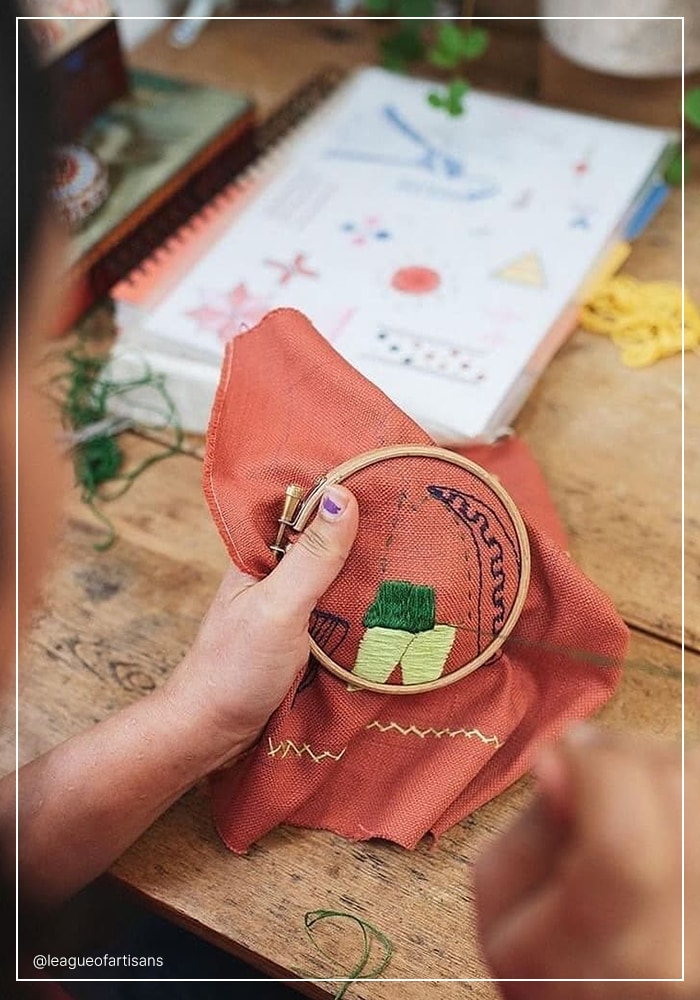
- A single Phulkari salwar kameez can take over 80 days to complete by hand
- The darning stitch is worked on the reverse side — the beauty blooms only on the front.
- Over 52 distinct types of Phulkari were once practised across Punjab.
- No two pieces are identical — designs come from the maker's memory, never a pattern.
- The narrower the stitch, the finer and more valuable the piece.
- The Philadelphia Museum of Art holds a permanent Phulkari exhibition
A Language Woven in Silk
Different types of Phulkari were made for different occasions and life events — each carrying its own ritual weight. Understanding these varieties is to understand the full emotional range of Punjabi womanhood:
Bagh: The most elaborate form — embroidery so dense that not an inch of the base fabric is visible. Like a blooming garden. Reserved for the most joyous of occasions.
Chope: Stitched by a maternal grandmother as a gift for her granddaughter's wedding. A labour of love that could span years — and a lifetime of blessings.
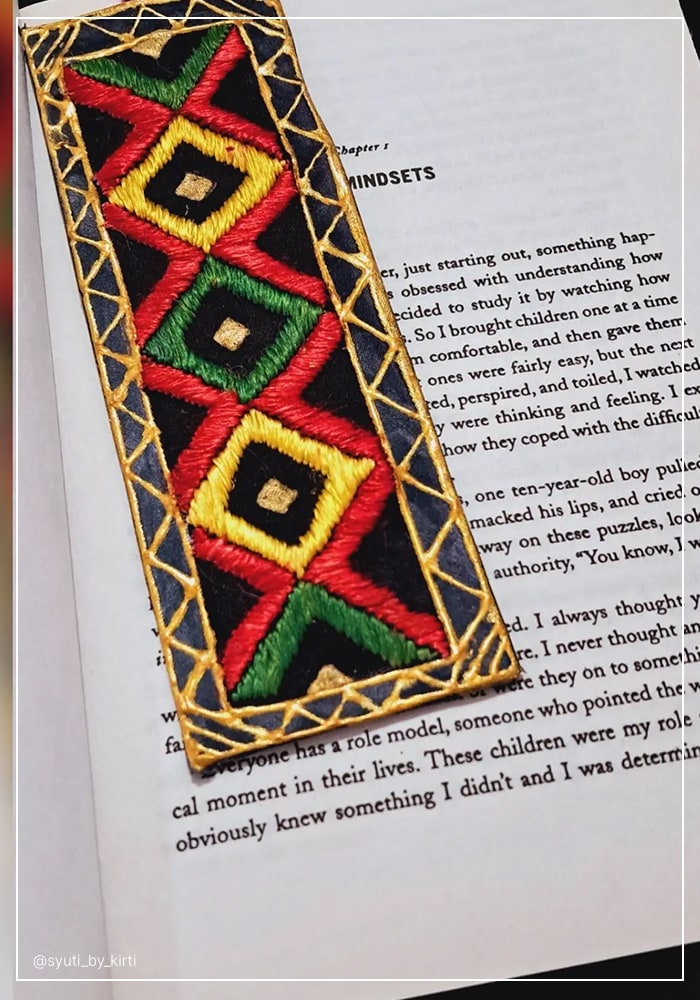
Vari-da-Bagh: Worked in lustrous golden thread on red cloth. Presented to a bride by her in-laws as a symbol of welcome and wealth.
Sainchi: Narrative embroidery depicting scenes from daily village life — animals, people, tools. A storybook in silk thread.
Darshan Dwar: Architectural motifs meant as offerings to gurudwaras. Sacred textiles where craft becomes devotion.
From Village Courtyards to Couture
For most of its history, Phulkari was never made to be sold. It was made to be given — presented at weddings, draped over brides, gifted between women. It was never made for commercialisation. Fabricated for familial customary obligations, Phulkari became famous mainly by word of mouth.
That changed dramatically in the late 20th and early 21st centuries, as India's fashion establishment turned its gaze toward its own heritage with newfound urgency. Some modern fashion designers began incorporating Phulkari embroidery into their designs, and its use has spread beyond traditional salwar kameez and dupatta to accessories like jackets, handbags, cushion covers, shoes, juttis, and children's clothes.
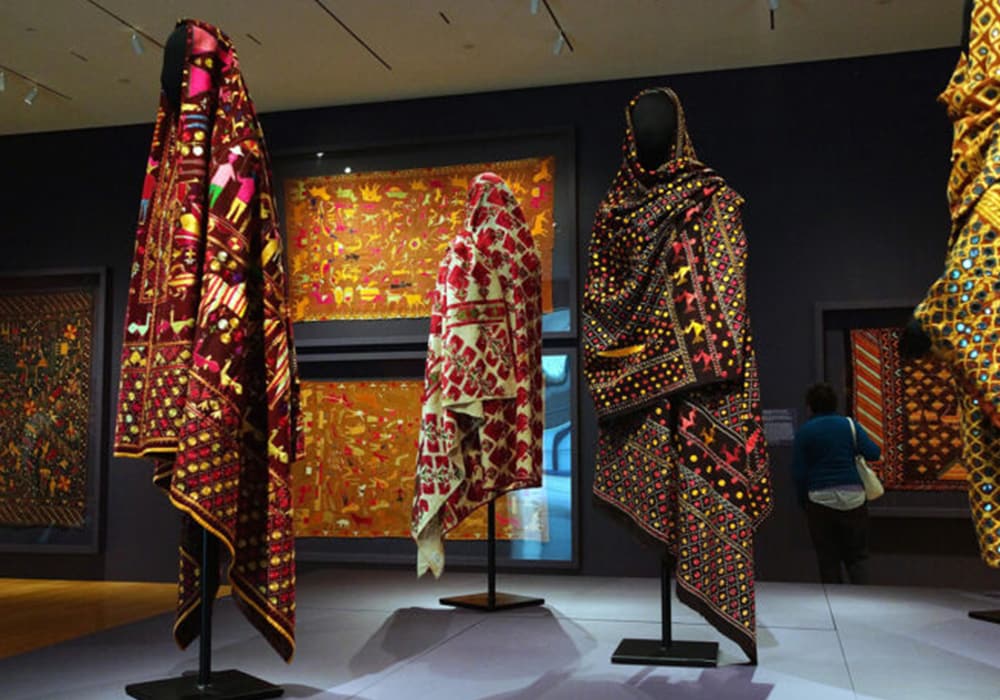
Jumpsuits, jackets, and tote bags now lend a fashion-ethnic flair to Phulkari, making it a global rage. Phulkari motifs are even being incorporated on juttis, belts, and ornaments — marrying the old with new trends. For brides, Phulkari-embroidered lehengas and dupattas have become an ornate attraction at weddings.
"The embroidery form became more or less extinct. Nobody promoted these." — Jasleen Dhamija, Handloom & Handicraft Traditions Expert
That neglect is firmly in the past. Today, Phulkari appears on international runways, in museum galleries, and at the hearts of bridal collections by India's finest designers. It has advanced from being a purely local art form to earning a spot in the couture collections of eminent fashion designers — adorning kurtis, jackets, sarees, and bandhgalas in addition to shawls.
Celebrities Who Made Phulkari the Ultimate Heritage Statement
From red carpets to wedding festivities, Phulkari has found devoted admirers among some of India’s most celebrated style icons. Each appearance reinforces how this centuries-old embroidery continues to thrive in modern wardrobes.
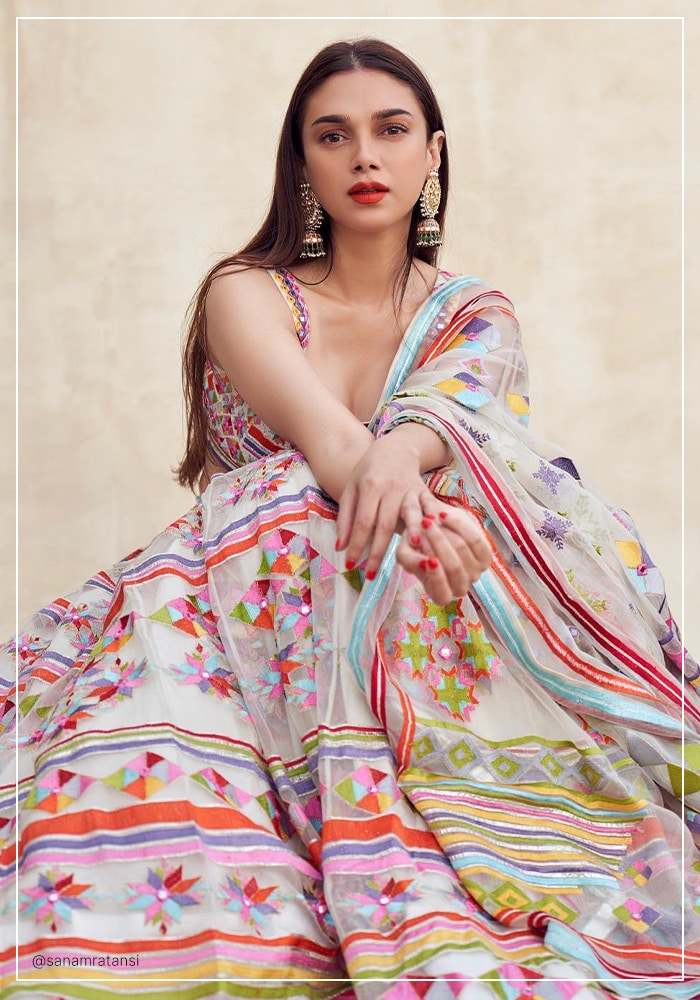
Aditi Rao Hydari — Regal Romance in Phulkari
Aditi Rao Hydari embraced the romance of heritage dressing in a regal Phulkari lehenga. Her look proved that traditional embroidery can feel effortlessly timeless, bringing together old-world craftsmanship with her signature graceful elegance.
Rakul Preet Singh — Festive Punjabi Joy
Sikh Punjabi beauty Rakul Preet Singh wowed in her vibrant orange and pink Mehendi attire, richly detailed with intricate Phulkari motifs. The colourful embroidery echoed the joyful spirit of Punjabi celebrations, making it a perfect choice for festive wedding moments.


Madhuri Dixit — Couture Craft Meets Classic Glamour
Madhuri Dixit stunned in a Tarun Tahiliani Spring Summer 2024 Phulkari-inspired saree, featuring intricate gota, mirror work, and sequins. Paired with a matching blouse, the ensemble beautifully blended vintage craft traditions with couture finesse—making Phulkari feel both nostalgic and runway-ready.
Preity Zinta — Heritage Pride on the Field
Even beyond red carpets, Phulkari continues to carry emotional significance. Preity Zinta was spotted proudly wearing a Phulkari dupatta while cheering for her IPL team, Punjab Kings, showing how this traditional embroidery remains deeply tied to regional pride and everyday expression.


Natasha Poonawalla — Phulkari on the Global Stage
Natasha Poonawalla took Phulkari to international spotlight moments at The Hope Gala in London, hosted by Alia Bhatt. She wore a custom three-piece lehenga and jacket set by Manish Malhotra, crafted over 3,800 hours to complete the intricate embroidery from Punjab. Malhotra’s Phulkari creations have also been celebrated globally at the Philadelphia Museum and the NMACC exhibit, further cementing the craft’s global appeal.
Designers Taking Phulkari Into the Future
While celebrities have helped spotlight Phulkari on global stages, it is visionary designers who have ensured the craft continues to evolve while staying rooted in tradition.
Manish Malhotra — Phulkari on the Global Couture Map
Manish Malhotra has played a significant role in bringing Phulkari into the world of high couture. Known for his glamorous aesthetic, he has reimagined the embroidery through opulent lehengas, jackets, and statement ensembles that celebrate Punjab’s heritage with contemporary flair. His Phulkari creations have been showcased globally, including at prestigious spaces like the Philadelphia Museum of Art and the NMACC exhibit, helping position the craft as an international symbol of Indian luxury.
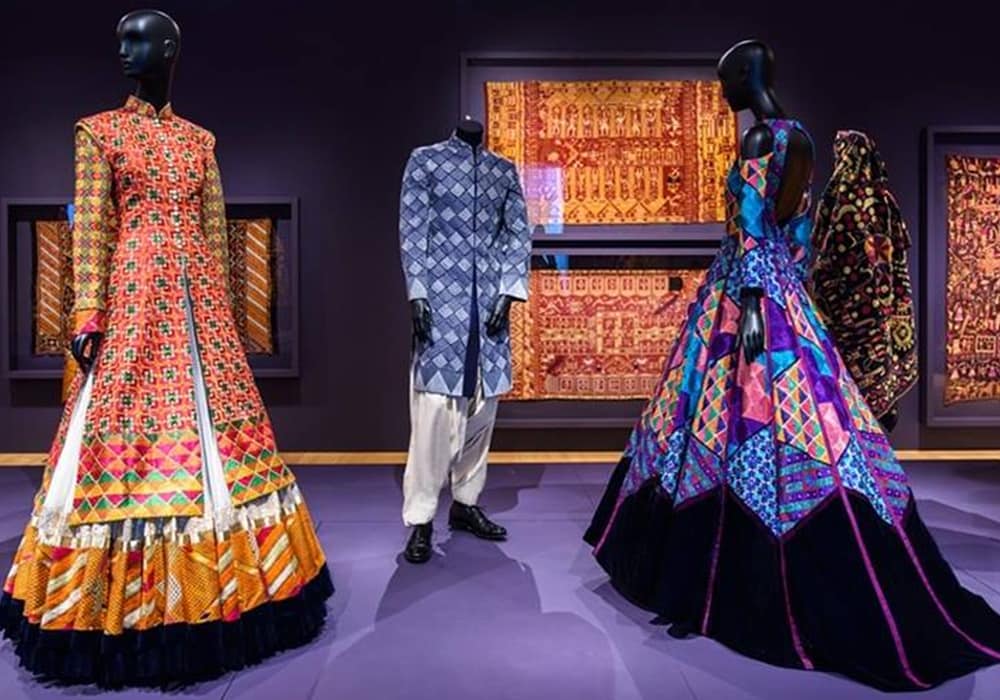
Tarun Tahiliani — Heritage Craft Meets Modern Silhouettes
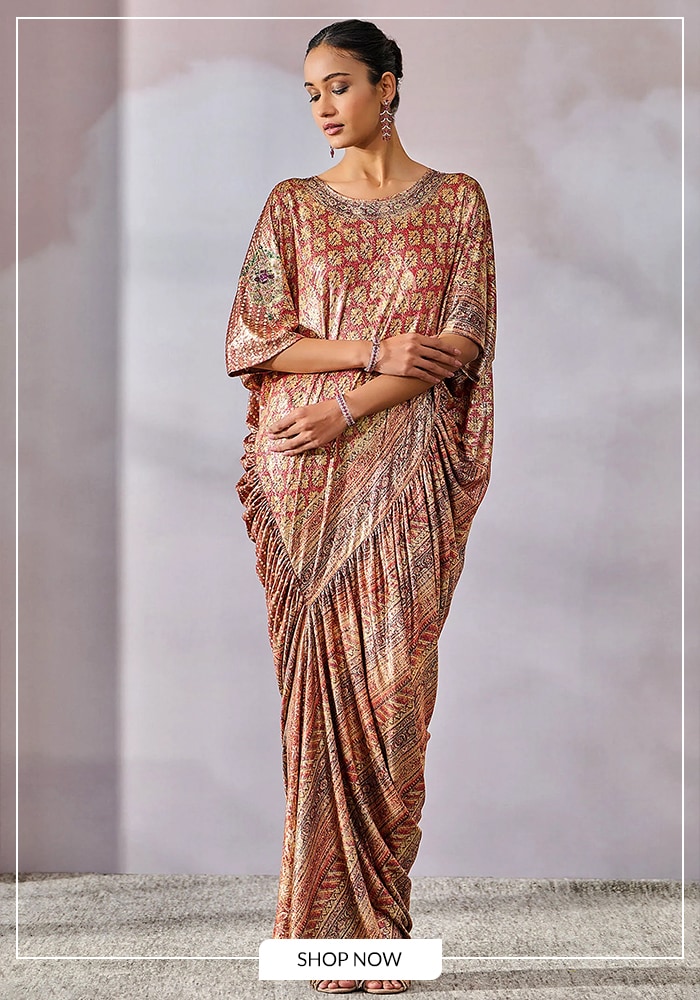
Tarun Tahiliani has approached Phulkari with his signature blend of structure and fluidity. By incorporating Phulkari-inspired motifs into sarees, bridal lehengas, kaftans, and draped ensembles, he has made the craft feel effortlessly relevant to the modern Indian woman. His designs often combine traditional embroidery with contemporary cuts, allowing Phulkari to move seamlessly from ceremonial wear to refined couture dressing.
Ritu Kumar — Reviving Tradition With Timeless Elegance
Ritu Kumar has long been a pioneer in reviving India’s traditional crafts, and her work with Phulkari has been instrumental in preserving its authenticity. She has consistently highlighted the beauty of handcrafted embroidery through understated yet elegant silhouettes that honour the craft’s origins. By bringing Phulkari into luxury fashion decades ago, she helped transform it from a regional tradition into a nationally and globally appreciated textile art.
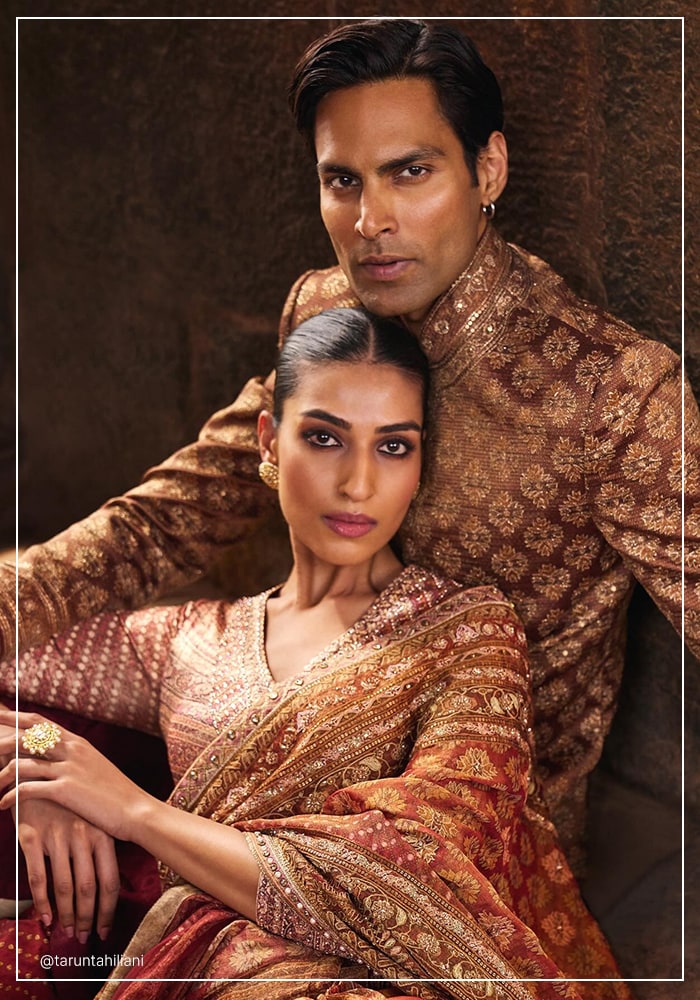
Our Handpicked Phulkari Favourites
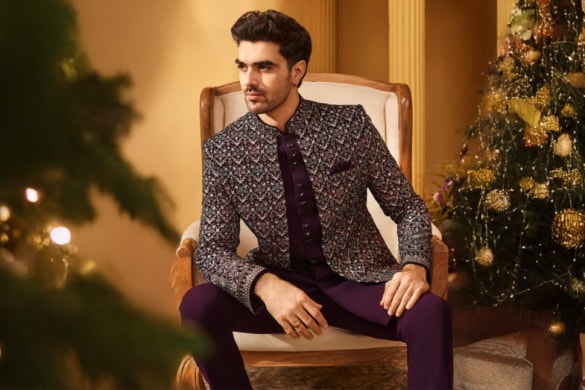
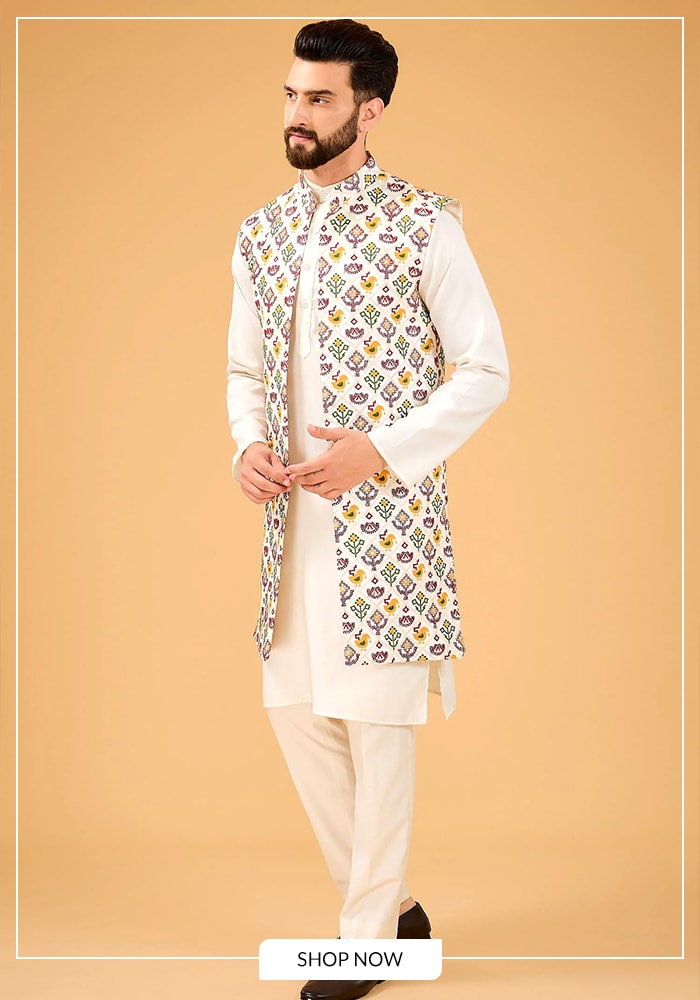
Phulkari Embroidered Nehru Jacket
A structured Nehru silhouette brought to life with hand-Phulkari embroidery. The jacket that turns any outfit into a statement — festive or otherwise.
Phulkari Phool Sharara Set
The sharara reimagined in Phulkari's joyful vocabulary. Wide-legged, richly embroidered, and unmistakably festive — this is the set the season demands.

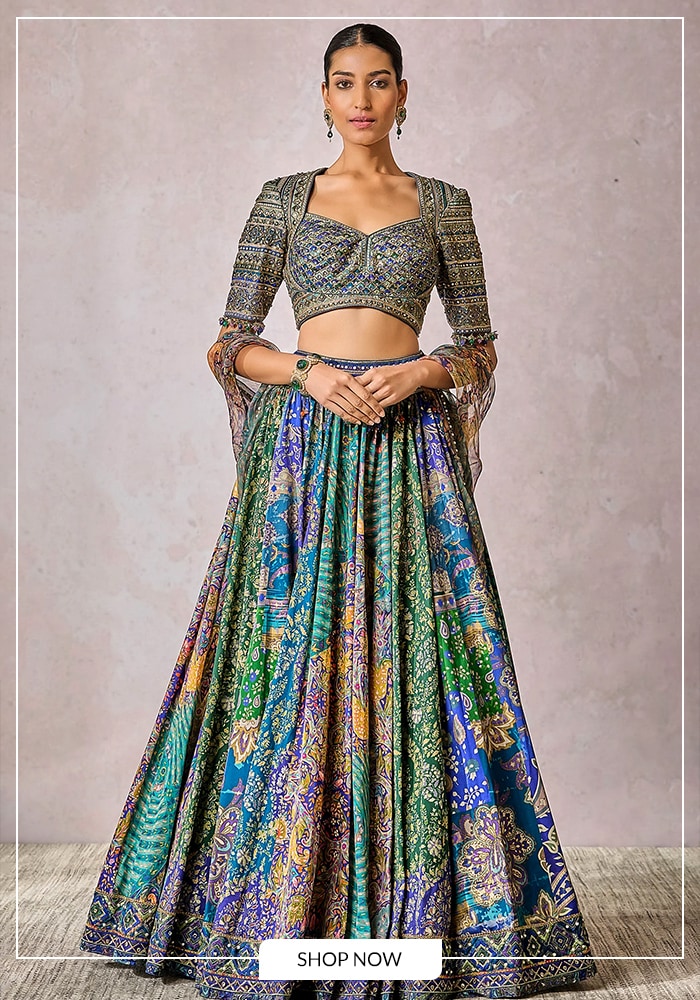
Phulkari Print Bridal Lehenga Set
Tarun Tahiliani brings his signature refinement to the Phulkari print. A bridal lehenga that carries centuries of Punjab's most beloved art form into its most important occasion.
Phulkari Print Draped Panelled Kaftan
Fluid, free, and gloriously printed. This kaftan takes Phulkari's vibrant geometry into resort-wear territory — proof that the art form belongs everywhere.