Arunachal Pradesh literally translates to the "land of the dawn-lit mountains." As the easternmost state in India, it is the very first place in the country to greet the morning sun. Beyond its breathtaking landscapes, this state holds an incredible treasure trove of textile heritage. Overflowing with vibrant colors and diverse ethnic groups, the region boasts fashion traditions that remain brilliantly untouched by fleeting modern trends.

The people of Arunachal Pradesh take immense pride in their ancestral crafts. For generations, they have passed down the meticulous arts of weaving, natural dyeing, and jewelry making. Because of its unique geographical location, the local clothing styles also reflect beautiful influences from neighboring Tibet and Bhutan.
Understanding these traditional garments gives you a profound appreciation for India's incredible diversity. In this guide, we will explore the vibrant tribal attire of Arunachal Pradesh. We will look at unique handwoven textiles like Mishmi and Apatani, and uncover the deep cultural significance behind their accessories. Finally, we will show you how modern platforms like Aza Fashions celebrate these indigenous roots in contemporary luxury wear.
The Cultural Tapestry of Tribal Attire
Arunachal Pradesh is home to dozens of distinct tribes, each with its own rich set of customs. This diversity translates directly into their clothing. The garments act as a visual language, communicating a person's tribe, social standing, and marital status.
The tribes weave their clothing using natural materials sourced directly from their lush surroundings. You will frequently see garments crafted from goat hair, tree bark, cotton, and local wool. They favor deep, striking colors that mirror the natural world. Scarlet red, rich emerald, bright yellow, and deep black dominate their traditional color palettes.
These garments are not just for show. The thick materials provide essential warmth for communities living at higher altitudes, proving that true fashion perfectly marries function and beauty.
Traditional Clothing for Women
The women of Arunachal Pradesh wear clothing that is both practical and exceptionally elegant. While each tribe features unique variations, you can spot several common threads across the region.
Women typically wear a sleeveless chemise as a base layer. Over this, they layer a beautifully embroidered full-sleeved jacket. A thick, woven skirt or petticoat completes the lower half of the outfit. For tribes like the Adi, Mishmi, and Apatani, geometric patterns heavily dominate these garments. These angular designs represent the celebratory nature of the community and their deep respect for ancient traditions.
No traditional outfit is truly complete without a "mushaik," a specifically designed tribal waistcoat. To add a final touch of regional elegance, women often wear a "gurdam." This unique skull cap features yak hair detailing, highlighting the community's connection to local wildlife and high-altitude living.
Traditional Clothing for Men
The traditional attire for men in Arunachal Pradesh balances simplicity with striking tribal markers. Men generally wear functional garments like woven shirts, heavy cloaks, and tailored jackets.
However, fashion serves as a strict marker of hierarchy and tribal identity among the men. For example, men from the Sherdukpan tribe wear luxurious garments woven entirely from silk. In contrast, the Wanchoo tribe uses fashion to denote leadership. Only members of the Chief’s family have the right to wear a specific blue band around their arms and legs.
Headgear also plays a massive role in men's fashion. Depending on the tribe, men wear elaborate hats crafted from cane, bamboo, animal tusks, or vibrant bird feathers. These natural accessories command respect and immediately identify the wearer's community.
The Master Weavers: Mishmi and Apatani Textiles
Weaving is the primary occupation for many women across the state. They craft textiles that easily rival the complexity of modern machine-made fabrics. Two of the most prominent textile traditions come from the Mishmi and Apatani tribes.
The Bold Patterns of Mishmi
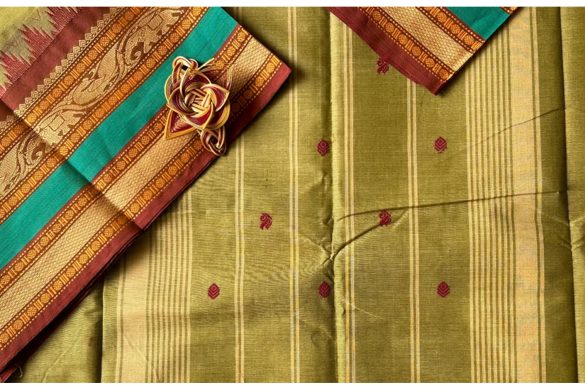
The Idu Mishmi sub-tribe creates some of the most recognizable textiles in the region. Using primarily cotton and wool, the weavers create elaborate, high-contrast designs. Mishmi fabric prominently features red, black, and blue colors woven into sharp geometric grids, diamonds, and intricate angular shapes.
The community uses this striking textile for almost everything. Women tailor Mishmi fabric into skirts, shirts, heavy shawls, and coats. They even use it to create functional accessories like woven bags, purses, and headbands.
The Sustainable Craft of Apatani
The Apatani tribe resides primarily in the Ziro Valley. They are famous across India for their highly sustainable social forestry systems. Amazingly, they apply this exact same eco-friendly philosophy to their weaving. The Apatani women rely heavily on leaves and native plant-based resources to naturally dye their yarn.
They weave this naturally colored yarn into beautiful traditional garments for weddings and massive cultural festivals like Dree and Myoko. The most famous Apatani creations include intricate shawls known as "jig-jagro" and beautifully tailored jackets called "supuntarii."
The Power of Jewelry and Accessories
In Arunachal Pradesh, jewelry does much more than simply add sparkle to an outfit. Every accessory carries immense cultural weight and tells a story about the wearer.
Belts are an absolutely essential component of women's traditional dress. Women wear them daily and during major ceremonies. The local communities view the belt as a direct symbol of a woman’s social and marital status.
Silver acts as the primary metal for both men and women. Artisans craft heavy silver necklaces, earrings, and bracelets featuring deeply etched tribal motifs. During weddings, families bring out highly sacred accessories. The bride often wears an ornate headgear called a "Koktung" and carries a ceremonial sword known as a "DoomoiChe" to symbolize strength and protection.
Celebrating Indian Heritage with Modern Style
The remarkable textiles of Arunachal Pradesh remind us of India's unmatched artisanal wealth. While traditional tribal garments remain sacred to their specific regions, the bold geometric patterns, natural dyes, and intricate silver jewelry continue to inspire the broader Indian fashion industry.
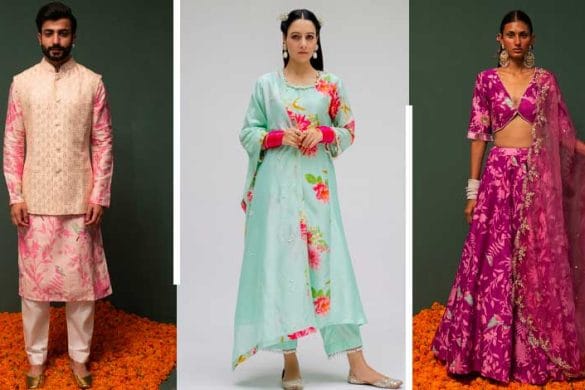
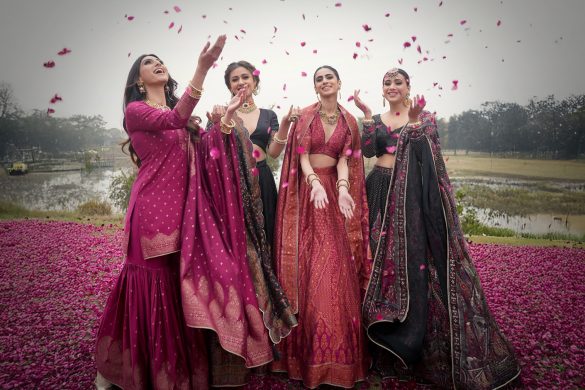
At Aza Fashions, we celebrate the deep roots of Indian textile heritage. We believe that true luxury lies in authentic craftsmanship. While we bring you the latest in contemporary ethnic wear, our curated collections consistently pay homage to traditional Indian weaving and embroidery techniques.
Many of our featured designers draw direct inspiration from indigenous crafts. You can find modern lehengas, chic jackets, and draped sarees that feature the sharp geometric motifs native to northeast India. Our platform also hosts an incredible array of oxidized silver jewelry and statement pieces that echo the bold, tribal aesthetics of Arunachal Pradesh.
By blending ancient textile inspiration with modern, wearable silhouettes, Aza Fashions helps keep India's vast cultural heritage alive. We offer you the perfect way to wear a piece of history while looking effortlessly modern.