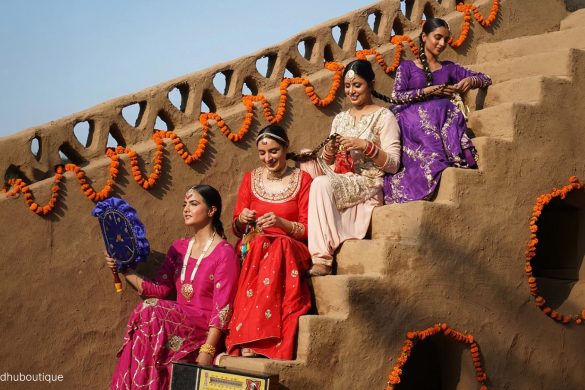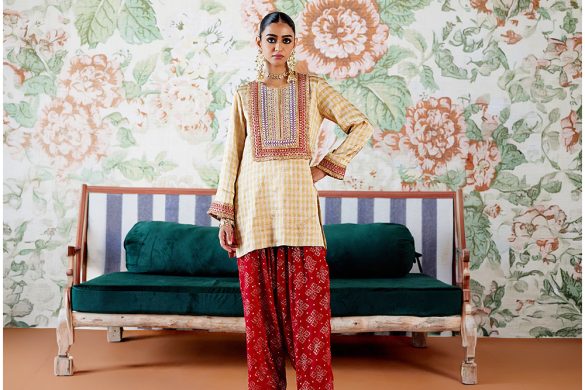


Bandhani is a tie-dye technique that creates small dotted patterns across fabric, while gota patti is an embroidery style using metallic ribbon appliqué to create raised, textured motifs. Together, they define the look of Navratri and garba wear because both hold up through hours of dancing without losing shape or shine. Bandhani works best for base fabric and prints, while gota patti adds structured embellishment on borders, necklines, and hems.
If you've ever wondered why certain garba outfits photograph so well under string lights and still look sharp by the end of the night, the answer usually comes down to these two crafts. Bandhani and gota patti aren't just decorative choices. They're practical ones, developed over generations in Rajasthan and Gujarat specifically for garments that need to move, twirl, and last.
Most Navratri wardrobes lean on one or both of these techniques, whether it's a bandhani-printed dupatta or a gota-trimmed lehenga hem. Knowing what each craft actually is, and where it works best, makes shopping for garba wear a lot less overwhelming.

What Is Bandhani and Why Is It So Common in Garba Wear?
Bandhani is a resist-dyeing technique where small sections of fabric are tightly tied before dyeing, creating tiny dot patterns once the ties are removed. The word comes from the Sanskrit "bandhan," meaning "to tie." Traditionally practiced in Gujarat and Rajasthan, bandhani is one of the oldest textile crafts still widely used in festive Indian wear today.
The reason bandhani shows up so often in garba outfits comes down to two things: color and movement. The dyeing process produces bold, saturated colors that read well from a distance, which matters when you're dancing under lights. And because bandhani is typically done on lightweight cotton or georgette, the fabric drapes and swings easily, which is exactly what you want during hours of dandiya and garba steps.
You'll usually find bandhani in three places on a garba outfit: the main fabric of a lehenga or saree, a dupatta, or as a printed accent on a kurta set.
What Is Gota Patti and How Is It Different From Bandhani?
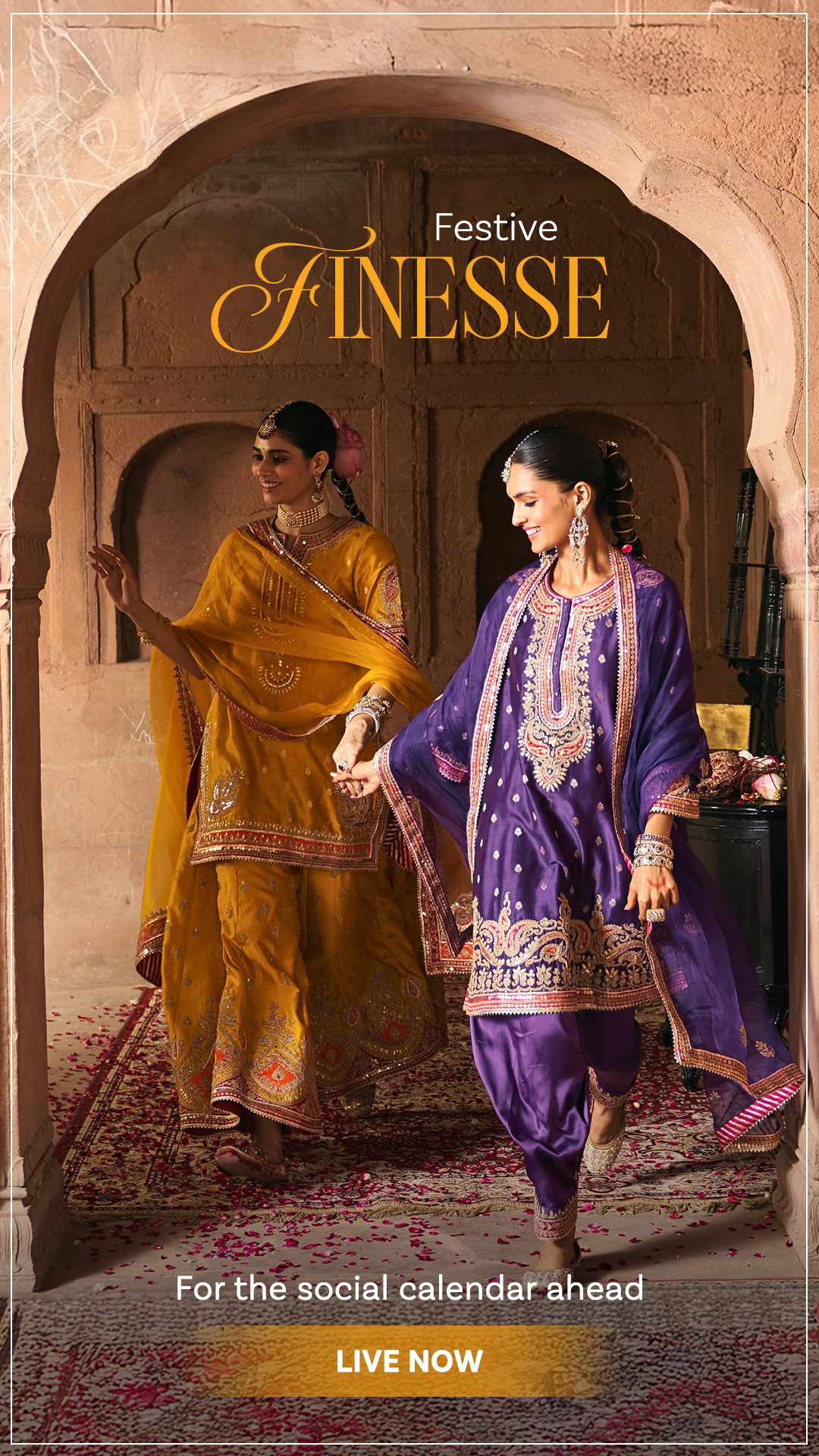
Gota patti is an embroidery technique that uses metallic ribbon, usually gold or silver, folded and stitched onto fabric to create raised, textured motifs. Unlike bandhani, which is a dyeing process applied to the entire fabric, gota patti is an embellishment technique applied to specific areas like borders, necklines, sleeves, and hems.
Originally from Rajasthan, gota patti was historically used in royal and bridal wear because of its rich, metallic finish. That same finish is why it's become a garba wear staple. It catches light beautifully, which matters a lot at night events, and it adds structure to lighter fabrics without weighing them down.
Gota patti is common on lehengas, anarkalis, and sharara or gharara sets, usually along the hemline, sleeve edges, or as a border on a dupatta.
Can Bandhani and Gota Patti Be Combined in One Outfit?
Yes, and this combination is one of the most popular choices for Navratri wear. A common pairing is a bandhani-printed base fabric with gota patti detailing along the border or hemline. This gives you the color and pattern of bandhani with the added texture and shine of gota work, without either craft overwhelming the outfit.
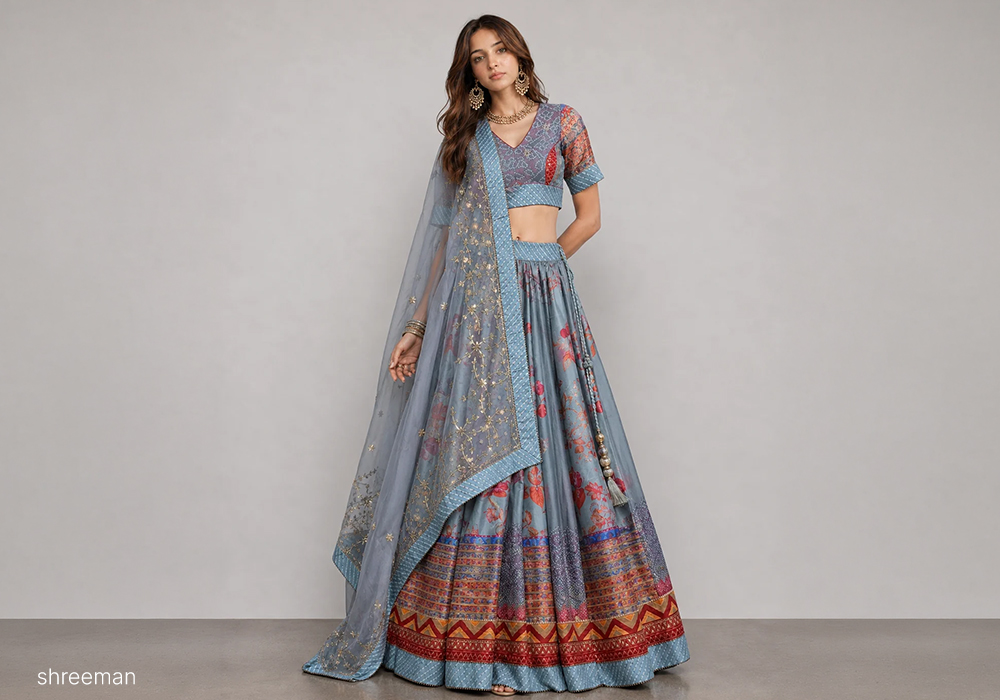
This combination works especially well on lehengas, where the bandhani print covers the flared skirt and gota patti trims the edges or blouse. It also shows up on saree borders, where a solid bandhani drape gets finished with a gota patti trim for added definition.
If you're picking one outfit for the whole nine nights, this combination tends to offer the most versatility since it works for both daytime pujas and nighttime garba sessions.
Which One Works Better for Dancing: Bandhani or Gota Patti?
Bandhani fabric is generally lighter and more breathable, since it's usually done on cotton or georgette, which makes it a strong choice for anyone dancing for extended periods. Gota patti, while beautiful, adds a bit of weight and structure depending on how much embroidery is used, so heavily embellished pieces can feel warmer or stiffer over a full night.
Choose a bandhani-heavy outfit if you're prioritizing comfort and movement for garba and dandiya. Choose a piece with moderate gota patti detailing, concentrated on borders and hems rather than the entire garment, if you want a festive look that still holds up through hours of dancing.
A kurta set with a bandhani print and light gota trim on the sleeves is a good middle ground for anyone who wants both crafts without the added weight of full embroidery.
What Should You Look for When Buying Bandhani or Gota Patti Outfits?
For bandhani, check that the dye pattern looks evenly distributed and the dots are clearly defined rather than blurred, which usually signals better craftsmanship. For gota patti, look at how securely the ribbon is stitched down. Loose threads or ribbon edges that lift away from the fabric tend to fray faster, especially with movement.
If you're shopping for a full Navratri look, lehengas and sharara sets with bandhani printing paired with gota trim tend to offer the best balance of durability and festive detail. Pair either with oxidised jewellery, since the matte, textured finish complements both the dyed pattern of bandhani and the metallic shine of gota work without competing with either.
Ready to Shop Bandhani and Gota Patti Pieces for Navratri?
Bandhani and gota patti aren't competing styles. They're two crafts that were developed to solve the same problem: how do you dress for hours of festive dancing while still looking your best. Bandhani brings the color and movement, gota patti brings the shine and structure, and together they cover most of what you'd want from a garba outfit.
Browse the festive shop for Navratri-ready pieces, or explore lehengas, sarees, and anarkalis featuring both crafts.
Frequently Asked Questions
What's the difference between bandhani and gota patti?
Bandhani is a tie-dye technique that creates a dotted fabric pattern through dyeing, while gota patti is an embroidery technique using metallic ribbon to add texture and shine to specific areas of a garment.
Is bandhani or gota patti better for dancing at garba?
Bandhani tends to be lighter and more breathable, making it easier to dance in for long periods. Gota patti adds weight depending on how much embroidery is used, so lighter detailing works best for movement-heavy events.
Can bandhani and gota patti be worn together?
Yes, this is one of the most common combinations for Navratri wear. A bandhani-printed base with gota patti detailing on the borders or hem is a popular choice for lehengas and sarees.
What outfits typically feature gota patti work?
Gota patti commonly appears on lehengas, anarkalis, and sharara or gharara sets, usually along hemlines, sleeve edges, or dupatta borders.
What jewellery pairs well with bandhani or gota patti outfits?
Oxidised jewellery works well with both crafts, since its matte, textured finish complements the dyed pattern of bandhani and the metallic shine of gota patti without overpowering either.