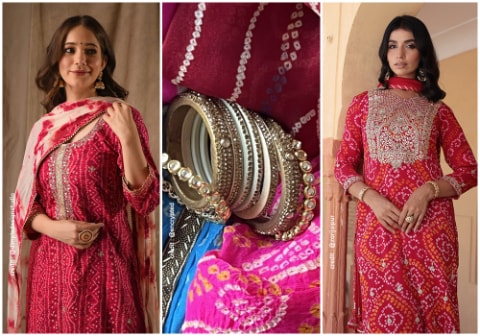
Imagine a fabric that captures the vibrancy of a festive crowd, the serenity of a starry night, and the joy of a spring garden—all within thousands of tiny, colorful dots. This is the magic of Bandhej, also known as Bandhani. It is one of the oldest and most beloved textile arts in India, thriving in the colorful states of Rajasthan and Gujarat.
From the turbans of village elders to the bridal sarees of royalty, Bandhej is more than just a pattern; it is an emotion. It represents a tradition that has survived for over 5,000 years, passed down through generations of skilled artisans who tie tiny knots with immense patience to create breathtaking designs.
In this guide, we will unravel the story of Bandhej, exploring its ancient roots, the painstaking process behind those tiny dots, and how this traditional craft has found a new home on the global fashion stage.
What is Bandhej?
The word "Bandhej" comes from the Hindi and Sanskrit word Bandhan, which means "to tie" or "to bind." As the name suggests, it is a form of resist dyeing.
The concept is simple but the execution is incredibly complex. Artisans pinch tiny sections of fabric and tie them tightly with thread before dipping the cloth into dye. The tied parts resist the color, remaining white (or the base color), while the rest of the fabric absorbs the dye. When the threads are finally opened, a pattern of small dots is revealed against a bright, colorful background.
While it is often grouped under the general umbrella of "tie and dye," Bandhej is distinct because of its fine, dot-like patterns, unlike the broader stripes or swirls seen in other tie-dye techniques like Leheriya or Shibori.
Tracing the Roots: A 5,000-Year-Old Legacy
Bandhej is not a new invention. Historical evidence suggests that this form of tie and dye dates back nearly 5,000 years, making it the oldest tradition of its kind that is still actively practiced.
Ancient Beginnings
The roots of Bandhej can be traced back to the Indus Valley Civilization. Visual representations of dotted fabrics have been found in the famous Ajanta Caves (dating back to the 6th century AD), depicting people wearing bodices and textiles that look remarkably like modern-day Bandhani.
Royal Connections
History books tell us that Bandhej was a favorite among royalty. It is mentioned in the texts of Alexander the Great, who marveled at India’s exquisite printed cottons. Furthermore, historical records like Banabhatta's Harshacharita mention that the first Bandhej saree was worn at a royal wedding, cementing its status as a fabric of celebration and prestige.
The Geography of the Craft
Today, the craft is primarily concentrated in two Indian states:
- Gujarat: specifically in regions like Jamnagar and Kutch.
- Rajasthan: with major hubs in Jaipur, Jodhpur, Sikar, Udaipur, and Bikaner.
Each city and village has its own unique style, color palette, and design vocabulary, making Bandhej a diverse and evolving art form.
Cultural Significance and Symbolism
In India, colors are never just aesthetic choices; they carry deep meaning. Bandhej relies heavily on natural colors, and every hue tells a story.
- Red: This is the most significant color in Bandhej. It symbolizes marriage, love, and fertility. A red Bandhej saree or dupatta is often a staple in a bride's trousseau, believed to bring good fortune and a happy future.
- Yellow: representing spring and joy, yellow Bandhej is often worn to celebrate new beginnings and festivals.
- Saffron: This is the color of the yogi, symbolizing renunciation and spirituality.
- Black and Maroon: Traditionally, these darker shades were associated with mourning or sorrow, though in modern fashion, they are used for their chic and bold appeal.
Beyond colors, the patterns also hold meaning. The diverse communities of Rajasthan and Gujarat often use specific Bandhej designs to identify their caste, community, or social status.
How It Is Made: A Labor of Love
The creation of a single Bandhej garment is a long, collaborative process that involves many hands. It is a perfect example of community-based craftsmanship, often divided by gender, with women handling the intricate tying and men managing the dyeing.
Here is a step-by-step look at how a plain cloth transforms into a masterpiece:
1. Preparation and Bleaching
The process begins with sourcing the fabric. Cotton, silk, georgette, and chiffon are popular choices. Since raw fabric often contains impurities or starch, it is first washed and bleached to ensure it is perfectly white and absorbent. This step is tricky because the artisan must use enough bleach to whiten the cloth without damaging the fibers.
2. Imprinting the Design
Before any tying happens, the design must be mapped out. Artisans use wooden blocks dipped in a fugitive (temporary) dye, often called ujala, to stamp the pattern onto the fabric. These blueprints guide the tiers on where to place their knots. Common motifs include geometric shapes, flowers, birds, and scenes from folklore like the Rasleela.
3. The Tying Process (The Art of the Nakhuna)
This is the most time-consuming and skilled part of the process, traditionally done by women in their homes.
- The artisan pinches a tiny point of fabric designated by the stamped pattern.
- Using a continuous thread, she winds it tightly around the pinched fabric.
- To help lift the fabric quickly and precisely, artisans often wear a metal ring with a pointed spur on their finger, known as a Nakhuna.
The price and value of a Bandhej piece depend entirely on the fineness of these dots. An intricate piece might have thousands of tiny knots, taking weeks to complete.
4. Dyeing
Once the tying is done, the fabric is sent to the dyers (usually men).
- The fabric is dipped in the lightest color first (usually yellow).
- If a multi-colored pattern is needed, the artisan will tie more sections of the fabric after the first dye bath to retain that yellow color, and then dip the cloth into a darker color (like red or green).
- This process of tying and dyeing can be repeated several times to create complex, multi-colored designs.
5. Drying and Unveiling
After the final dye bath, the fabric is washed and left to air dry. This can take anywhere from a few hours to several days depending on the weather.
The final step is the most satisfying. The fabric is pulled to break the threads (or they are carefully untied), revealing the white or colored dots underneath. The result is a crinkled texture—a signature of authentic Bandhej—which disappears only when the garment is ironed.
Design Elements and Patterns
Bandhej is not just about random dots; the arrangement of these dots creates specific names and styles.
- Ekdali: A single dot pattern.
- Boond: A small dot with a dark center.
- Khas-Khas: Very fine dots, resembling poppy seeds.
- Chandrakala: A design inspired by the phases of the moon.
- Shikari: Patterns that depict hunting scenes, featuring animals and figures.
- Bavan Baug: Literally meaning "52 gardens," this is a complex layout featuring different geometric grids or "gardens" of patterns across the saree.
Bandhej Today: Tradition Meets Trend
While Bandhej remains deeply rooted in tradition, it has successfully transitioned into the modern world. It is no longer limited to traditional sarees and turbans.
Modern Adaptations
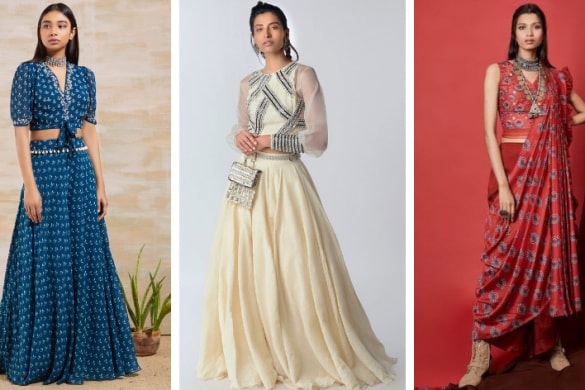
Fashion designers in India and abroad have embraced Bandhej, giving it a contemporary spin. You can now find:
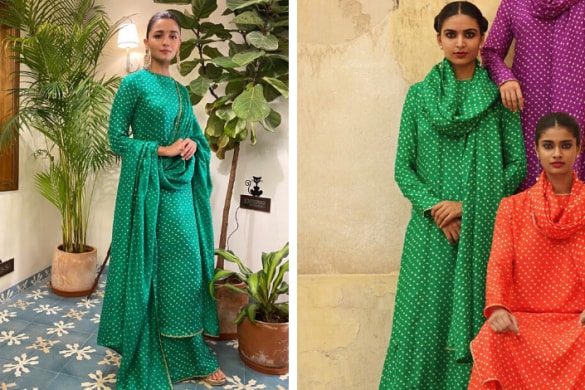
- Western Wear: Bandhej print dresses, crop tops, jumpsuits, and skirts.
- Accessories: Scarves, stoles, bags, and even shoes featuring Bandhani patterns.
- Fusion Styles: Kaftans and cape sets that blend the comfort of modern silhouettes with the tradition of tie-dye.
Economic Importance
The demand for Bandhej provides a vital livelihood for thousands of artisans in rural Rajasthan and Gujarat. While there is a concern about mass-produced, screen-printed imitations flooding the market, the appreciation for authentic, hand-tied Bandhej remains strong among connoisseurs. The intricate handwork is something machines simply cannot replicate perfectly.
Conclusion
Bandhej is a testament to the beauty of patience. In a world of fast fashion and digital prints, there is something profoundly grounding about a fabric where every single dot represents a human touch—a knot tied by hand.
Whether it is a vibrant dupatta that brightens up a simple kurta or a heavy bridal saree passed down as an heirloom, Bandhej carries the spirit of India in its folds.