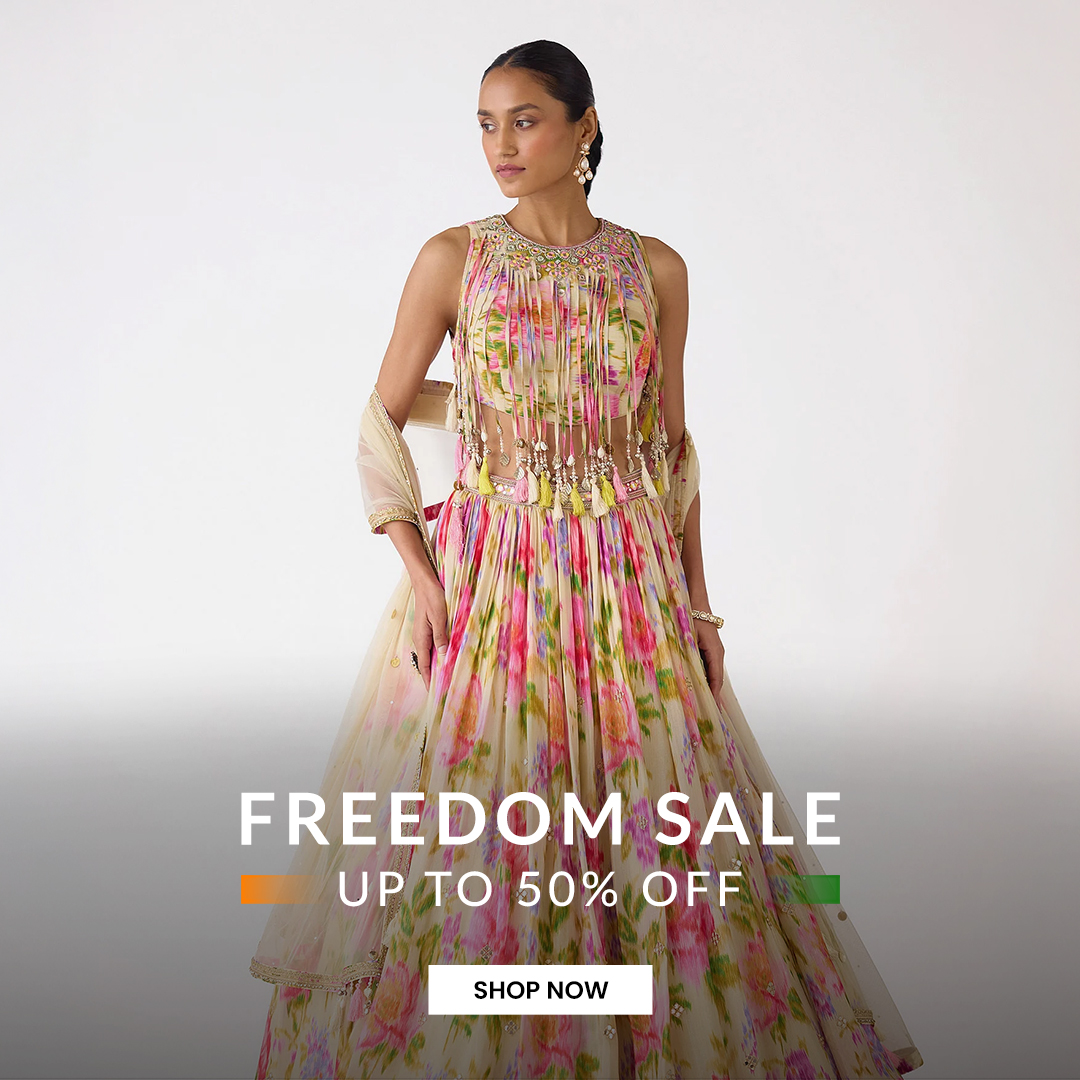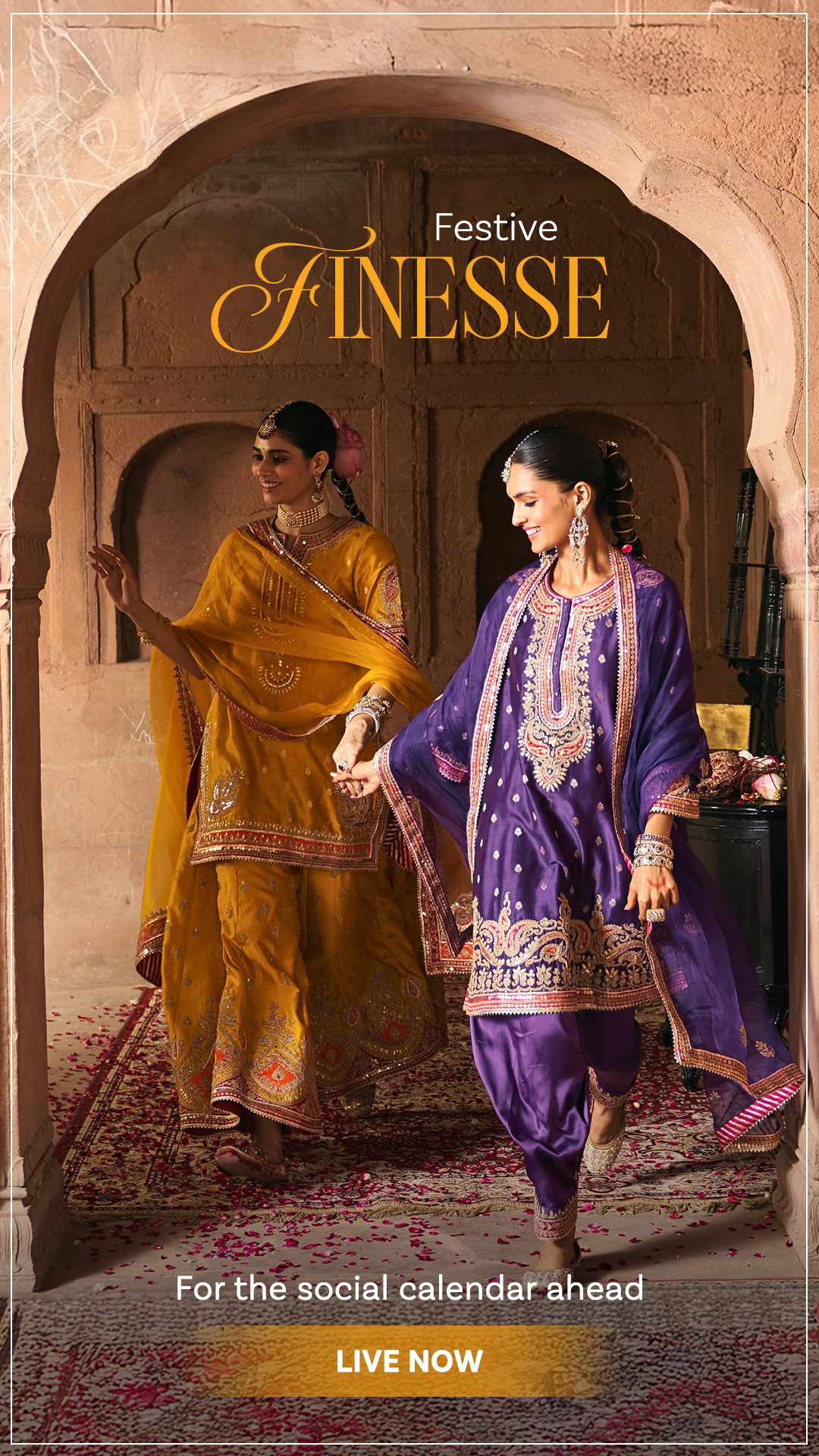
Every wedding season leaves behind a residue, a phrase, a silhouette, a shade that lingers in every trousseau conversation for years after. 2027 is shaping up to be one of those seasons. The bridal wardrobe is moving away from safe, expected choices and toward pieces that argue with tradition a little, a corset laced over a saree, a cape thrown over a lehenga, cutwork so architectural it reads more like sculpture than embroidery. This isn't a rejection of heritage dressing, it's a renegotiation of it. Nine-yard drapes and hand embroidery are still the backbone, but the framing around them — the structure, the sleeve, the shade — is where 2027 is choosing to be loud. Here's what's defining the season.
The Corset Takeover
The blouse is being benched. In its place, the corset has walked straight out of Western eveningwear and into the heart of Indian bridal dressing, and it isn't looking back. What makes this trend so compelling is the tension it creates, a rigid, structured bodice laced tight against the soft, unstructured drape of a saree or the voluminous sweep of an anarkali.
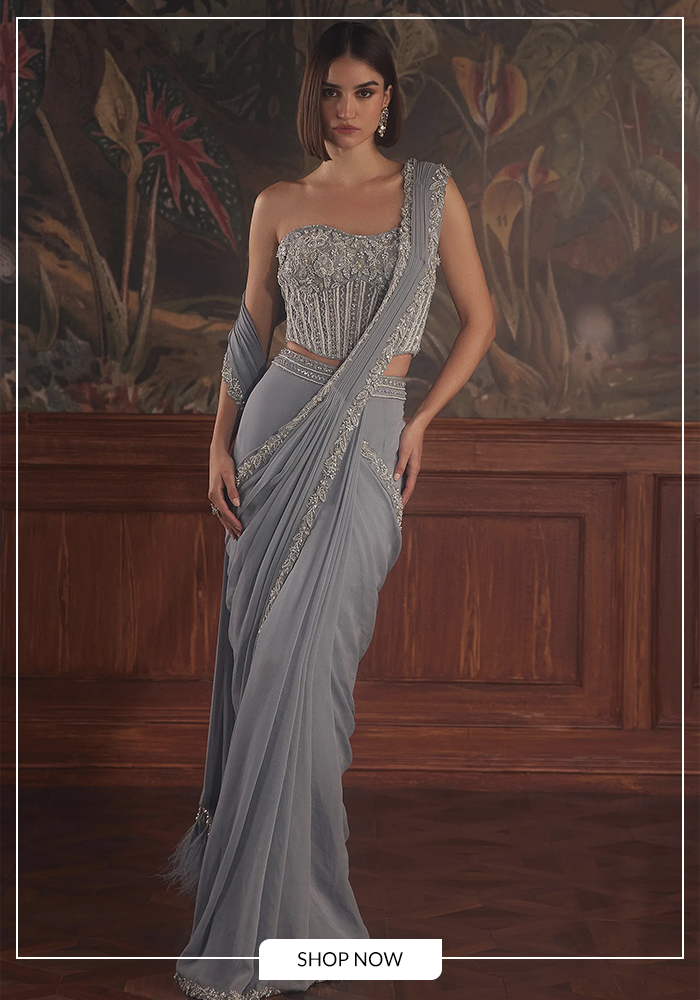
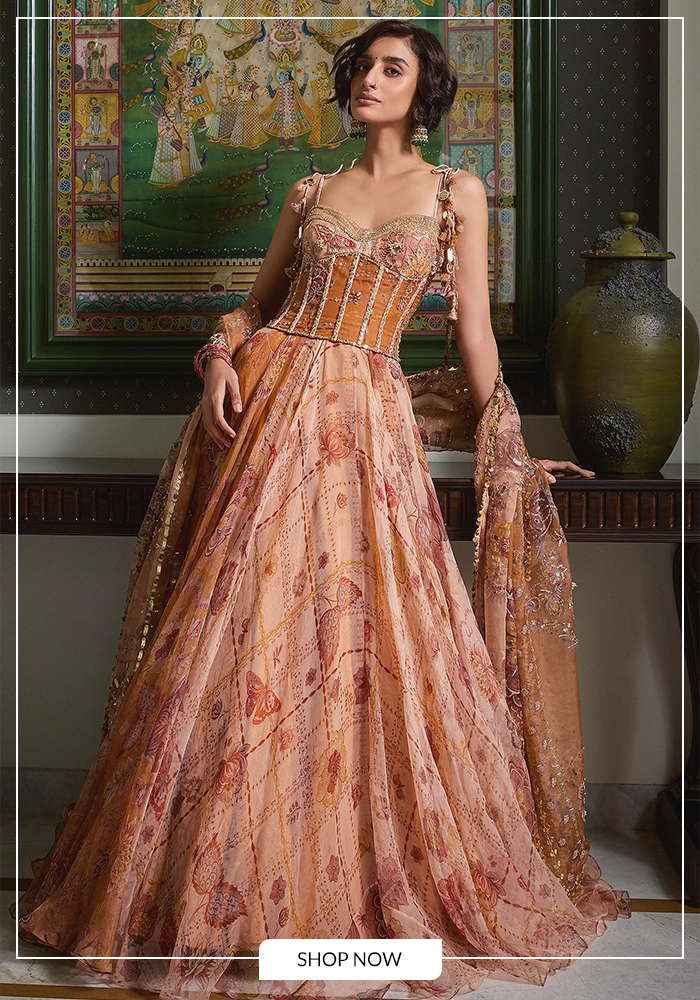
It gives the silhouette an hourglass precision that traditional blouses rarely attempt, and it reads as distinctly modern without sacrificing an ounce of embellishment. Brides gravitating toward this trend are the ones who want their wedding look to feel engineered, not just embroidered.
Short Capes Take Over the Draping Game
The dupatta is being challenged by the cape, and the short cape is winning ground. Draped over lehengas or layered onto sarees, embellished short capes add architecture to an outfit in a way a flat dupatta never could, they move differently, they catch the eye from behind, they give the whole look a sense of occasion the moment the bride turns to walk away.
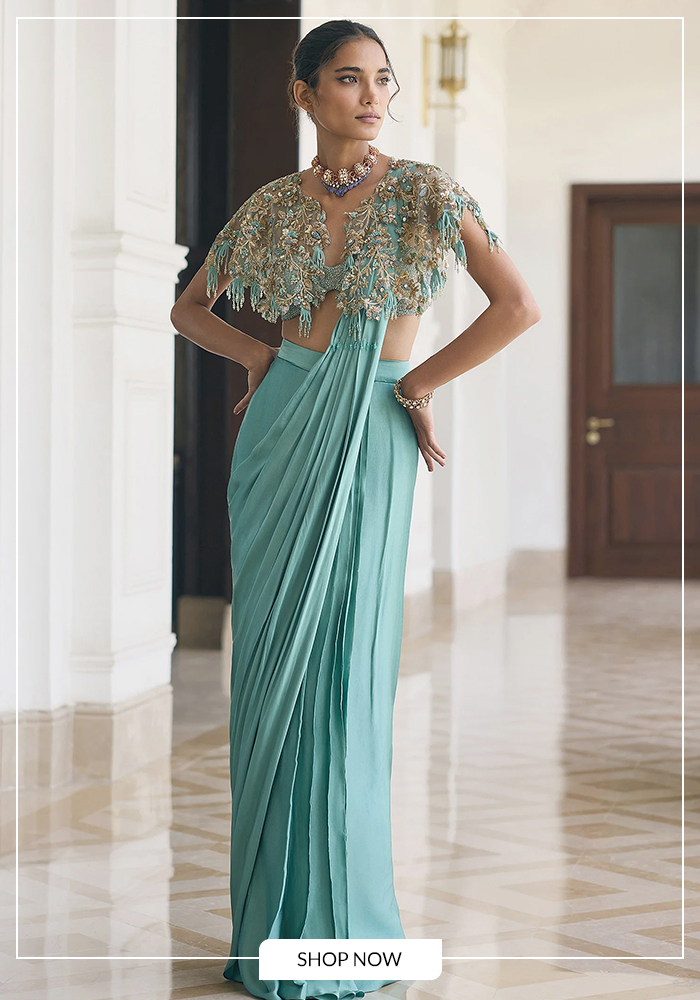
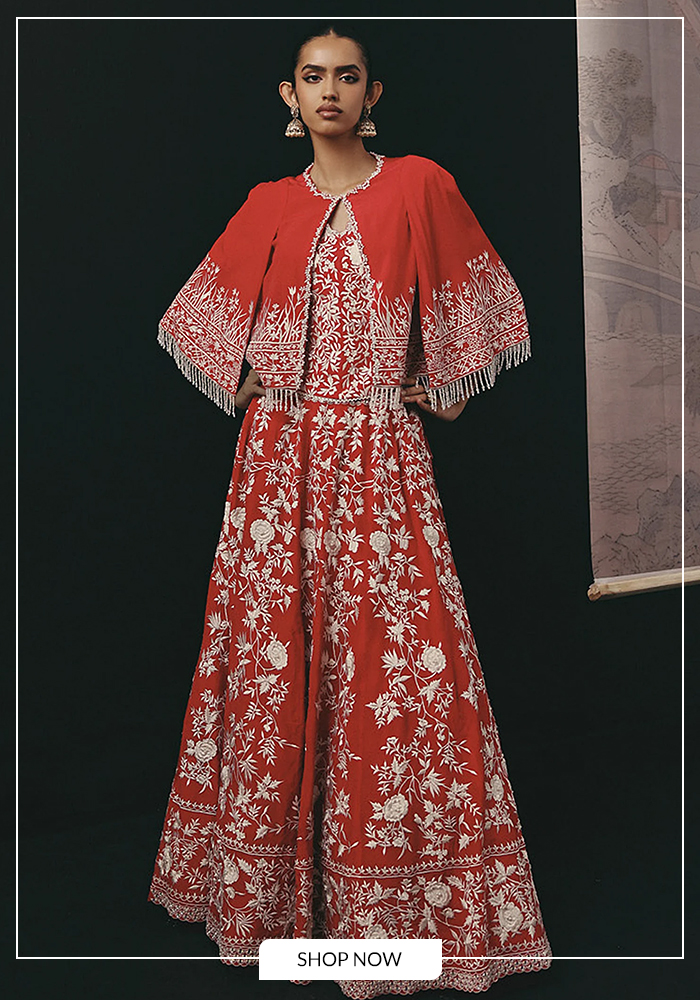
Mirrorwork and Parsi gaara detailing on capes bring in heritage craft, while pre-draped saree-and-cape sets show how easily this silhouette adapts across categories. For 2027, the cape isn't an accessory anymore — it's a second garment doing first-garment work.
The Silk Saree Refuses to Budge
While the rest of the wardrobe experiments with structure and shape, silk sarees are holding their ground exactly as they always have, with the kind of quiet, unshakeable confidence that doesn't need reinvention.
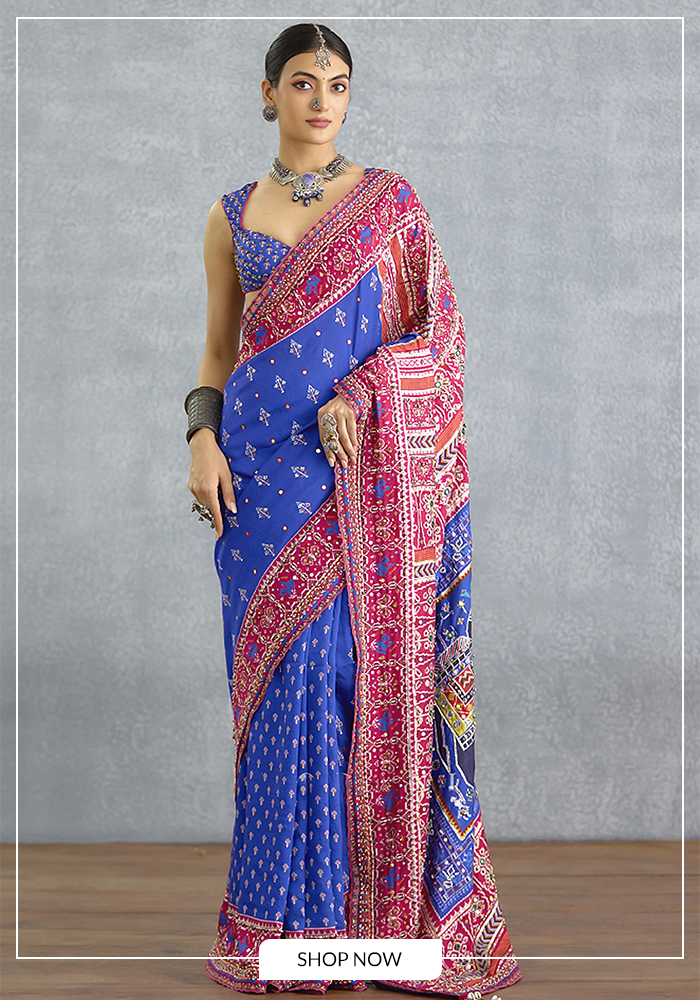
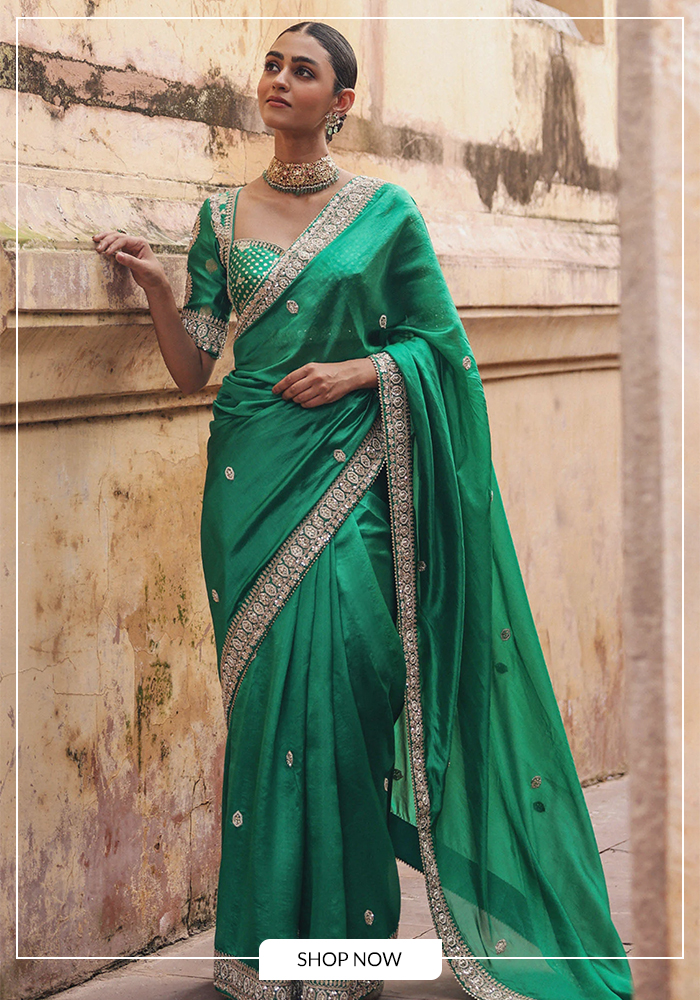
What's evolving is the embroidery layered onto that silk base: dense zari borders, hand-worked motifs that turn the pallu into the focal point, weaves that catch light differently depending on how the drape falls. For 2027, silk isn't a trend so much as a trend-proof constant, the piece every other experiment eventually gets measured against.
The Sleeve Becomes the Statement
Sleeves have stopped being an afterthought. Cape sleeves, structured drama at the shoulder, silhouettes that extend the line of the arm into something sculptural — this is where 2027 brides are choosing to make their loudest style statement. It's a smart pivot, because a dramatic sleeve transforms an outfit's silhouette without touching the embroidery or the palette underneath.
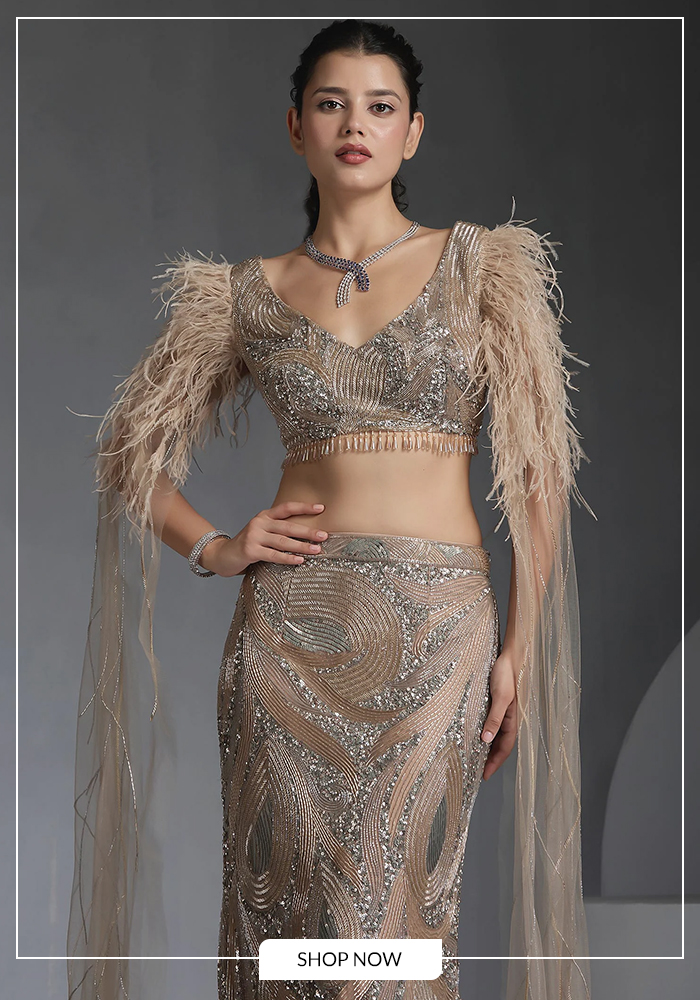
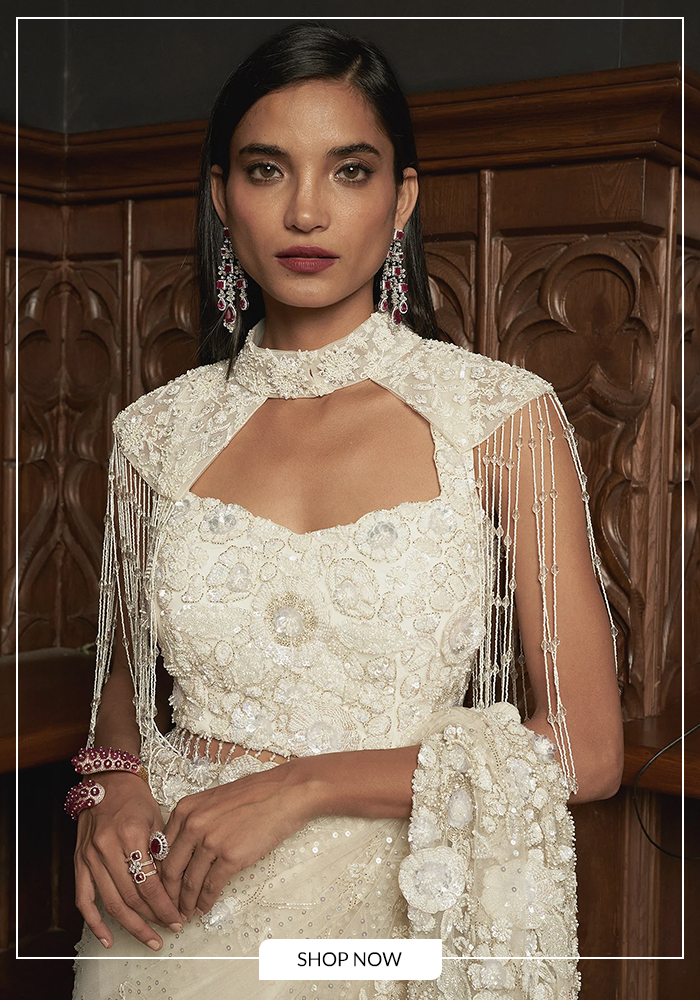
Whether it's a fluid cape-sleeve blouse or a geometric sequinned structure, the message is the same: the shoulder is the new focal point, and it's not being ignored anymore.
When the Blouse Becomes the Jewellery
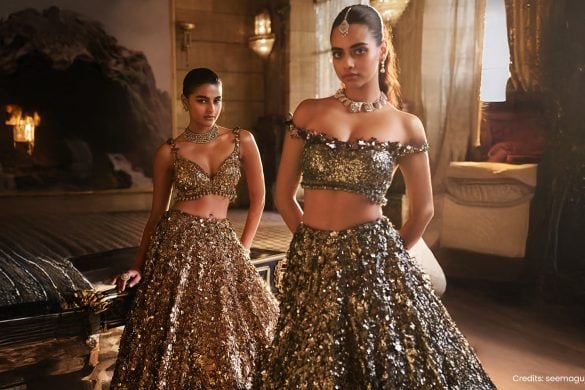
The blouse has quietly become the most jewelled surface in the outfit. Pearls, hand-set stones, and dense bead-work are being used the way a jeweller would use them on a necklace, mapped out in grids, clustered into motifs, built up in relief until the fabric almost disappears beneath the shine.
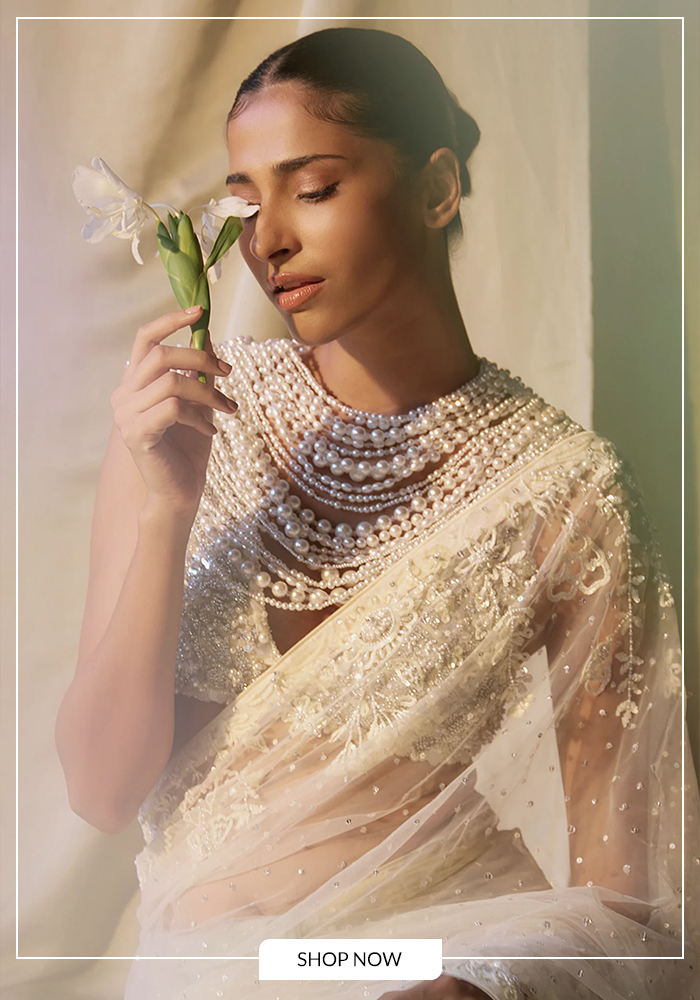
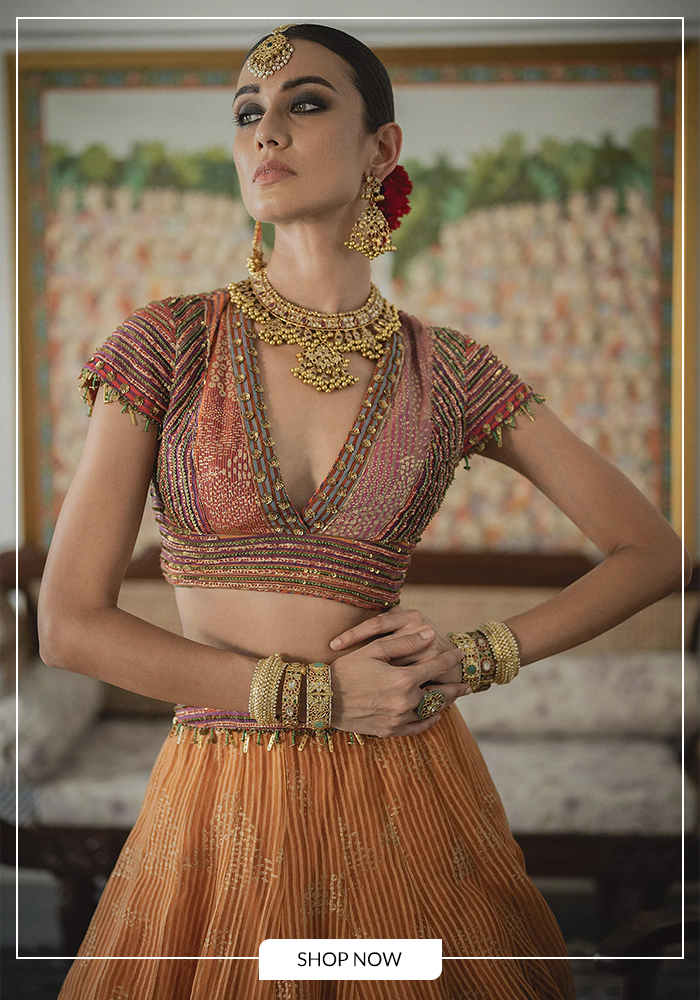
This is embroidery behaving like ornamentation rather than decoration, and it means the blouse no longer plays second fiddle to the drape or the skirt. For 2027, the blouse is the statement piece, and everything else is styled around it.
Red Finds a New Mood
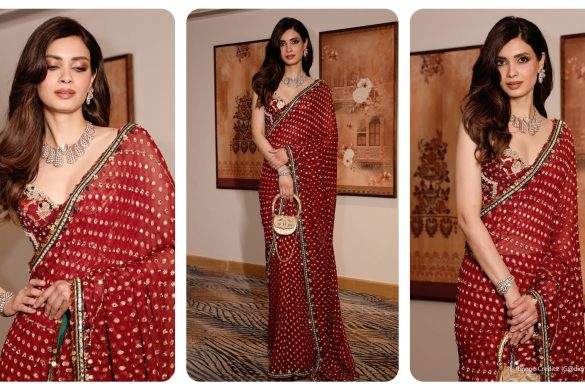
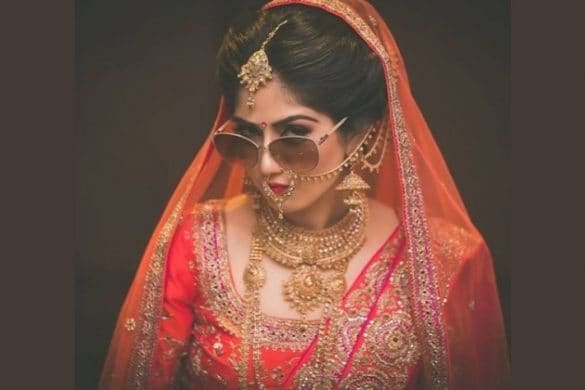
Red has never left the Indian bridal palette, but 2027 is asking it to work harder. This isn't one red anymore, it's a spectrum, moving from deep surkh e laal intensity to warmer, more saturated crimsons, each shade carrying its own mood.
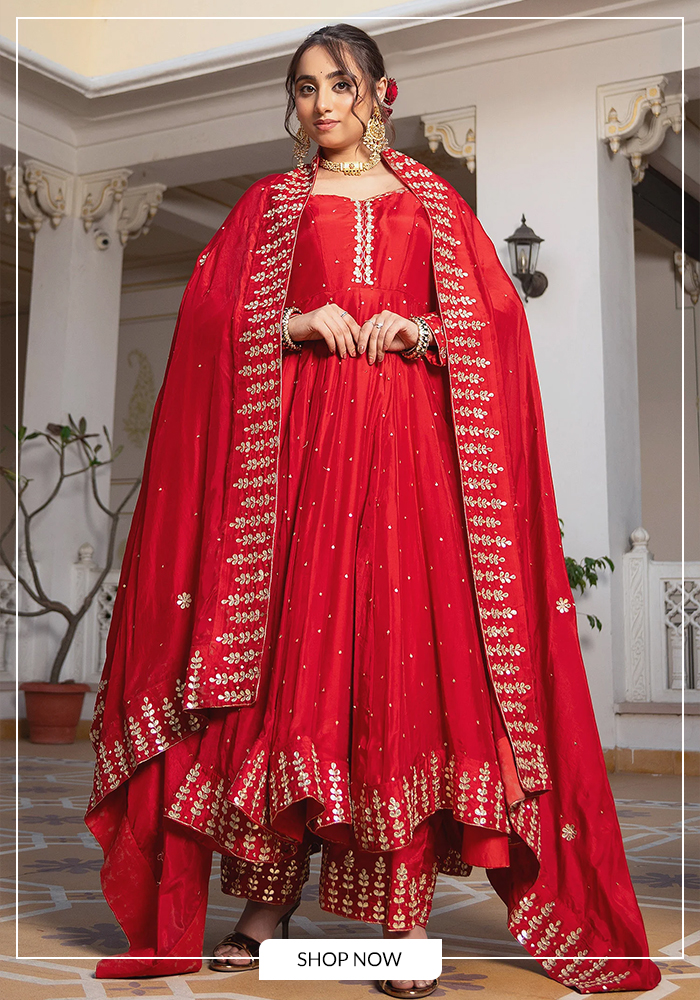
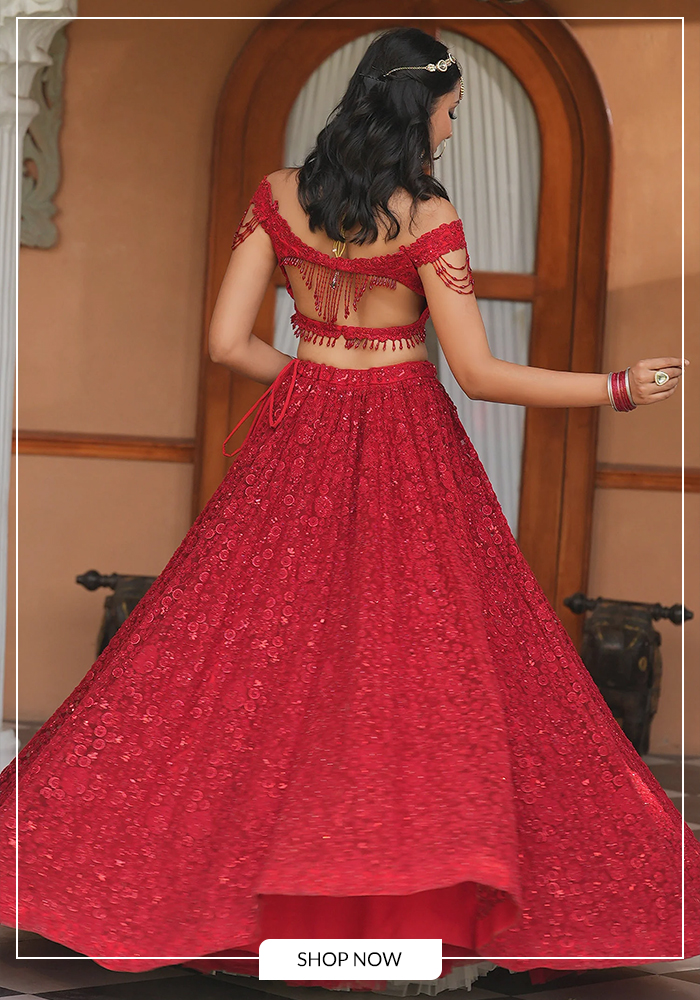
What's changed is how it's being used: red as the base for gota patti and zardozi work that turns the colour into texture, red as the anchor of florals that keep the palette from feeling one-note. It remains the color every trousseau eventually circles back to, but 2027 red comes with more nuance and considerably more range.
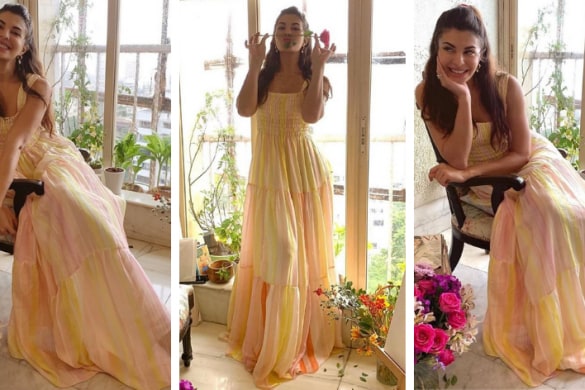
Florals Bloom Beyond the Print
Botanical prints in 2027 aren't decorative filler, they're doing narrative work. Florals are being scaled up, rendered with painterly detail, and placed with intention rather than repeated as an all-over pattern. Think oversized blooms trailing across a lehenga skirt like a garden caught mid-bloom, or delicate sprigs embroidered onto a blouse the way you'd press flowers into a book.
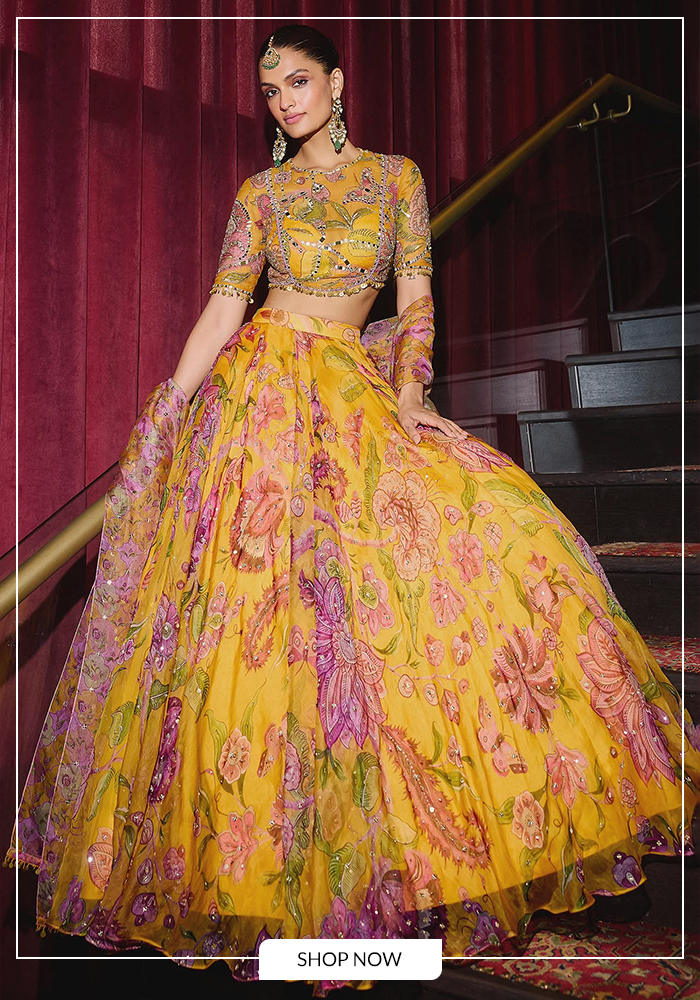
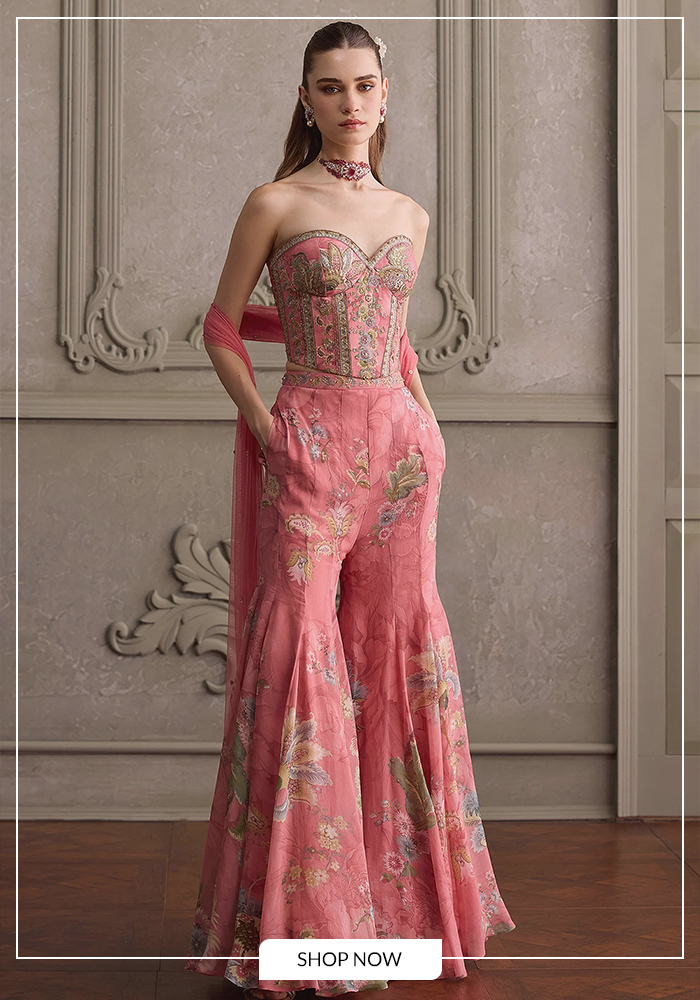
This trend brings softness and romance to occasions that usually default to hard shine and heavy embellishment, and it's proving that print can carry as much weight as embroidery when it's done with restraint.
Cutwork Goes Architectural
Cutwork embroidery is having a moment precisely because it does what most embellishment can't, it removes fabric instead of adding to it. The result is negative space used as deliberately as thread, blouses that look latticed, almost carved, letting skin and shimmer peek through in equal measure.
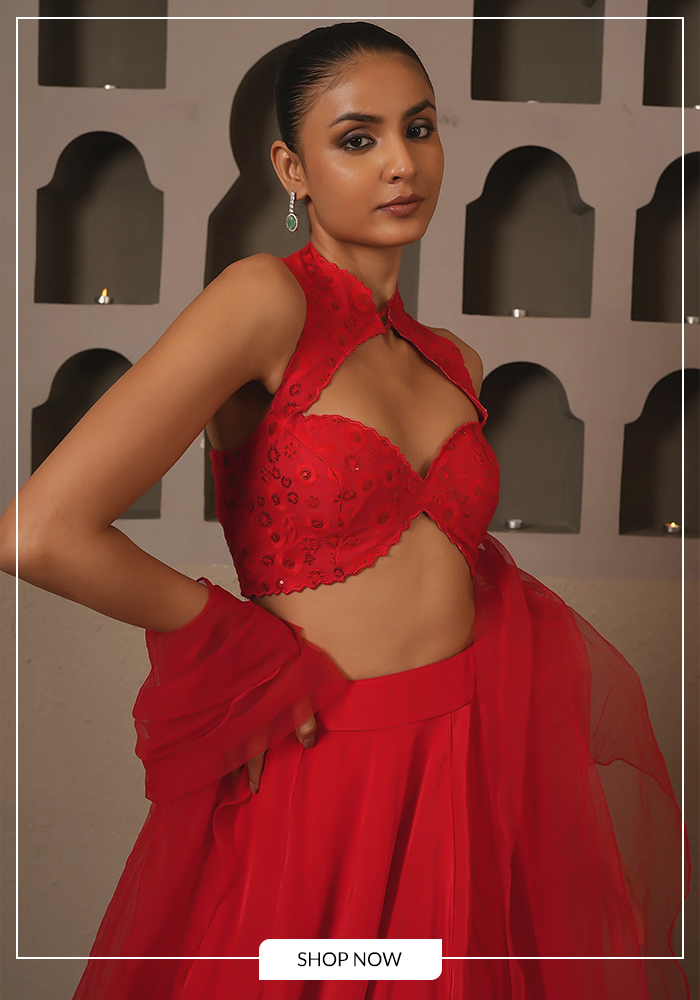
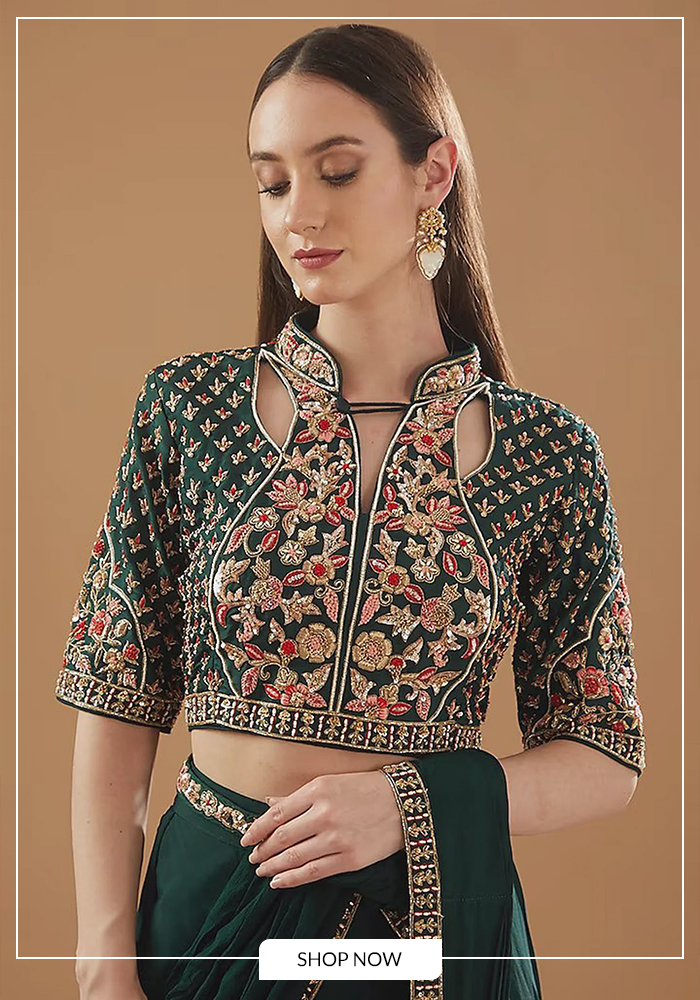
Paired with cutdana work that catches light like scattered crystal, this trend brings a sense of precision engineering to bridalwear. It's intricate without being heavy, ornate without being dense — proof that sometimes the most striking embroidery is the embroidery that isn't there.