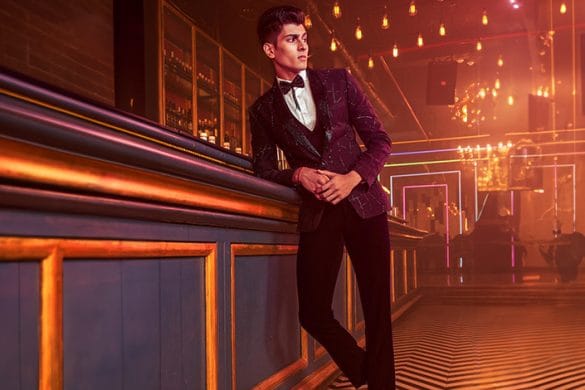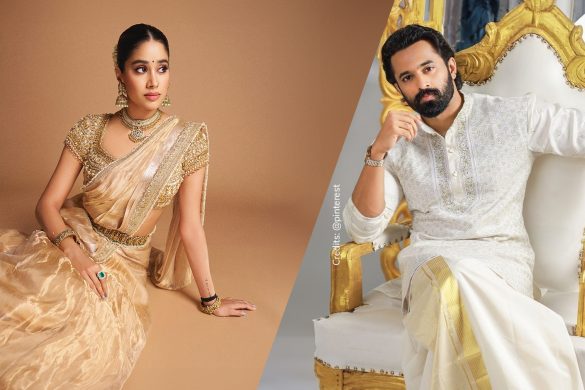
Menswear has always had its classics: the straight kurta, the structured sherwani, the dependable Nehru jacket. But lately, designers are drawing outside those familiar lines. Geometric menswear is bringing angles, grids, prisms, lines and abstract motifs into traditional wardrobes, giving occasion dressing a more contemporary point of view.
The appeal is easy to see. Geometric patterns feel precise without being predictable, statement-making without looking overly loud. Whether worked into embroidery, printed across fabric, built into embellishment or used as a structural detail, they give even the most familiar silhouettes a fresh visual language.
And suddenly, traditional menswear has a few more angles to its personality.
Why Is Menswear Suddenly Seeing Things in Shapes?
For years, menswear relied heavily on florals, paisleys, traditional butis and ornate embroidery. Geometric patterns offer something different: a sense of structure.
Squares, triangles, diamonds, stripes and abstract formations create natural visual movement. They can make a simple kurta feel considered, give a jacket more dimension or turn a classic sherwani into something that feels distinctly now.
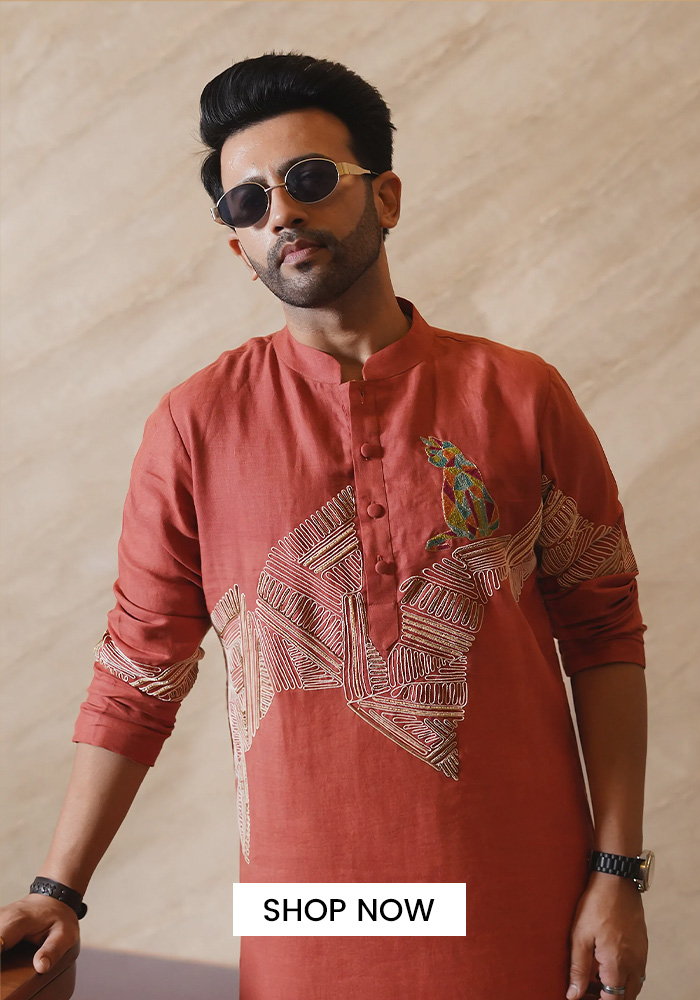
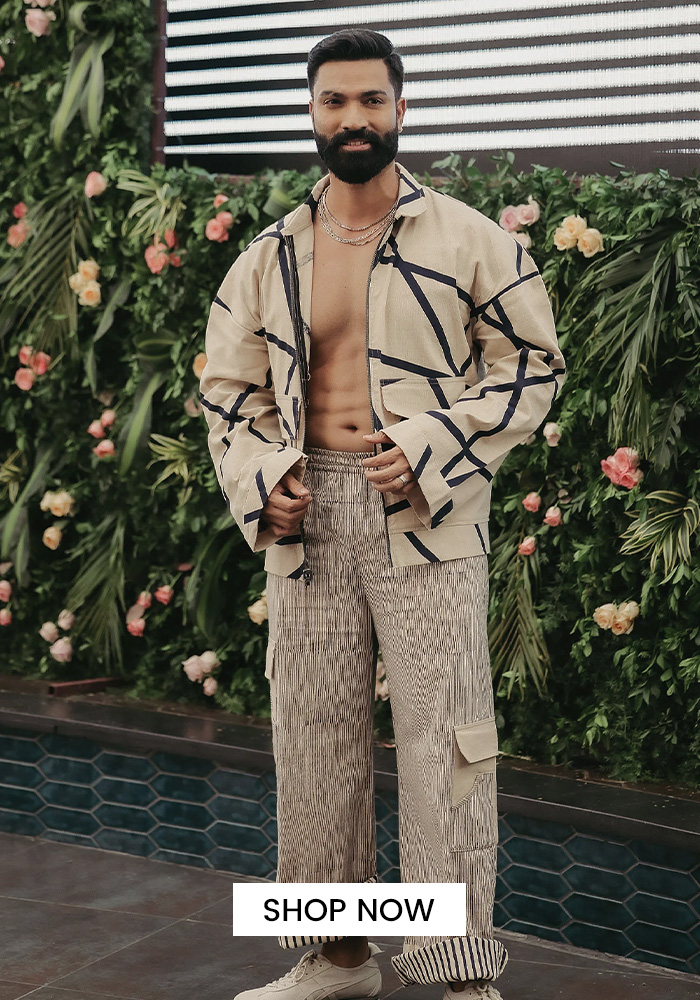
There is also something inherently modern about geometry. Its clean lines and repeated forms lend themselves beautifully to contemporary fashion, while still leaving plenty of room for Indian craftsmanship.
The Straight Line Between Traditional and Contemporary
The beauty of geometric menswear lies in its ability to sit between two worlds.
A traditional silhouette can carry a sharp geometric motif and instantly feel less conventional. Meanwhile, an elaborate embroidered piece can use symmetrical lines or angular patterns to create a cleaner, more polished finish.
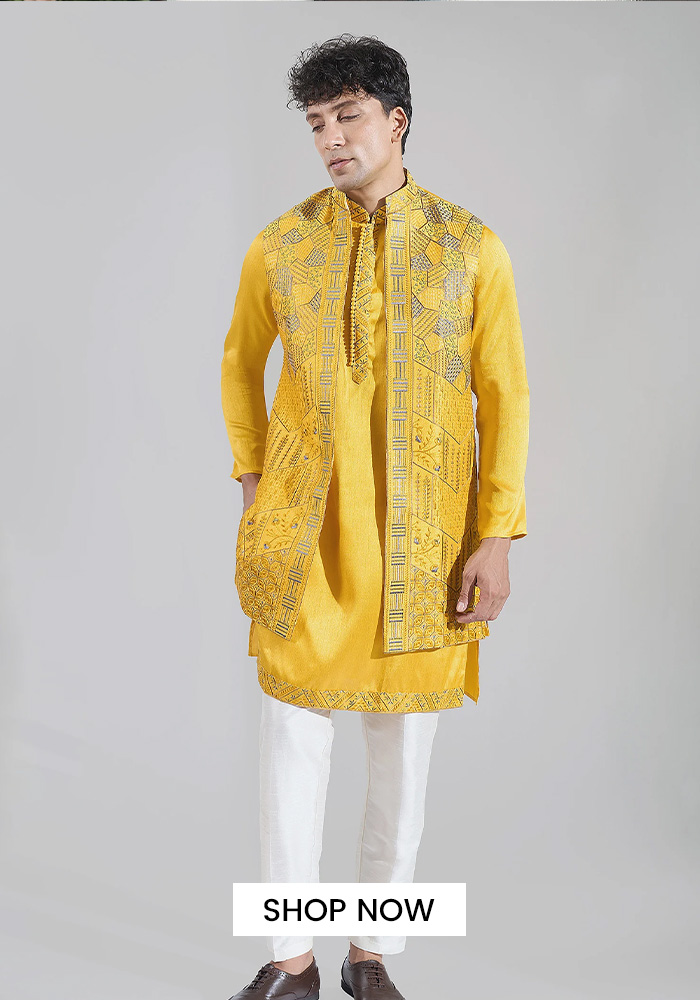
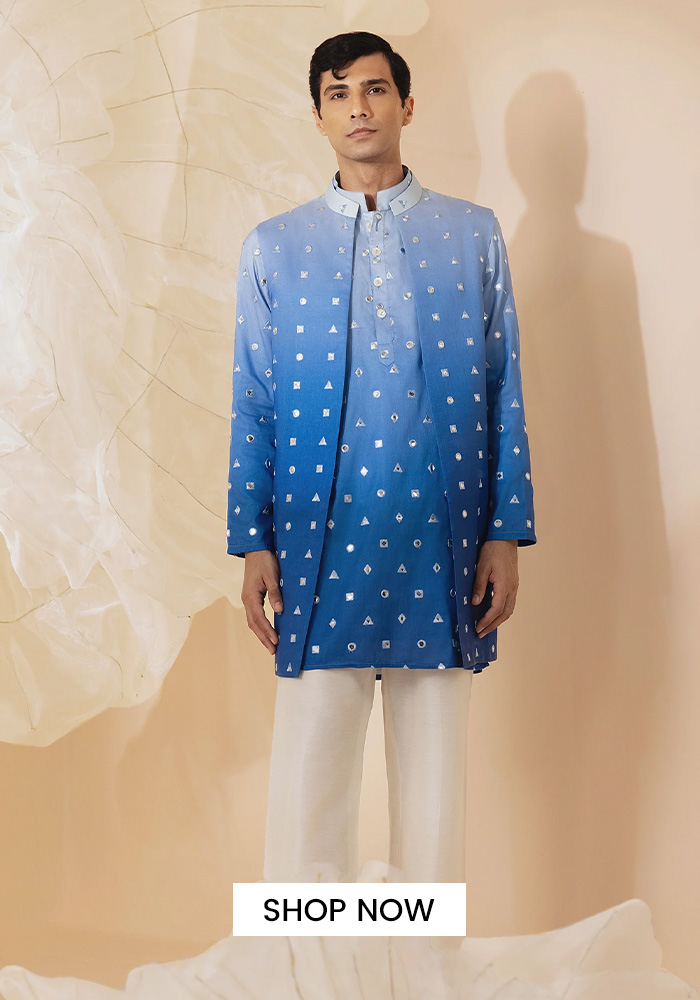
It is heritage dressing with the edges sharpened.
This makes geometric designs particularly interesting for men who want their occasion wardrobe to feel rooted in tradition but not bound by it.
When Embroidery Gets an Architectural Upgrade
Geometry and embroidery make surprisingly good partners.
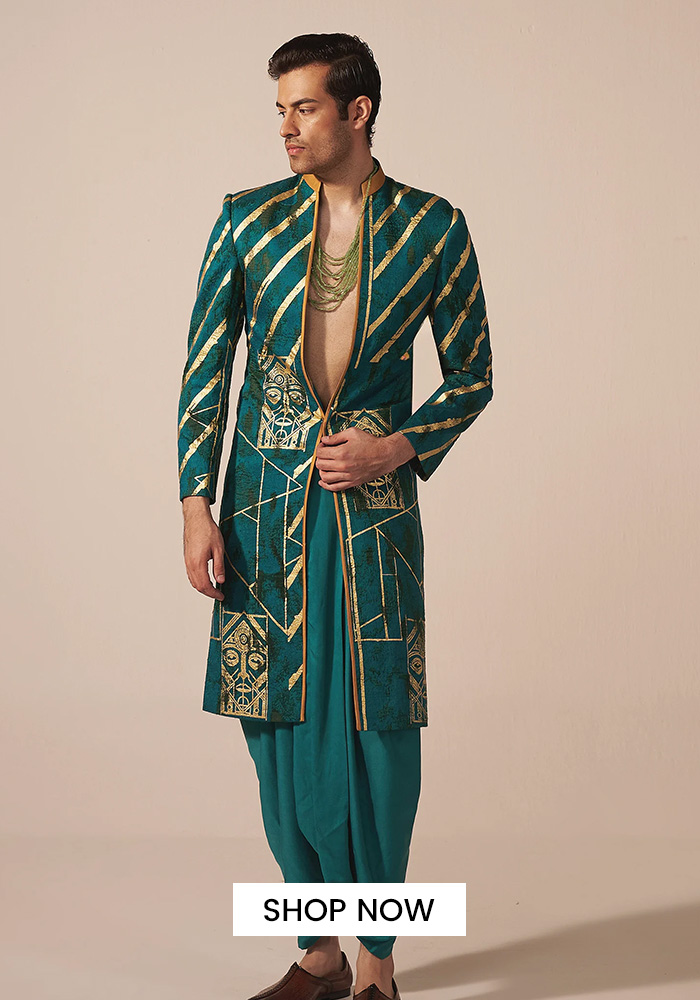
Instead of covering a garment with motifs scattered across the surface, geometric embroidery can create defined panels, borders, grids and symmetrical compositions. The result can feel almost architectural, especially when tonal threads, metallic details or dimensional embellishments are brought into the mix.
On sherwanis, bandhgalas, kurtas and Nehru jackets, these patterns can act almost like a blueprint, giving the garment its visual rhythm.
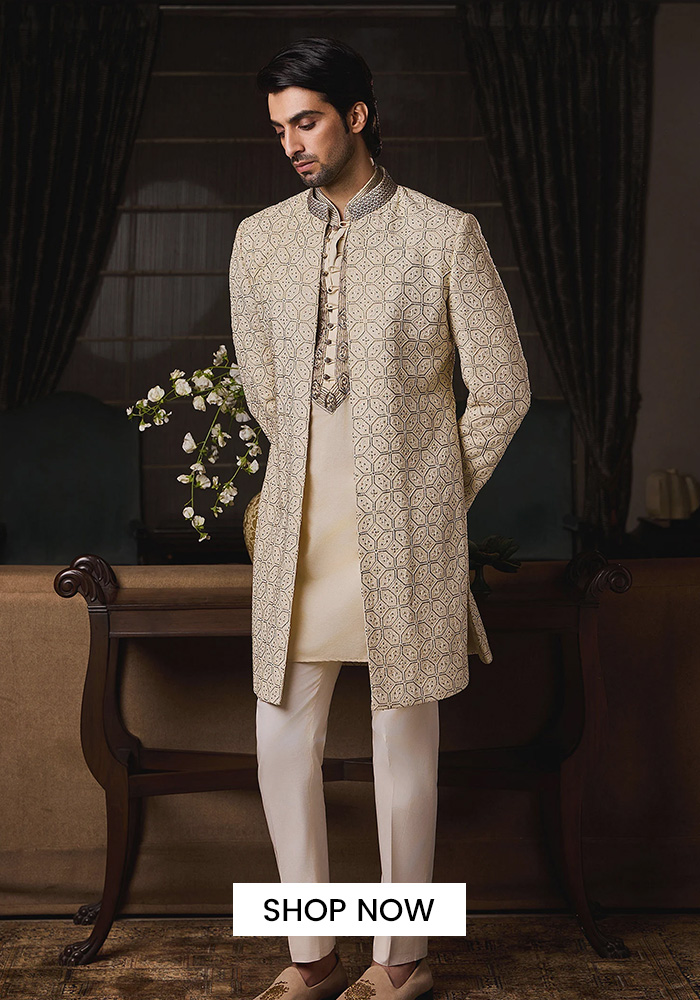
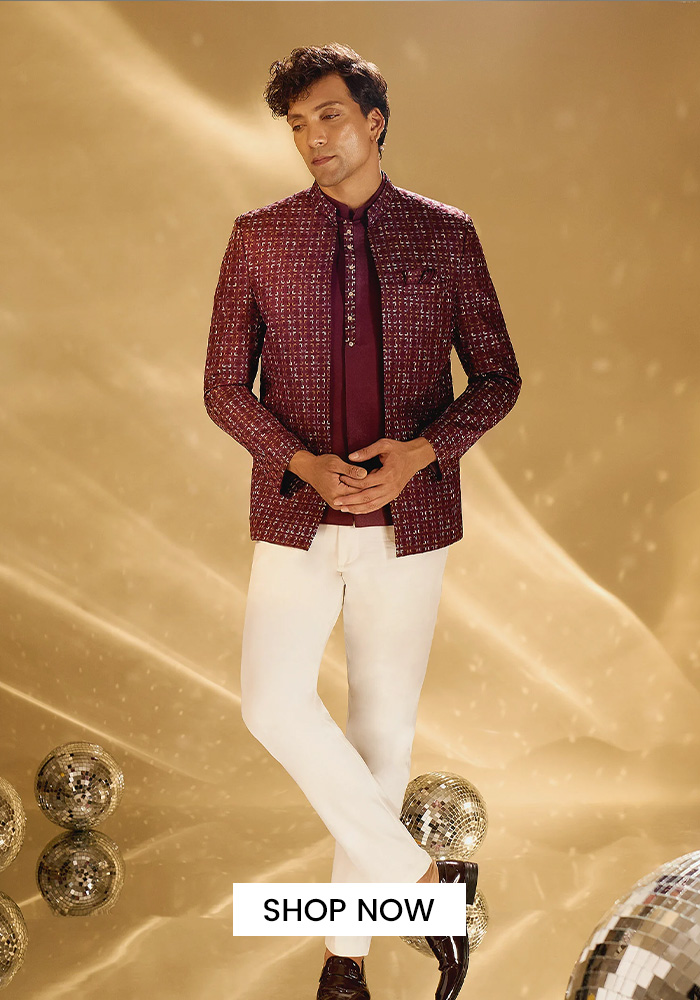
Think less more is more and more every line has a job.
Prints That Refuse to Stay in the Background
Geometric prints bring an entirely different energy to menswear. They can be graphic, abstract, oversized, tonal or subtly repetitive, depending on the mood.
A printed jacket paired with a traditional kurta can make occasion dressing feel relaxed and fashion-forward. More abstract patterns can also lend themselves to Indo-western wardrobes, where the boundaries between ethnic and contemporary dressing are already delightfully blurry.
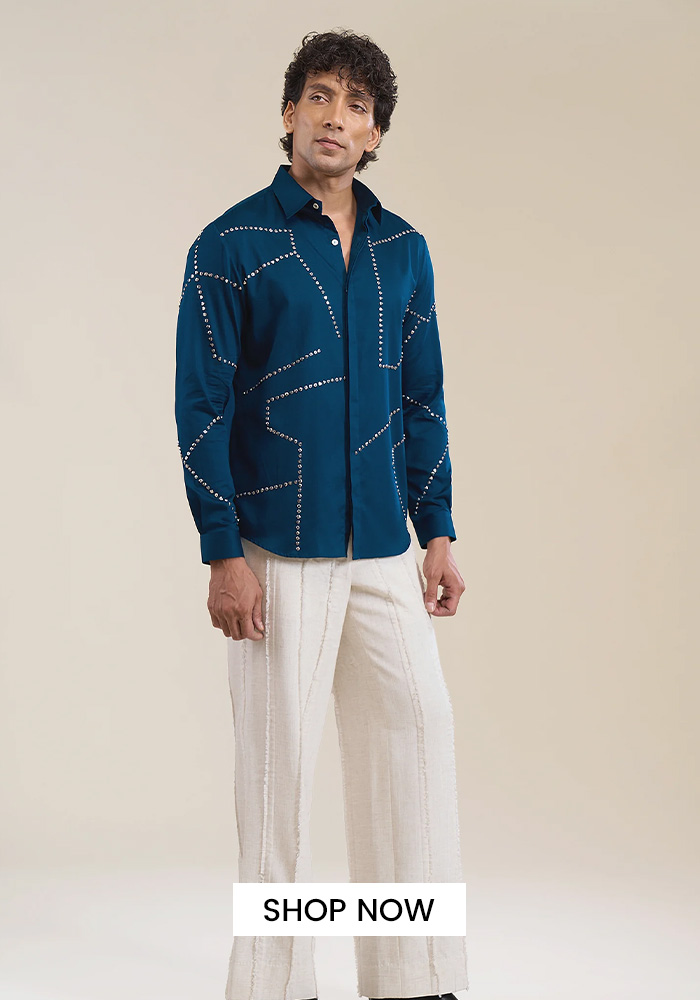
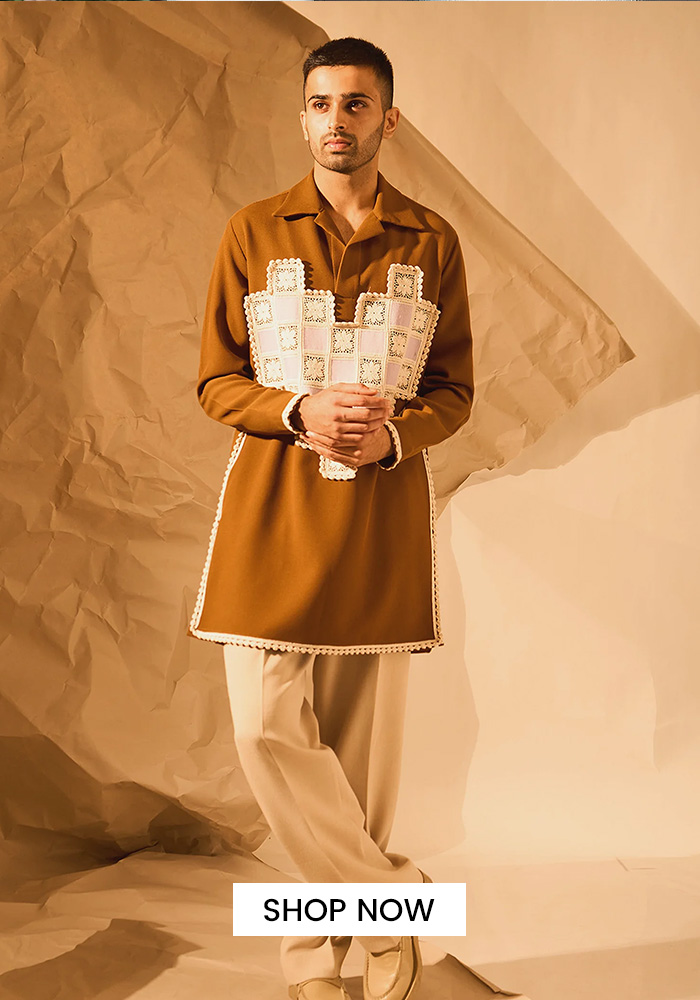
The trick is that geometry doesn't necessarily need to shout. Even restrained patterns can make a garment look instantly more distinctive.
From Kurta Sets to Bandhgalas, Geometry Has Range
One reason the trend has gained momentum is its versatility.
Geometric details can work across almost every category of Indian menswear:
- Kurtas can use subtle linear or angular embroidery for a contemporary finish.
- Nehru jackets can turn geometric motifs into statement surfaces.
- Bandhgalas lend themselves naturally to precise, structured patterns.
- Sherwanis can use geometric embroidery to balance their grandeur with a modern sensibility.
- Bundi sets can incorporate repeated motifs without overwhelming the silhouette.
- Shirts and jackets can take the trend in a more experimental, Indo-western direction.
So whether the occasion calls for a wedding-ready sherwani or something less ceremonious, there is a geometric interpretation for it.
The New Language of Statement Dressing
There is a larger shift happening in menswear, too. Men are becoming more willing to experiment with prints, embellishments, unusual textures and expressive silhouettes. The idea that occasionwear has to be either heavily traditional or completely minimal is slowly losing its grip.
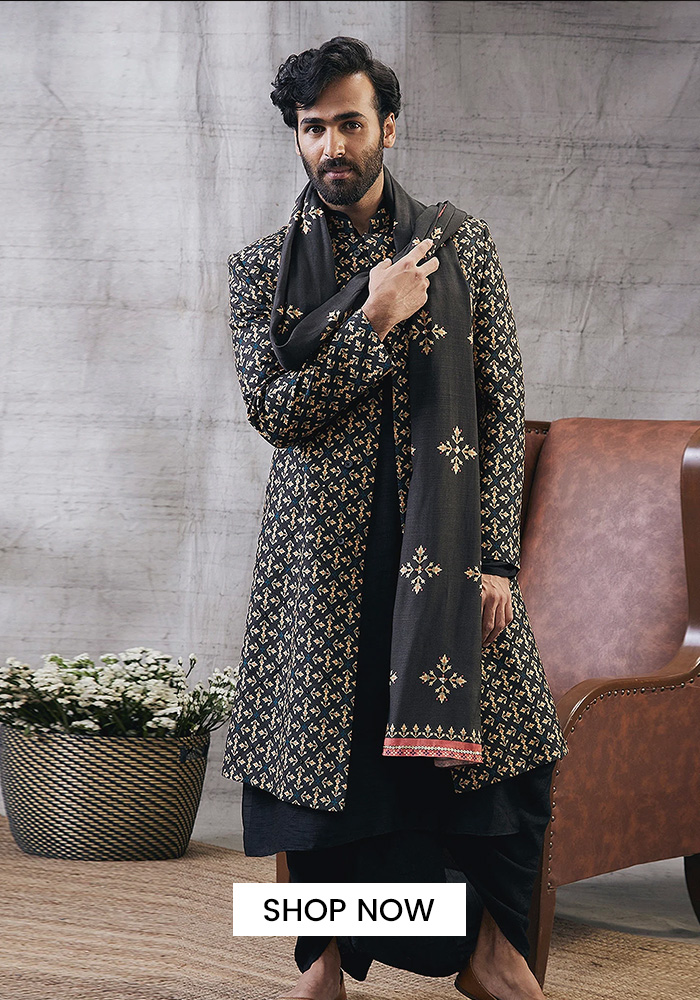
Geometric designs fit neatly into this new fashion vocabulary.
They offer personality without relying solely on colour. They can be bold without being chaotic. And because the motifs are often rooted in symmetry and repetition, they retain a sense of polish even when the design itself is experimental.
Not All Angles Are Sharp
One of the most interesting things about the trend is just how varied geometry can be.
It isn't limited to rigid squares and perfect triangles. Designers are playing with intersecting lines, optical patterns, abstract shapes, irregular formations, ombré effects and geometric interpretations of traditional motifs.
That leaves plenty of room for personal style. Someone who prefers understated dressing can opt for tonal embroidery, while a maximalist can lean into elaborate patterns and embellishment.
In other words, geometry has range. And thankfully, it doesn't require a protractor.
Why Geometric Menswear Works So Well for Weddings
Wedding dressing is perhaps where the trend makes the strongest case for itself.
Indian occasionwear is naturally rich with detail, so introducing structured motifs creates an interesting counterpoint to traditional opulence. A geometric embroidered sherwani or bundi can feel festive while offering something visually different from the usual floral or paisley-heavy designs.
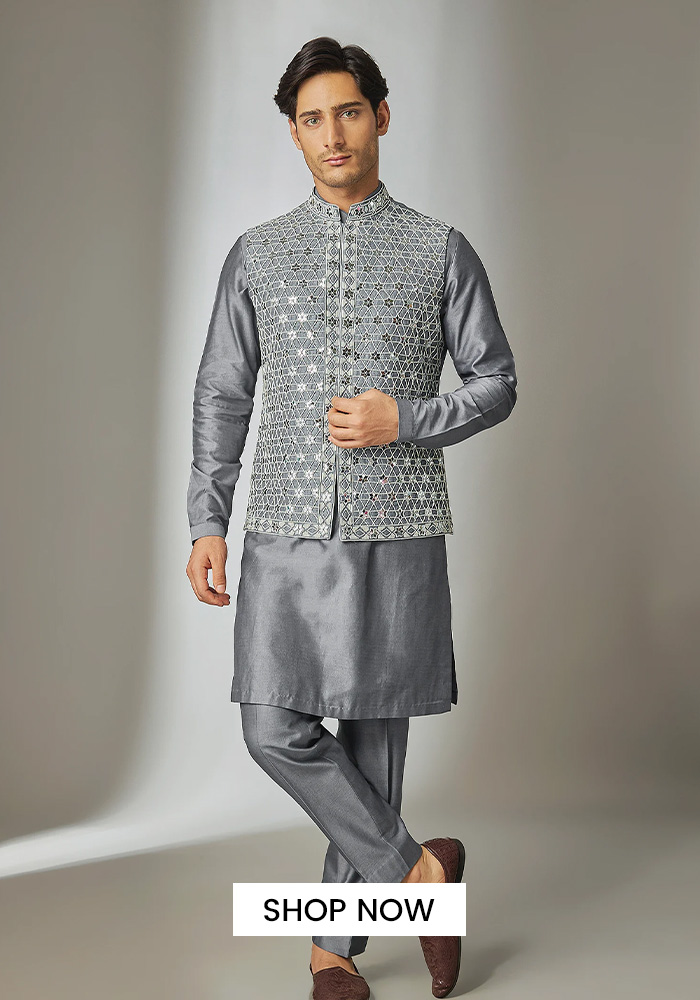
For wedding guests, geometric kurtas and jackets can also become statement pieces that don't compete with the groom's grander attire. And for the groom himself, the trend offers a way to make a traditional silhouette feel more personal.
The Shape of Menswear's Future
Geometric menswear isn't about replacing traditional design. It is about reinterpreting it.
The classic kurta remains a classic. The sherwani isn't going anywhere. The Nehru jacket still knows how to make an entrance. But when designers introduce grids, lines, angular embroidery, abstract prints and architectural motifs, these familiar silhouettes suddenly speak in a more contemporary accent.
Perhaps that is exactly why the trend feels so fresh. It doesn't ask menswear to abandon its roots. It simply gives tradition a few new shapes to work with.