

Getting Ready to Measure
Before you start, here are a few quick tips to ensure your numbers are accurate:- Use a standard measuring tape: A flexible tailor's tape is essential.
- Wear thin clothes: Measure over light clothing or undergarments. Bulky clothes will add unnecessary inches.
- Stand straight: Keep your posture natural. Do not suck in your stomach or hold your breath.
- Ask for help: While you can do it yourself, having a friend help ensures the tape stays straight, especially for the back and length.
Step-by-Step Measurement Guide
1. Kameez (Top) Measurements

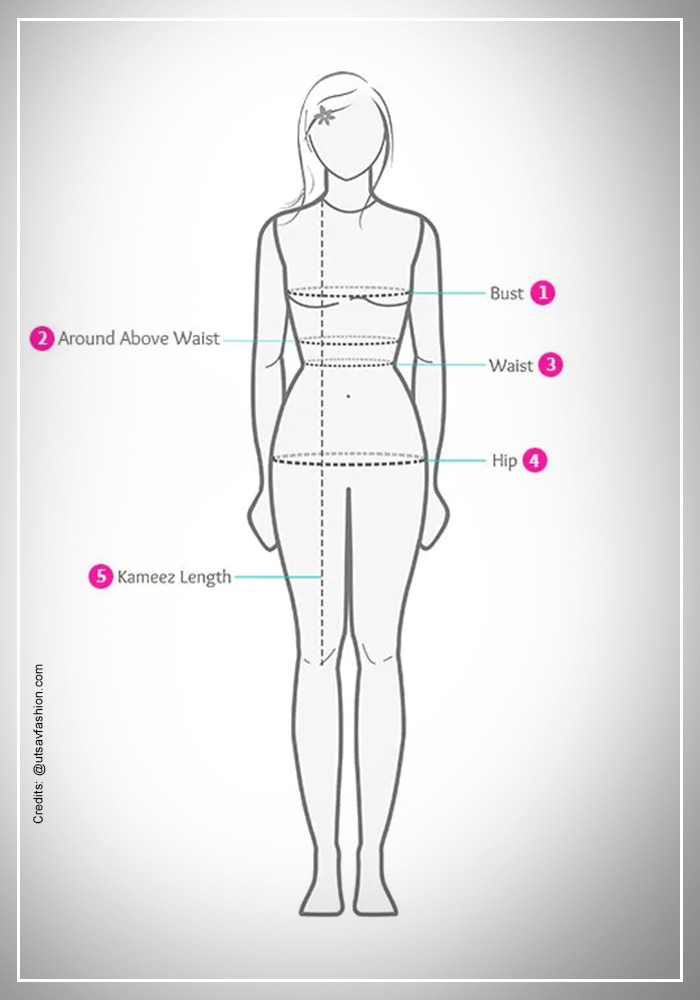
- Length: Place the tape at the top of your shoulder (where the neck meets the shoulder). Let it drop down straight over your chest to where you want the kameez to end. This could be knee-length, calf-length, or floor-length depending on the style.
- Bust: Wrap the tape around the fullest part of your chest. Make sure the tape is straight across your back and not drooping. Keep it snug but comfortable—you should be able to slide one finger under the tape.
- Waist: Find the narrowest part of your waist (usually just above your belly button). Wrap the tape around this natural waistline.
- Hips: Stand with your feet together. Measure around the fullest part of your hips and buttocks. This is crucial for ensuring the kameez doesn't pull tight when you sit.
- Shoulder: Measure across your back from the tip of one shoulder bone to the other.
- Sleeve Length: Place the tape at the edge of your shoulder and measure down your arm to where you want the sleeve to stop (short, elbow, three-quarter, or full).
- Armhole: Wrap the tape around the top of your shoulder and under your armpit to get the circumference.
2. Salwar (Bottom) Measurements

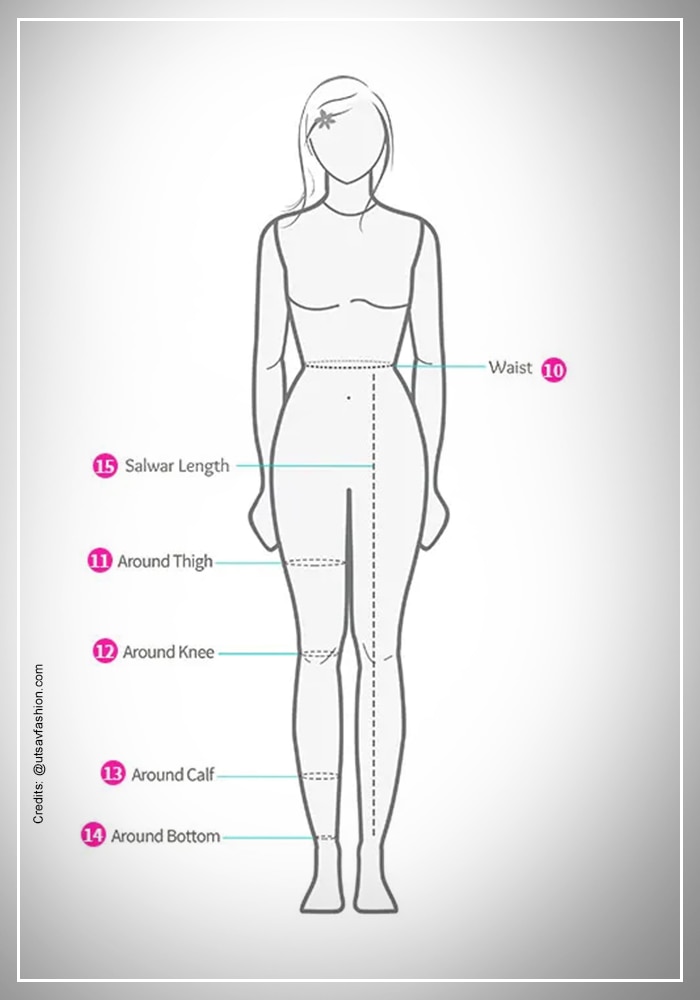
- Length: Measure from your waist (where you tie the drawstring) down to your ankle. For churidars, you will need extra length for the gathers at the bottom.
- Waist: This measurement is often the same as your natural waist or slightly lower, depending on where you prefer to tie your bottoms.
- Bottom Opening: Decide how wide you want the opening at the ankle to be. For a tight churidar look, measure your ankle round. For palazzos, measure the desired width.
Common Mistakes to Avoid
Even a small error can change the fit. Watch out for these common slip-ups:- Tape is too tight or loose: The tape should sit flat on your skin without digging in. If it's too loose, the outfit will look baggy.
- Wrong posture: Slouching can result in a shorter length or incorrect chest measurement.
- Guessing: Never guess your size based on other brands. Sizes vary everywhere, so measuring in inches is the safest bet.
Why Custom Fit Matters
A custom salwar kameez is made just for you. It accounts for your unique body shape, ensuring the armholes don't pinch, the chest isn't too tight, and the length is just right for your height. This level of comfort allows you to move freely and enjoy your event without constantly adjusting your clothes.Get Your Perfect Look with Aza Fashions
Now that you have your measurements ready, you are all set to shop! At Aza Fashions, we offer a stunning collection of designer salwar suits that blend tradition with modern trends. Many of our premium styles come with custom tailoring options, so you can have your favorite designer piece fitted exactly to your specifications. Don't settle for "okay" when you can have "perfect." Explore our latest collection of custom salwar suits today and step out in style with Aza Fashions.Author


How to Measure Salwar Kameez for the Perfect Fit was last modified: February 14th, 2026 by