Some outfits are engineered to grab all your attention. Janhvi Kapoor's recent white saree, however, earned it by doing the opposite: a hush of ivory, then a burst of gold, garnet and green exactly where you least expect it. At the Business of Fashion BoF 500 Gala in Paris on October 3, the Gen Z style icon arrived in a custom Pankaj S Heritage creation, styled by Rhea Kapoor.
It was her second Paris Fashion Week appearance after the Miu Miu show, and her second big moment for the six yards on a global stage after Cannes. While she wasn't an inducted member of the Class of 2026. She came as an influential guest and a living argument for where Indian cinema meets global high fashion.
The Drape That Made Ivory Look Anything But Basic
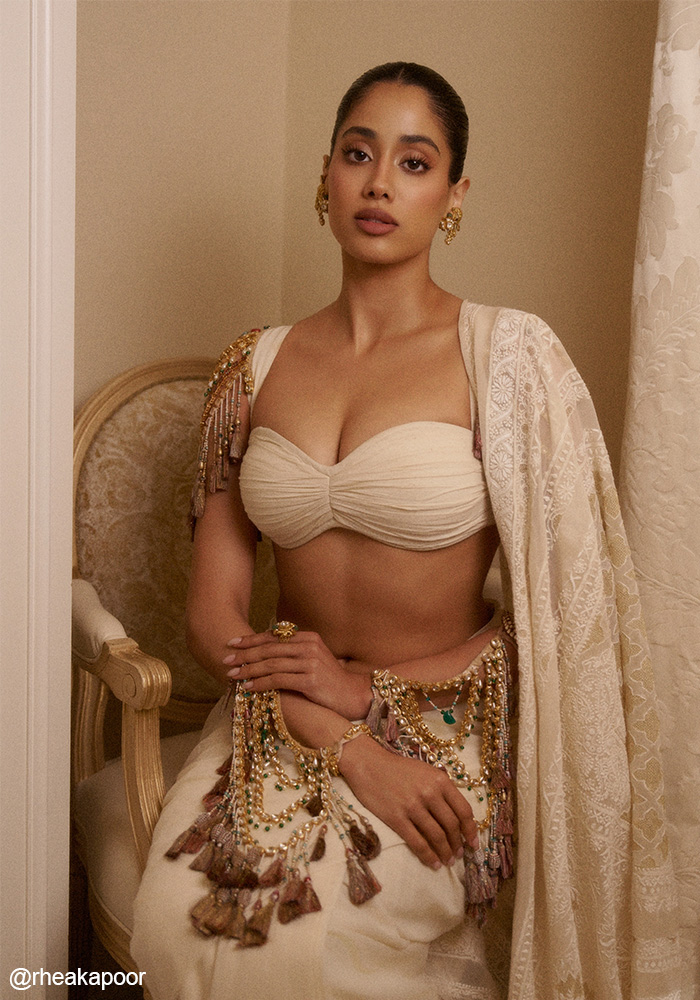
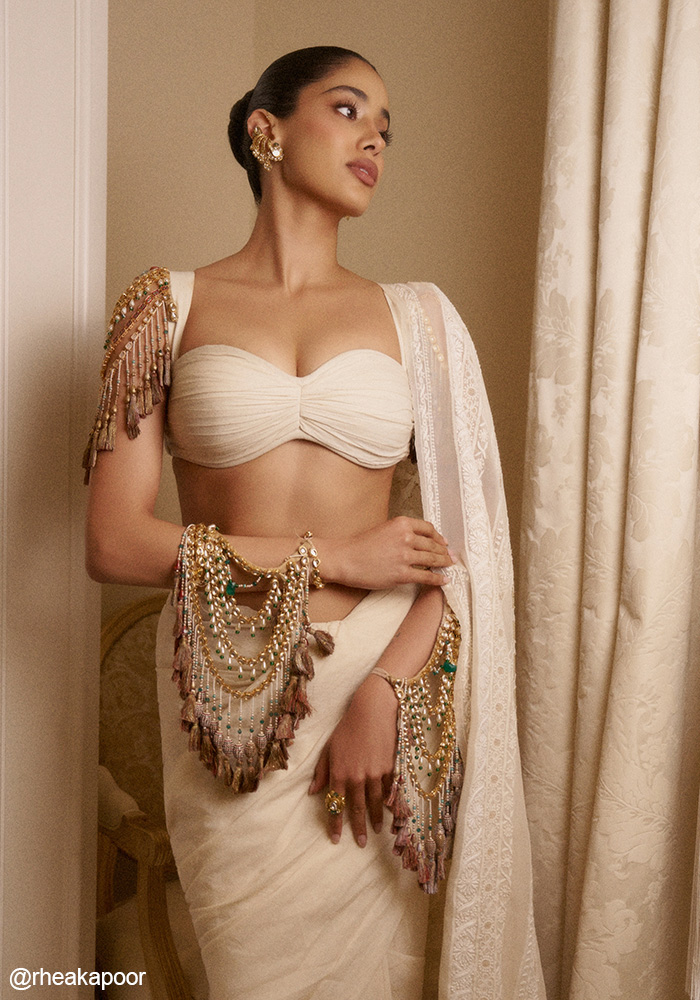
Forget the textbook nivi. This ivory drape was low-slung, shoulders bare, with a long pallu skimming the floor and a cross-drape at the waist over structured linen pleats. The pallu wrapped the torso, looped around the wrist, then fell alongside the pleats, so the fabric moved like architecture rather than cloth.
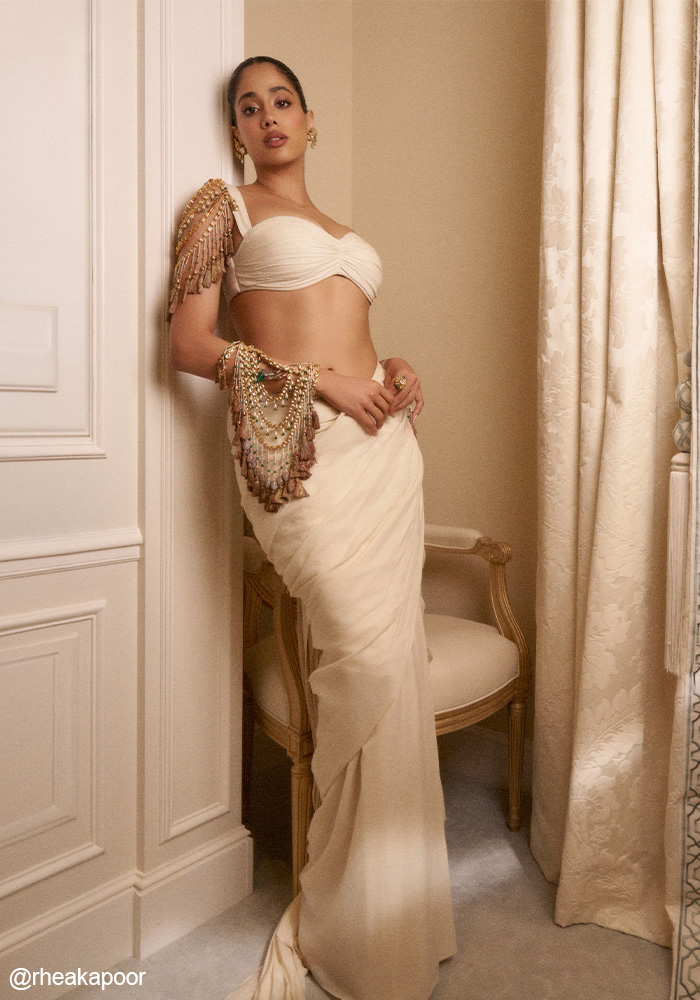
The real hero was the material itself. The ivory canvas was 460-count Bengal muslin, unbleached and woven entirely in India, so light and airy it felt made for Paris. A sheer chikankari dupatta, thrown casually over one shoulder, added a whisper of texture without disturbing the clean line. Quiet fabric, loud pedigree.
When Sleeves Became the Statement
The blouse was the plot twist. Instead of embroidery or sequins, the statement came from the sleeves, which were less sleeves than wearable installations. Layers of gold loops and blush-pink tassels cascaded down her arms, finished with saraafa tassels and resham fringing. Polkis, garnets, emeralds, gold beads, pearls and shells were worked across the shoulders and arms, with beaded fringes framing her bare shoulders.
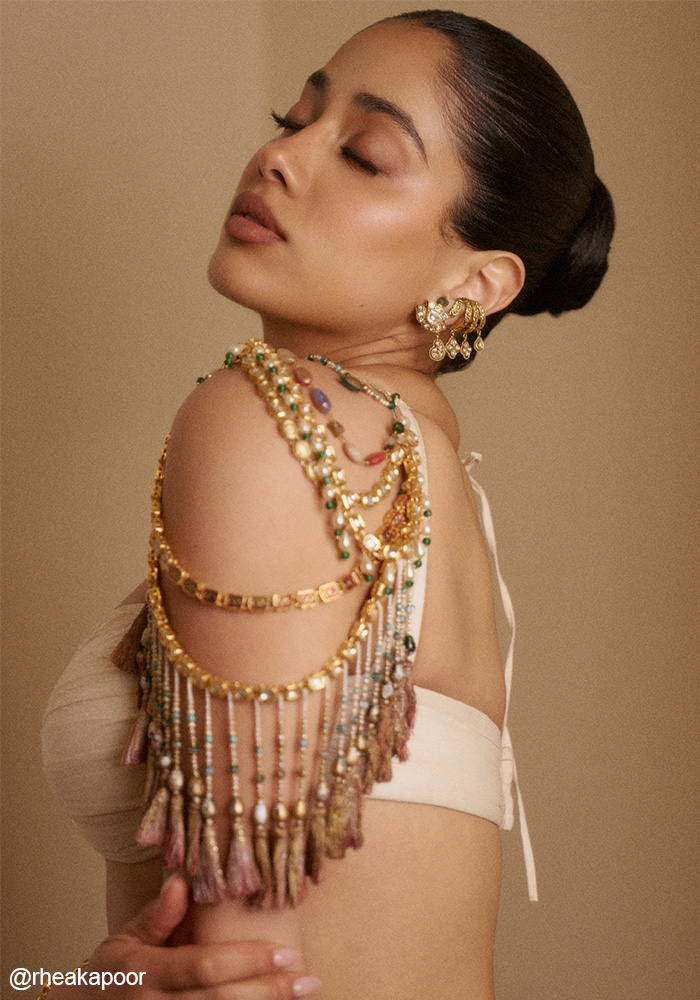
Think of a jewellery box tipped gently over a cloud. The restraint of the torso made every bead on the arms read louder, and that contrast was the entire point.
A Jewellery Box, Reimagined on Her Arms
Here the lines between blouse and jewellery dissolved. Layered kundan strands, armlets and dangling pearls travelled down her arms, so the ornamentation became the garment's second skin. Her only other accessory was a pair of gold studs, deliberately small, because when your sleeves are doing the talking, your ears should stay silent.
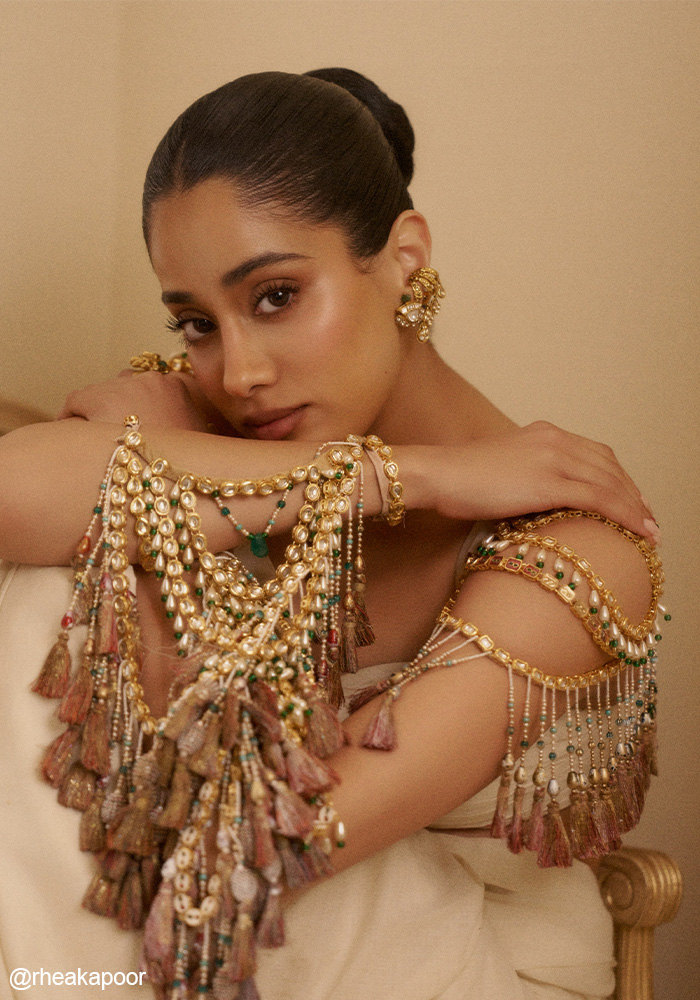
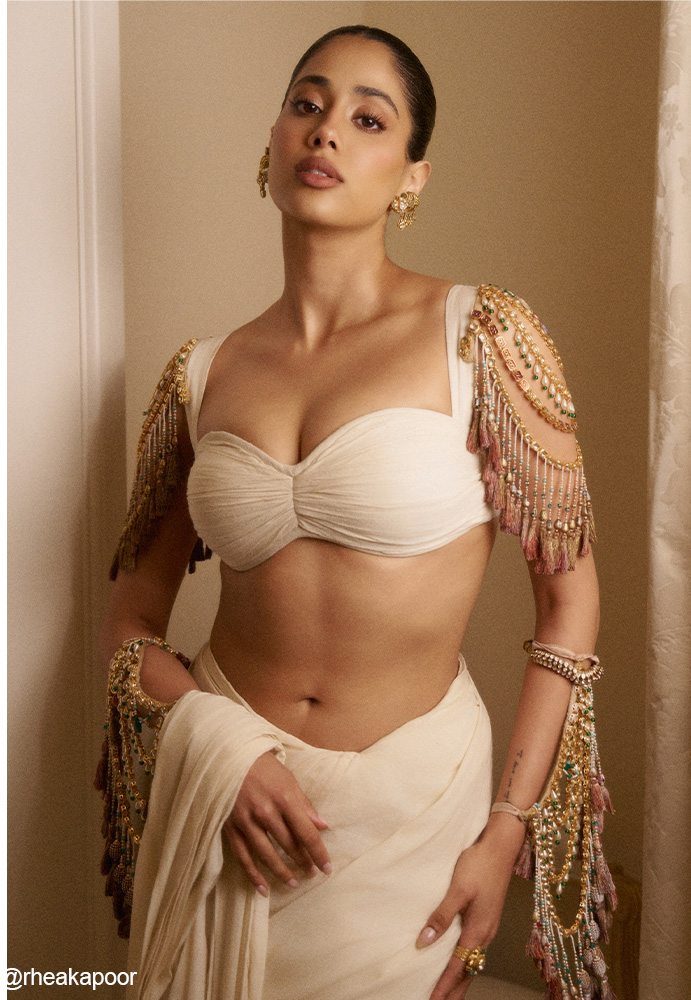
It was heirloom thinking applied to a contemporary silhouette: jewellery treated not as an add-on but as architecture.
Why Her Hair Had to Stay Sleek
A centre-parted bun, pulled back and polished. It opened up the neckline and shoulders, giving the beadwork room to breathe and the camera a clear sightline to all that craftsmanship. With this much happening below the chin, nothing above it needed to compete.
The Makeup Took a Backseat—and That Was the Point
Subtle, soft and pared back. No smoky eye, no bold lip, nothing fighting the shoulders for attention. The face stayed calm so the story could stay in the sleeves, a lesson in knowing when the outfit has already said everything.
Aza's Verdict: Heritage, Rewired
This look nailed the balance every global-bound Indian outfit chases: deep textile heritage with a thoroughly contemporary attitude. The muslin spoke of centuries of weaving, the drape spoke of today, and the jewellery bridged the two. Janhvi's styling, with Rhea Kapoor at the helm, proved that you don't need to dilute Indian craft for an international audience. You just need to edit around it.
Our takeaway: choose one hero, then let everything else step back. If you're wearing a saree to a cocktail evening or a destination wedding, try a muted base with statement sleeves or dramatic shoulder jewellery, and keep the hair sleek and the makeup quiet. The six yards have never looked more at home in Paris.