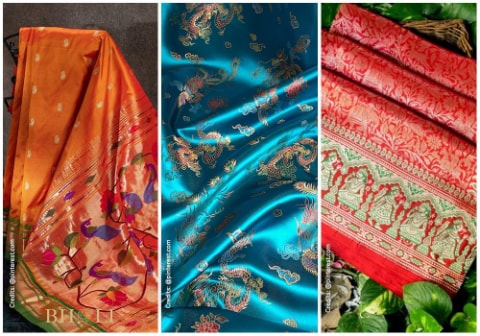
The saree is a symbol of Indian grace and elegance, with countless draping styles that vary across different regions. Among these, the Maharashtrian Kacha style saree stands out for its unique and powerful silhouette. Also known as the Nauvari saree, this traditional drape is not just a piece of clothing but a rich part of Maharashtra's cultural heritage. It represents strength, freedom, and a connection to history.
The Kacha style saree, or "Kashta" saree, is famous for its distinctive pant-like appearance, which sets it apart from the more common Nivi drape. Historically worn by warrior women and those working in the fields, its practical design allowed for freedom of movement. Today, it has been embraced by modern women and designers, making a grand comeback on festive occasions and fashion runways. At Aza Fashions, we celebrate the timeless appeal of regional weaves and drapes. Let's explore the legacy of the Kacha style saree and how you can master this iconic look.
What is a Kacha Style Saree?
The most defining feature of the Kacha style saree is its unique drape. The name "Nauvari" literally translates to "nine yards," referring to the length of the fabric used, which is longer than the standard six-yard saree. This extra length is what allows for the characteristic tucking and draping.
In this style, the saree is wrapped around the body in such a way that it forms a pair of trousers. A portion of the saree is pulled between the legs and tucked in at the back of the waist. This creates a functional and striking look that is both traditional and bold. Unlike other saree styles, the traditional Nauvari drape does not require a petticoat, as the fabric itself provides full coverage.
The Cultural Significance and Origins
The Kacha style saree is deeply rooted in Maharashtrian history. It was the preferred attire of women who needed to be active and agile. From the brave Maratha warrior women who fought alongside men on the battlefield to the women who toiled in farms, the Nauvari saree offered unparalleled comfort and mobility. This practicality made it a symbol of female strength and independence.
This draping style is prominently seen during major Maharashtrian festivals like Ganesh Chaturthi and Gudi Padwa. It is also the traditional attire for folk dances like Lavani, where the drape allows for energetic and expressive movements. By wearing a Kacha style saree, women honor their heritage and celebrate the powerful legacy of the women who came before them.
Different Ways to Drape the Kacha Saree
While the core concept remains the same, there are a few variations to the Kacha style drape.
The Traditional Brahmini Style
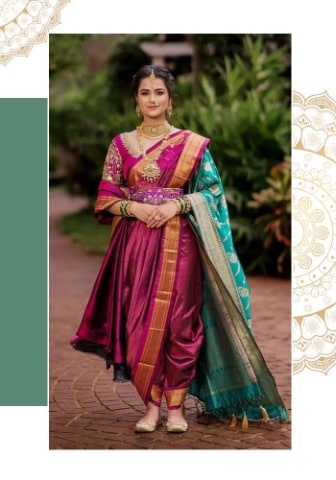
This is the most authentic and widely recognized style, where the saree is draped without a petticoat. The border of the saree is prominently displayed in the front and back. It is a more complex drape but results in a truly regal and traditional look.
The Koli Style
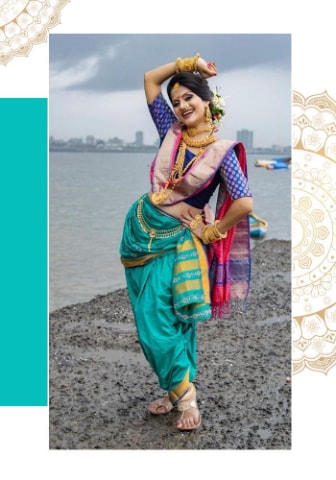
The Koli fisherwomen of Maharashtra have their own version of the drape. They often use a slightly shorter saree and drape it tighter and higher, reaching just below the knees. This adaptation was practical for their work near the water. The Koli drape is often more colorful and rugged in appearance.
The Modern, Simplified Drape
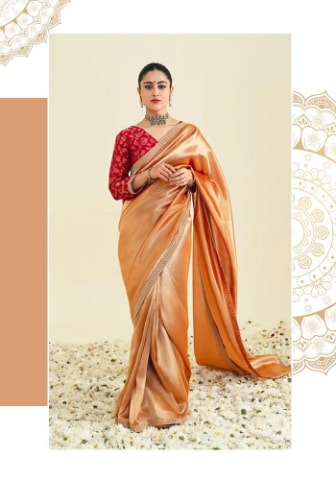
For those who find the traditional drape challenging, modern versions have emerged. Many women now wear the Kacha style saree over a pair of leggings or churidars. This makes the process simpler and provides extra comfort and security, especially for those new to the style. Pre-stitched Nauvari sarees are also available, offering the same look with the ease of slipping into a pair of trousers.
Fabrics and Designs of Kacha Sarees
A Kacha style saree is not just about the drape; the fabric and design are equally important. Traditionally, these sarees were made from cotton or silk to withstand daily wear.
- Paithani Silk: The most coveted choice for a Nauvari saree is the Paithani. Originating from Paithan in Maharashtra, these silk sarees are known for their rich colors, gold zari work, and distinctive peacock or floral motifs on the pallu. A Paithani Nauvari is the ultimate choice for a Maharashtrian bride or for a grand festive celebration.
- Cotton and Silk Blends: For festivals and other functions, sarees made from cotton-silk blends are a popular choice. They are lighter than pure silk but still have a beautiful sheen and structure.
- Bold Borders: A key feature of most Nauvari sarees is a thick, contrasting border. Gold zari borders are the most common, adding a touch of opulence to the saree. The pallu is also often heavily decorated.
Styling Your Kacha Saree for a Complete Look
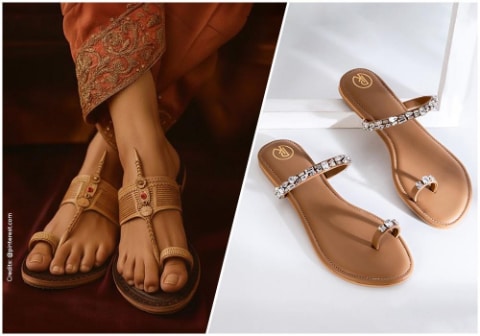
The beauty of the Kacha style saree is enhanced with the right accessories and styling. The focus is on creating an authentic, traditional Maharashtrian look.
Footwear
The Kacha style drape highlights your legs and feet, so footwear is important.
- Kolhapuri Chappals: The most traditional and popular choice is the Kolhapuri chappal. These handcrafted leather sandals also originate from Maharashtra and perfectly complement the ethnic vibe of the saree.
- Flats: Flat, strappy sandals or embellished juttis are also great options that maintain the traditional feel while ensuring comfort. While modern interpretations sometimes involve heels, flat footwear remains the most authentic choice.
Jewelry
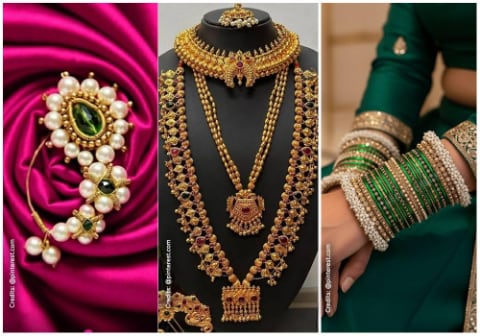
Maharashtrian jewelry is unique and is essential for completing the Nauvari look.
- Nath (Nose Ring): The most iconic piece is the Maharashtrian nath, a large, pearl-studded nose ring with a distinctive paisley shape. Wearing a nath instantly elevates the authenticity of your look.
- Thushi and Kolhapuri Saaj: These are traditional necklaces. The Thushi is a choker-style necklace made of gold beads, while the Kolhapuri Saaj is a longer, more elaborate piece.
- Ambada (Hair Bun Pin): The hair is typically tied in a neat bun, which is then adorned with a traditional hairpin called an ambada and fresh flowers, usually jasmine.
- Green Bangles: Green glass bangles are considered auspicious for married women in Maharashtra and are almost always worn with a Nauvari saree.
Embrace a Timeless Legacy with Aza Fashions
The Kacha style saree is a powerful statement of cultural pride and timeless fashion. It is a celebration of heritage, strength, and grace. While it may look intimidating to drape, the final result is a look that is both stunning and empowering.
Are you ready to embrace this beautiful Maharashtrian legacy? Explore the exquisite collection of Maharashtrian sarees, including beautiful Paithanis and silks, at Aza Fashions. Our curated selection of premium ethnic wear from India’s leading designers offers the perfect sarees to create your authentic Nauvari look. Shop with us and step into a world of timeless tradition and style.