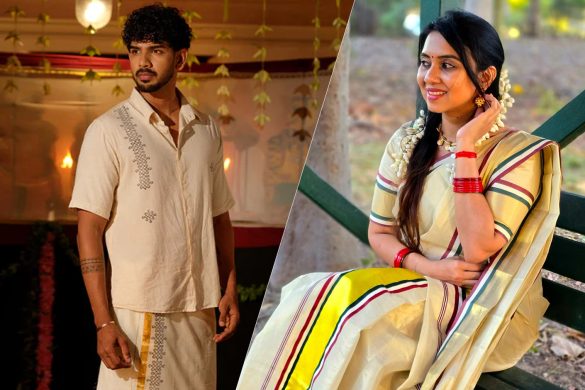
For Mysore Dasara and Bommai Golu celebrations, Kanjeevaram silk sarees remain the gold standard, especially in temple colors like maroon, mustard, and peacock green with contrasting zari borders. Pair them with temple jewelry for pujas and golu visits. Choose lighter Kanjeevarams or half-and-half sarees for daytime, and richer, heavier weaves for evening functions.
Dussehra looks different depending on where you're standing in South India, and that's part of what makes it special. In Mysore, the festival builds toward ten days of processions, palace illuminations, and a city that genuinely transforms. In Tamil Nadu, Karnataka, and Andhra Pradesh homes, it's Bommai Golu season, where painted dolls climb wooden steps and neighbors visit each other's homes in the evenings. Both traditions come with their own unspoken dress code, and getting it right isn't complicated once you know what to look for.
Here's the thing about South Indian festive dressing: it rewards intention. A Kanjeevaram saree isn't just fabric, it's a piece meant to be worn for a reason, on a day that calls for it. Dussehra, with its layered rituals and daily visits, gives you plenty of reasons.
What should you wear for Bommai Golu visits?
Bommai Golu is a home-hosted tradition, which changes the dressing calculus. You're visiting multiple houses over several evenings, often on short notice, so comfort matters as much as elegance.
- Half-and-half Kanjeevaram sarees work well here. They offer the richness of silk without the heaviness of a fully zari-woven piece, making them easier to wear across consecutive evenings.
- Cotton-silk blends are a smart choice if you're doing multiple golu visits in one evening and need breathability.
- Temple jewelry with simple gold or oxidized finishes complements the traditional aesthetic without overpowering it.
Browse Aza Fashions' Kanjeevaram saree collection for pieces that balance heritage weaving with everyday wearability.
What's the right outfit for Mysore Dasara celebrations?
Mysore Dasara is public, grand, and photographed constantly, whether it's the palace procession or a family gathering to watch the festivities. This calls for a different register than a golu visit.
Choose a pure Kanjeevaram silk saree with a contrasting zari border if you're attending anything connected to the main celebrations. Traditional Mysore Dasara colors lean toward maroon, deep green, and mustard, echoing the festival's royal history. If you want something with more presence for evening events, a temple-border Kanjeevaram in jewel tones photographs beautifully under the city's famous illuminations.
Aza Fashions' festive silk saree edit has a strong range of these traditional weaves, from classic temple borders to contemporary color pairings.
How do you choose between a Kanjeevaram saree and other festive wear?
This comes down to the occasion, the time of day, and how much movement you'll be doing.
Choose a full Kanjeevaram silk saree if you're attending a puja, a formal family function, or anything tied directly to the ritual side of Dussehra. Choose a lighter silk-cotton saree or South Indian festive kurta set if you're doing several casual visits in one day and need ease of movement. Kanjeevarams tend to photograph better and hold their drape through long events, so keep that in mind for anything with a stage or a large gathering.
What jewelry pairs best with a Kanjeevaram saree for Dussehra?
Temple jewelry is the traditional pairing, and for good reason. Its motifs, often depicting deities or floral patterns in gold, complement the zari work on a Kanjeevaram without competing with it. For daytime pujas, keep it minimal with jhumkas and a simple necklace. For evening events, a longer haram or layered necklace set adds the right amount of drama.
What colors are traditionally worn during Dussehra in South India?
Maroon, mustard, peacock green, and deep gold are the most common choices, tied to the festival's association with prosperity and victory. Some families also follow the Navratri color calendar, which assigns a specific color to each of the nine days leading up to Dussehra. If you're following this tradition, it's worth checking the day-specific color before picking your saree.
Dress with the occasion in mind
Mysore Dasara and Bommai Golu aren't the same celebration, even though they fall in the same festive window. One is public and grand, the other intimate and home-centered. Your outfit should reflect that difference rather than treating every event the same way.
Explore Aza Fashions' full range of South Indian silk sarees to find pieces suited to both your Dussehra plans and your personal style.
Frequently Asked Questions
What is Bommai Golu?
Bommai Golu is a traditional display of dolls and figurines arranged on odd-numbered wooden steps during Navratri and Dussehra, commonly observed in Tamil Nadu, Karnataka, and Andhra Pradesh households.
Is a Kanjeevaram saree suitable for daytime events?
Yes, especially lighter or half-and-half Kanjeevarams. Fully zari-woven, heavier pieces are better suited to evening functions or formal pujas.
What makes Mysore Dasara different from Bommai Golu?
Mysore Dasara is a large public festival centered around processions and palace celebrations, while Bommai Golu is a home-based tradition involving doll displays and evening visits between neighbors and family.
What jewelry works best with South Indian festive sarees?
Temple jewelry, with its traditional motifs in gold, is the most common pairing and complements the zari work found on Kanjeevaram sarees.
Where can I shop for Kanjeevaram sarees for Dussehra?
Aza Fashions offers a curated range of Kanjeevaram silk sarees suited for Mysore Dasara, Bommai Golu, and other Dussehra celebrations, spanning traditional and contemporary weaves.