There is a reason Rajasthan is called the Land of Kings and nowhere is that royal inheritance more magnificently alive than at a Rajasthani wedding. Draped in the colors of a desert sunset, echoing with the sound of shehnai and ghoomar, and steeped in centuries of Rajput valor, Rajasthani weddings are among the most visually spectacular and culturally layered celebrations in the entire world.
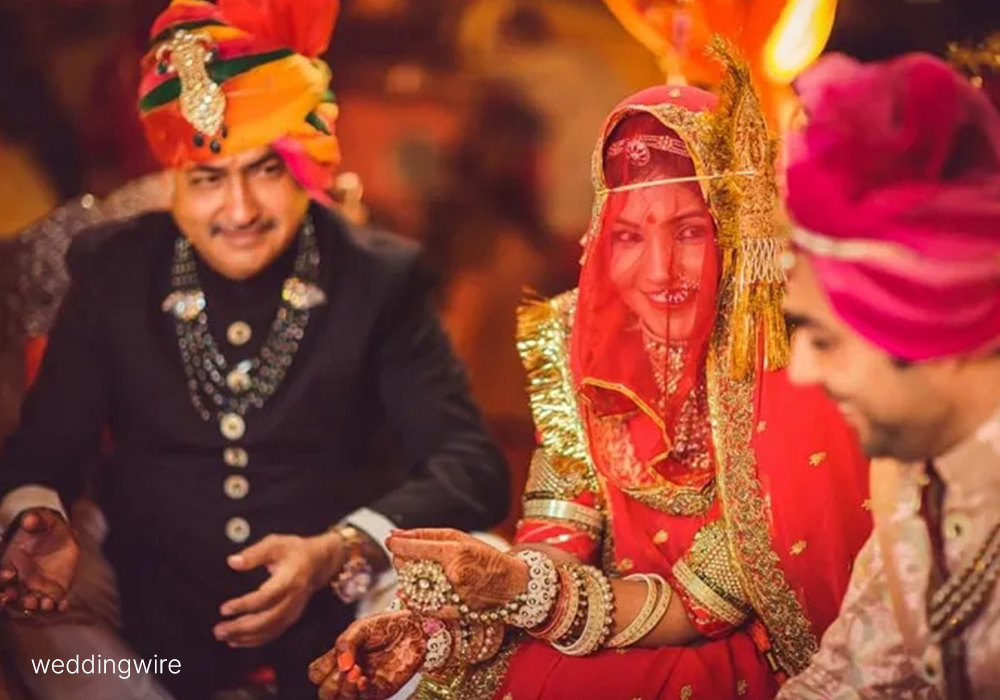
From the painted havelis of Jodhpur to the golden dunes of Jaisalmer, from the lakes of Udaipur to the bazaars of Jaipur every corner of Rajasthan brings its own distinct flavor to the wedding tradition it shares. In 2026, as destination weddings in Rajasthan attract couples from across India and the globe, understanding the traditions and rituals behind the grandeur is what transforms a beautiful event into a truly meaningful experience.
What Makes Rajasthan Weddings Unique?
Rajasthani weddings are shaped by three powerful forces: the Rajput warrior aristocracy, the Marwari merchant tradition, and the indigenous folk culture of the desert communities each contributing distinct rituals, music, attire, and values to the wedding tapestry.
Rajput weddings are governed by clan honor (kul maryada), elaborate codes of hospitality, and a deep reverence for the lineage of both families. Every ritual reinforces the importance of gotra (lineage), community witness, and the dignity of the two clans being united.
Marwari weddings associated with the trading communities of Rajasthan are known for their extraordinary scale, meticulous ritual structure, and the central role of the family priest (kulguru) in guiding every ceremonial step.
Folk and tribal communities of Rajasthan including the Bhil, Meena, Garasia, and Rabari add a dimension of indigenous tradition, nature worship, and oral poetry that predates formal Vedic ceremony and carries its own breathtaking beauty.
What unites all Rajasthani weddings is an unapologetic love for color, music, dance, and festivity and a belief that a wedding is not just a family event but a celebration of an entire community's joy.
Pre-Wedding Rituals in Rajasthan
Sagai (Formal Engagement)
The wedding journey begins with Sagai the formal engagement ceremony. The groom's family visits the bride's home carrying gifts: a ring for the bride, sweets, dry fruits, and new clothing. The families exchange these items formally, and the alliance is declared publicly. In Rajput tradition, the Sagai is preceded by the exchange of nariyal (coconut) a deeply auspicious symbol of purity and prosperity between the two family heads.
In Marwari families, the Sagai is accompanied by the Lagan Patrika a formally written and priest-certified document declaring the wedding date and muhurat, signed by both families in the presence of witnesses.
Ganesh Puja (Invocation of Blessings)
Before any wedding ritual sequence begins, Rajasthani families perform a dedicated Ganesh Puja at the family's home temple or in the courtyard. Lord Ganesha the remover of obstacles is worshipped with flowers, modak, and incense. The priest consecrates the beginning of the wedding proceedings, and both families perform this puja separately at their homes, often on the same muhurat day.
Haldi (Ubtan) Ceremony
The Haldi ceremony called Ubtan in many Rajasthani communities involves applying a paste of turmeric, chickpea flour (besan), sandalwood, and rose water to the bride and groom at their respective homes. Female relatives take turns applying the paste while singing traditional geet (folk songs). The yellow turmeric color is considered a divine protective shield believed to ward off the evil eye and bless the couple with a natural glow for the wedding day.
In Rajasthani tradition, the Ubtan is applied on five consecutive mornings before the wedding in some communities a practice called Panchanga Ubtan reflecting the extraordinary ceremonial thoroughness of Rajasthani wedding culture.
Mehendi Ceremony
The Mehendi ceremony is one of the most celebrated pre-wedding events in Rajasthan and rightly so, as Rajasthan is the birthplace of some of India's most intricate henna art traditions. The bride's hands and feet are adorned with elaborate Rajasthani mehendi designs featuring peacocks, elephants, camels, and the iconic motif of the bride and groom hidden within the design. Professional mehendi artists called Mehandiwalis are hired for the ceremony, and the event is accompanied by music, dancing, and a feast for female relatives and friends.
Rajasthani mehendi is darker, thicker, and more densely patterned than most regional henna traditions a reflection of the desert culture's love for maximum ornamentation.
Mayra (Maternal Uncle's Arrival)
Mayra also called Maayro is one of Rajasthan's most distinctive and emotionally significant pre-wedding ceremonies. The bride's maternal uncle (Mama) arrives at the bride's home with an elaborate procession of gifts including clothing, jewelry, sweets, and household items for the bride and her entire family. This is not a token gesture: the Mayra gift-giving is a major ceremonial occasion that demonstrates the maternal family's love and financial commitment to the bride.
The Mama's arrival is greeted with music, song, and great celebration. Female relatives welcome him with an aarti, and he is given a seat of honor at every subsequent wedding ceremony. The Mayra reflects the same deep cultural reverence for the maternal family seen across Eastern Indian wedding traditions.
Baan (Ritual Purification Period)
Baan is the Rajasthani equivalent of the purification period observed in many Indian wedding traditions. From a set number of days before the wedding, both the bride and groom observe specific restrictions they do not leave the house after sunset, eat only sattvic (pure) food, and abstain from certain activities. Women of the household apply baan (a paste of turmeric and oil) to them daily during this period as a form of ongoing ritual purification.
During the Baan period, auspicious folk songs called Geet or Mangal Geet are sung every morning and evening by female relatives creating a sustained ceremonial atmosphere in both homes that builds toward the wedding day.
The Main Wedding Day: Core Rajasthani Rituals
Torana (Groom's Arrival at the Gate)
When the groom's Baraat (procession) arrives at the wedding venue traditionally on horseback in Rajasthani culture the first ritual is the Torana. A decorated wooden or floral arch (torana) is erected at the entrance of the bride's home or venue. The groom strikes the torana with a sword or his right hand upon arrival, symbolizing his power and his formal claim over the bride and her family's home. The bride's mother performs an aarti and welcomes him with great ceremony.
Jai Mala (Exchange of Garlands)
Before the main ceremony begins, the bride and groom exchange flower garlands (Jai Mala) in front of the assembled guests a public declaration of their mutual acceptance. In Rajasthani tradition, this is accompanied by much playful interference from the brothers and cousins of both sides lifting the groom high so the bride cannot reach to garland him, leading to much laughter. The Jai Mala is one of the most joyful and photographed moments of a Rajasthani wedding.
Kanyadaan (Giving Away the Bride)
Kanyadaan is the holiest ritual of the Rajasthani wedding ceremony. The bride's father places his daughter's right hand in the groom's hand, pours sacred Gangajal over their joined hands, and formally gives her away with Vedic mantras chanted by the priest. This act is considered the most meritorious deed a Hindu father can perform in his lifetime.
In Rajput tradition, Kanyadaan is preceded by a ritual called Gotracharana where the priest announces the complete gotra (lineage) of both the bride and groom, establishing their ancient ancestry and confirming there is no blood relationship between the two clans. This recitation of gotra is taken extremely seriously in Rajasthani communities and can sometimes last several minutes.
Saptapadi (Seven Sacred Steps)
The bride and groom take seven sacred steps together around the sacred fire each step accompanied by a specific vow chanted by the priest. In Rajasthani tradition, these seven steps are taken with the bride's ghunghat (veil) partially lifted a carefully maintained balance between modesty and participation. After the seventh step, the priest declares the couple husband and wife in the eyes of God, family, and community.
Sindoor Daan (Vermillion Ceremony)
The groom applies sindoor (vermillion) in the bride's hair parting the singular act that makes the marriage complete and permanent. In Rajasthan, this moment is accompanied by the blowing of conch shells, the beating of dhol, and a shower of flower petals by family members. The application of sindoor is considered so sacred that the priest's timing for this act is pre-calculated and non-negotiable.
Phera (Circumambulation of the Sacred Fire)
The Pheras the rounds taken by the bride and groom together around the sacred fire are the spiritual heart of every Hindu Rajasthani wedding. In most Rajasthani communities, seven pheras are taken (corresponding to the Saptapadi), though some communities take four. Each phera represents a fundamental aspect of the life the couple is committing to build together prosperity, health, devotion, happiness, children, harmony, and eternal companionship.
Post-Wedding Rituals in Rajasthan
Vidaai (Bride's Farewell)
Vidaai the farewell of the bride is one of the most emotionally powerful moments in a Rajasthani wedding. The bride tosses a fistful of rice or flower petals backward over her head as she crosses the threshold of her parental home for the last time as a daughter. She departs accompanied by the sound of weeping and traditional Vidaai Geet (farewell songs) sung by female relatives. Even the most stoic family members rarely remain dry-eyed during Vidaai.
Griha Pravesh (Entry into the New Home)
Upon arriving at the groom's home, the bride performs Griha Pravesh stepping into her new household with her right foot first, tipping over a vessel of rice to symbolize abundance. The groom's mother welcomes her with an aarti and applies tilak on her forehead. The bride is then taken to offer prayers at the family's home temple.
Mooh Dikhai (Unveiling of the Bride)
On the first morning after the wedding, the Mooh Dikhai ceremony takes place the formal unveiling of the bride to the groom's extended family. Each elder relative lifts the bride's ghunghat slightly to see her face, offers a blessing, and presents a gift (cash, jewelry, or gold). This ceremony formally introduces the bride to every member of her new family, one by one, and often results in a substantial addition to the couple's wedding gifts.
Reception (Pag Phera)
Three to five days after the wedding, the bride returns to her parental home for the first time as a married woman a ritual visit called Pag Phera (literally "return of the feet"). This visit marks the formal conclusion of the wedding ceremonies and is celebrated with a small feast at the bride's parents' home. The bride brings gifts for her parents from her new household, and the parents send her back with a final round of gifts for the couple.
Traditional Rajasthani Wedding Attire
Bride
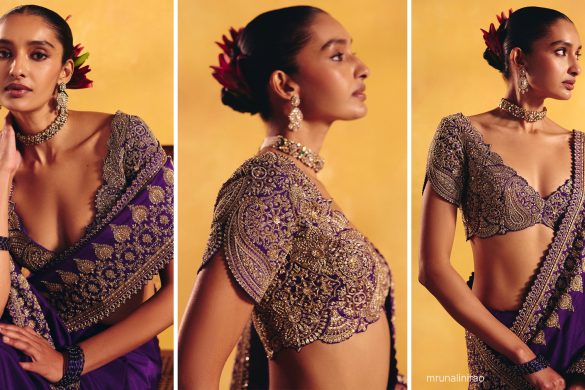
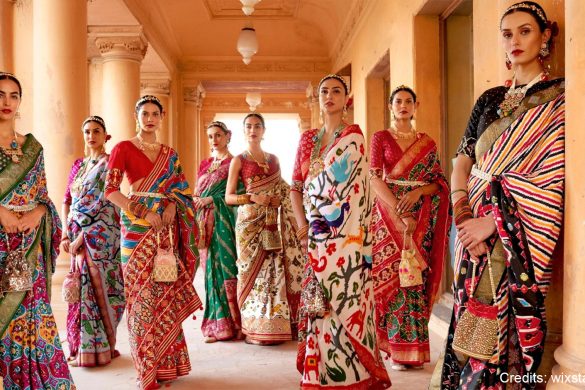
The Rajasthani bride is a breathtaking vision arguably the most visually spectacular bridal look in all of India. She wears a heavily embroidered lehenga in jewel tones deep red, royal blue, emerald green, or magenta adorned with gota patti (gold ribbon embroidery), mirror work, and intricate zari weaving. Her bridal jewelry includes:
- Mathapatti an elaborate headpiece covering the forehead and hairline
- Borla a large, spherical gold maang tikka set with precious stones
- Nath a large nose ring, often connected to the hair by a gold chain
- Aad and Hansli traditional Rajasthani necklace styles
- Kangan and Chura gold bangles and ceremonial bangles
- Payal silver anklets with distinctive Rajasthani motifs
The ghunghat (veil) is a central part of the Rajasthani bridal look a long, heavily embroidered dupatta draped to cover the face, maintained through most of the wedding ceremony as a mark of modesty and grace.
Groom
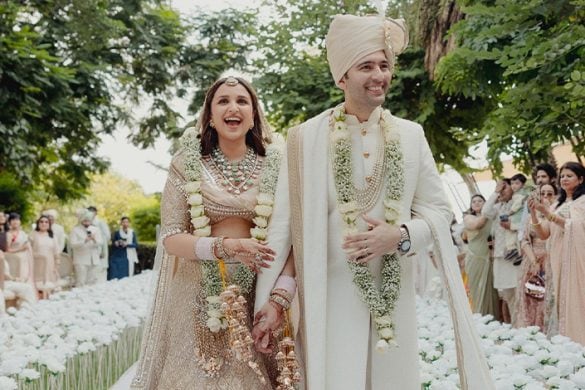
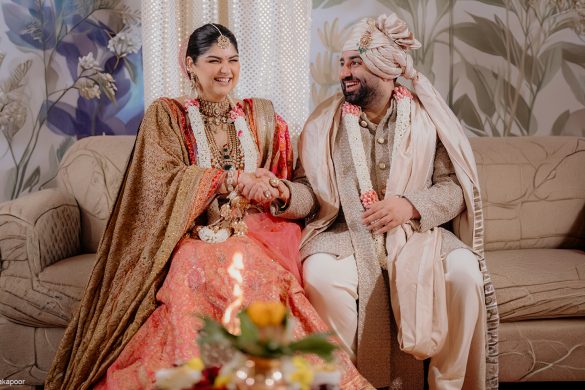
The Rajasthani groom is dressed like royalty a sherwani or achkan in cream, ivory, or gold, paired with a safa (turban) in the signature Rajasthani style tied high and fanned with a distinctive flourish on one side. The color of the safa carries specific meaning: saffron for Rajput families, pink or red for Marwari grooms, and royal blue or maroon in modern interpretations. A sehra (floral or pearl veil) adorns the groom's turban, cascading over his face.
Rajasthani Wedding Music & Dance
No Rajasthani wedding is complete without its extraordinary musical traditions:
- Ghoomar the iconic circular dance performed by women; the quintessential Rajasthani wedding dance
- Kalbeliya the serpentine folk dance of the Kalbeliya community, now recognized by UNESCO as an Intangible Cultural Heritage
- Bhavai a spectacular folk performance featuring dancers balancing multiple pots on their heads
- Shehnai and Nagara the primary ceremonial instruments played at every ritual moment
- Dhol and Thali used for the Baraat procession and celebration dancing
- Maand the classical vocal music tradition of Rajasthan, sung at weddings by professional artists
Regional Wedding Variations Across Rajasthan
Region | Distinctive Wedding Custom |
Jaipur (Dhundhar) | Ghoomar dance central to celebration; pink city themed decor |
Jodhpur (Marwar) | Marwari rituals; extended Baan period; elaborate Mayra ceremony |
Udaipur (Mewar) | Rajput clan rituals; lake palace venues; sword-carrying groom |
Jaisalmer | Desert wedding setting; camel processions; folk music under stars |
Bikaner | Distinctive Bikaneri jewelry styles; spiced halwa as wedding sweet |
Shekhawati | Painted haveli wedding venues; Shekhawati folk dance traditions |
Bhil & Meena (Tribal) | Nature worship; bride price; community elder officiants |
Rajasthani Wedding Food: A Royal Feast
A Rajasthani wedding feast is legendary across India for its scale, richness, and variety:
- Dal Baati Churma the iconic Rajasthani trio; wheat balls baked in fire, served with lentil curry and sweetened crushed wheat
- Laal Maas fiery red mutton curry; a Rajput wedding essential
- Ker Sangri the desert bean and berry preparation; uniquely Rajasthani
- Gatte ki Sabzi gram flour dumplings in a spiced yogurt gravy
- Mawa Kachori a sweet-filled pastry from Jodhpur; the crown jewel of Rajasthani desserts
- Churma Ladoo and Ghevar traditional sweets presented at every wedding feast
- Thandai a spiced milk drink served to welcome guests
The feast is served in the grand thali (platter) style a silver or steel thali laden with small bowls of multiple preparations, reflecting the royal tradition of multi-course hospitality.
Frequently Asked Questions (FAQ)
Q1. What are the main rituals in a Rajasthani wedding? A Rajasthani wedding includes pre-wedding rituals (Sagai, Haldi/Ubtan, Mehendi, Mayra, Baan), main wedding ceremonies (Torana, Jai Mala, Kanyadaan, Saptapadi, Sindoor Daan, Phera), and post-wedding rituals (Vidaai, Griha Pravesh, Mooh Dikhai, Pag Phera).
Q2. What is the Mayra ceremony in Rajasthani weddings? Mayra is a distinctive Rajasthani pre-wedding ritual where the bride's maternal uncle (Mama) arrives with an elaborate procession of gifts for the bride and her family. It is a major ceremonial occasion that celebrates the maternal family's love and commitment to the bride.
Q3. What is Ghoomar and why is it performed at Rajasthani weddings? Ghoomar is a traditional Rajasthani circular folk dance performed by women at weddings and celebrations. It is characterized by swirling movements and colorful lehengas fanning out as dancers spin a visual representation of joy, femininity, and cultural pride. It is the most iconic element of Rajasthani wedding celebrations.
Q4. What does a traditional Rajasthani bride wear? A traditional Rajasthani bride wears a heavily embroidered lehenga in jewel tones, paired with elaborate gold jewelry including a Borla (maang tikka), Mathapatti (headpiece), Nath (nose ring), Aad necklace, and Payal (anklets), completed with a heavily embroidered ghunghat (veil).
Q5. What is the Torana ritual in Rajasthani weddings? Torana is the ceremony performed when the groom's procession arrives at the wedding venue. A decorated arch (torana) is erected at the entrance, and the groom strikes it with a sword or his hand upon arrival symbolizing his strength and his formal claim to the alliance. The bride's mother then welcomes him with an aarti.
Q6. What is Pag Phera in Rajasthani weddings? Pag Phera is the first visit of the newly married bride back to her parental home, three to five days after the wedding. It marks the formal conclusion of all wedding ceremonies and is celebrated with a small feast at the bride's parents' home.
Q7. How is a Rajput wedding different from a Marwari wedding? Rajput weddings emphasize clan honor, gotra recitation, sword-carrying processions, and warrior-class traditions. Marwari weddings focus on meticulous ritual structure guided by the family priest, extended pre-wedding ceremonies, and an emphasis on merchant-community prosperity rituals. Both are grand in scale but reflect different cultural values.