 Deep within the misty blue mountains of the Nilgiris in Tamil Nadu lives a tribe that has guarded a unique artistic tradition for centuries. This is the Toda tribe, and their gift to the world of textiles is the striking red and black embroidery known as Pukhoor. While India is home to countless embroidery styles, Toda embroidery stands apart. It doesn't look like typical needlework; in fact, the stitches are so fine and precise that the finished fabric often looks like it was woven by a machine. But make no mistake—this is purely the work of human hands, crafted without frames or modern tools. In this guide, we will explore the fascinating world of Toda embroidery, tracing its roots in tribal history, understanding its complex technique, and seeing how this ancient craft is finding a new place in modern fashion.
What is Toda Embroidery?
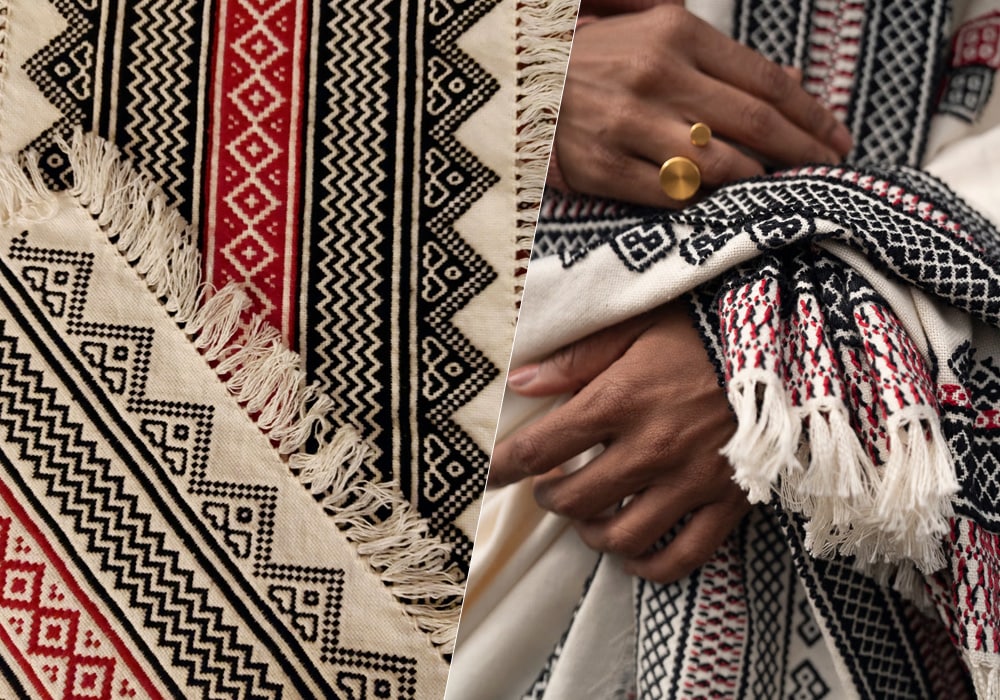
Toda embroidery, locally called Pukhoor (meaning "flower"), is an art form exclusive to the women of the Toda community. It is visually distinct from other Indian embroideries because of its bold, geometric nature. The base fabric is almost always white or off-white coarse cotton. On this canvas, the artisans use thick red and black wool threads to create intricate patterns. The result is a striking high-contrast design that is embossed, rich in texture, and deeply symbolic. The most famous application of this embroidery is on the Poothkuly, a traditional draped cloak worn by both Toda men and women. The embroidery is so significant to their culture that it is used during all major life events, from weddings to funerals.Tracing the Origins: The People of the Hills
To understand the art, you must understand the artists. The Todas are a small pastoral community who have lived in the Nilgiri Hills for possibly 3,500 years. Unlike other communities in the region, they remained isolated for centuries, allowing their unique customs and traditions to flourish untouched. The origin of Toda embroidery is shrouded in myth and history. While there are no written records dating back millennia, the craft has been passed down orally from mother to daughter for generations. The women of the tribe, often living in small hamlets called munds, would sit together in the afternoons to embroider cloaks while singing traditional songs. The craft is so unique to this specific geography and people that it was granted a Geographical Indication (GI) tag in 2013. This status recognizes Toda embroidery as an intellectual property of the Toda community, protecting it from cheap imitations and preserving its authenticity.The Technique: Why it Looks Like Weaving
What makes Toda embroidery truly mind-blowing is its method. Most embroidery involves drawing a design on fabric and then stitching over it. Toda women do not use tracing, patterns, or even embroidery frames (hoops).The Reverse Stitch Method
The technique relies entirely on counting threads. The artisan counts the warp and weft threads of the base fabric with the naked eye to determine where the needle goes. This requires incredible eyesight and concentration. The needle is passed through the fabric's structure in a way that the embroidery appears on the reverse side first. This is a darning stitch, but done with such precision that the motif emerges on the front as a raised, embossed pattern.The "Clean" Finish
One of the hallmarks of high-quality Toda embroidery is that it looks almost as good on the back as it does on the front. There are no messy knots or loose threads hanging. The needle moves parallel to the weave of the cloth, making the embroidery look like it is part of the fabric's original weave structure rather than something stitched on top later.Design Elements: Nature and Geometry
The Toda people live in harmony with nature, and their art reflects their surroundings. However, they don't depict nature realistically like the floral chintz of the Mughals. Instead, they interpret their world through bold geometric shapes.Colors of Life
The color palette is strictly traditional:- Base: White or Cream (representing purity)
- Motifs: Red (representing youth/blood) and Black (representing maturity/darkness). Sometimes blue is added, but red and black remain dominant.
Symbolic Motifs
Every pattern tells a story or represents an aspect of tribal life:- Hutz (Zigzag Lines): Often represents the path of life or the rugged terrain of the hills.
- Esh Puhur (Arrowhead): Represents arrows, vital for a community that traditionally respected hunting skills.
- Thur Puhur (The 'W' Shape): This is a signature motif resembling the letter 'W', often used to cover larger areas of the shawl.
- Booth Puhur: A geometric combination of hearts and dots, often seen on borders.
- Izhadvin Puhur: A design resembling flowers.
- Sun, Moon, and Stars: Celestial bodies are often depicted using triangles and diamonds.
- Buffalo Horns: Since the buffalo is sacred to the Toda people and central to their economy, stylized horn motifs are common.
Cultural Significance
For the Toda people, this embroidery is not just decoration; it is identity. The embroidered Poothkuly cloak is an essential part of their social fabric. It acts as a marker of adulthood and social standing. When a Toda person passes away, it is mandatory for the body to be wrapped in a traditional embroidered cloak for the funeral rites. This signifies the deep spiritual connection the tribe has with their textile heritage. Furthermore, the act of embroidering serves as a social glue for the women. It is a communal activity where stories are shared, and younger generations are taught the values of patience and precision.Toda Embroidery in the Modern World
For a long time, Toda embroidery was limited to the cloaks worn by the tribe. However, as the world discovers the beauty of "slow fashion" and indigenous art, this craft is finding new avenues.Contemporary Applications
To ensure the craft provides a sustainable livelihood, Toda women have started adapting their skills to modern products. You can now find Toda embroidery on:- Accessories: Tote bags, clutches, and pouches.
- Home Decor: Cushion covers, table runners, and bedspreads.
- Fashion: Stoles, dupattas, and even borders for sarees.