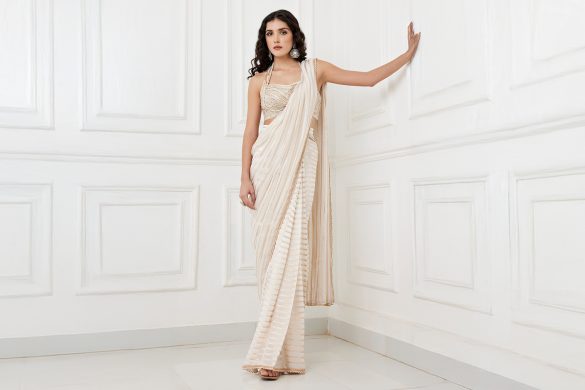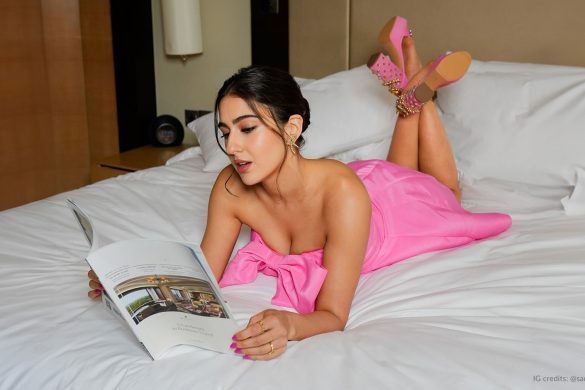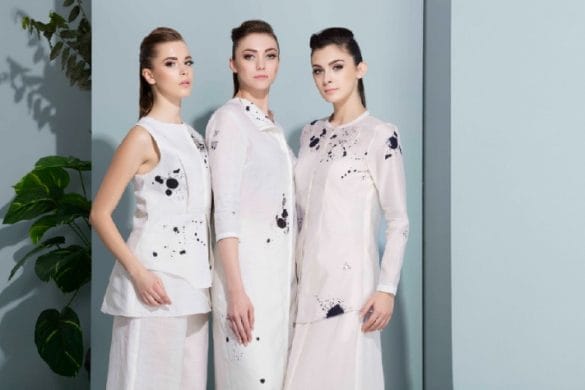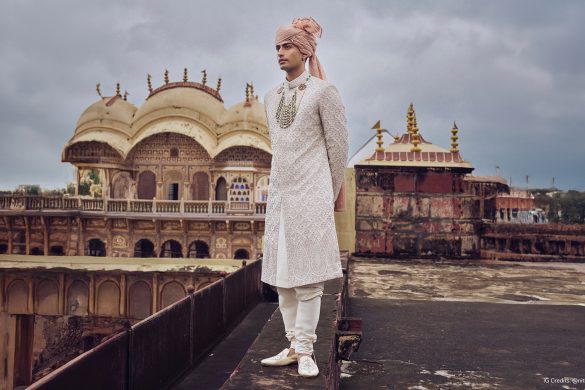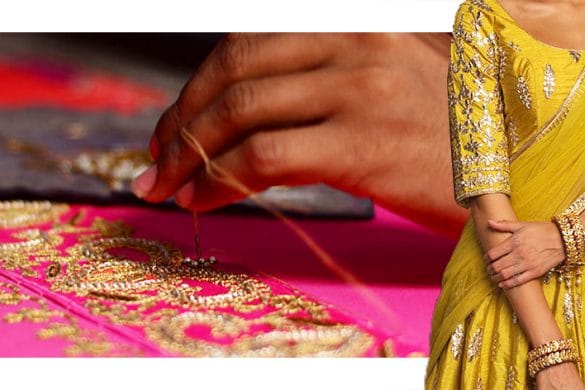
Tone-on-tone embroidery uses thread in the same color family as the base fabric, creating subtle, textured patterns without contrast. In Indian couture, this technique has become a defining marker of quiet luxury—understated, intentional, and deeply refined.
The loudest looks don't always make the strongest statements. Across Indian couture runways and bridal wardrobes, a quieter aesthetic has taken hold—one where intricate craftsmanship hides in plain sight. Tone-on-tone embroidery is at the heart of this shift, turning restrained color into an art form.
What Is Tone-on-Tone Embroidery?
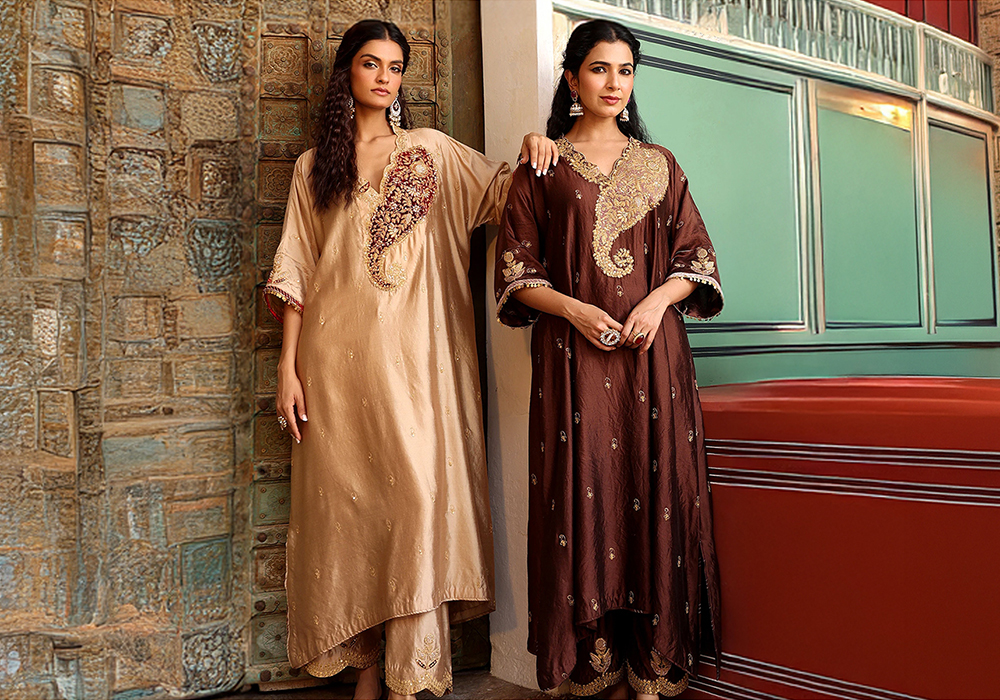
Tone-on-tone embroidery involves stitching with thread that matches or closely echoes the color of the underlying fabric. Rather than drawing attention through contrast, the embellishment reveals itself through texture, light, and movement. A cream chikankari on ivory silk. A dusty rose zardozi on blush georgette. The pattern is present—but it doesn't announce itself.
This technique spans a range of traditional Indian embroidery styles, including chikankari, zardozi, and mukaish work, all of which naturally lend themselves to tonal dressing when executed in matched palettes.
Why Does It Represent Quiet Luxury in Indian Couture?
Quiet luxury, as a broader fashion philosophy, prioritizes quality over ornamentation. Applied to Indian couture, it challenges the assumption that celebration dressing must mean maximalism. Tone-on-tone embroidery is the craft-forward answer to that assumption—a garment's value lies in the hours of hand embroidery, not the volume of embellishment.
There's also a cultural resonance here. Subtle tonal work has roots in Lucknowi chikankari and Parsi gara embroidery, both of which have long valued precision over spectacle. Modern couture is returning to these traditions with fresh intention.
For brides leaning into this aesthetic, this sensibility pairs naturally with the ivory and white Indian wedding outfit trend—a look explored in detail in our guide to ivory and white Indian wedding outfits for 2026.
Which Garments Carry This Aesthetic Best?
Tone-on-tone embroidery works across silhouettes, but some garments wear it particularly well:
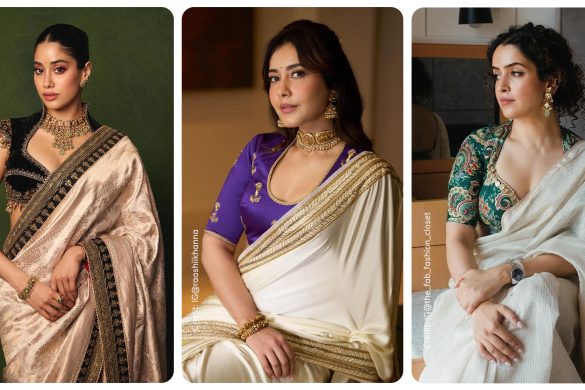
- Sarees: A tonal tissue or organza saree with self-embroidery has an heirloom quality that few other garments can match.
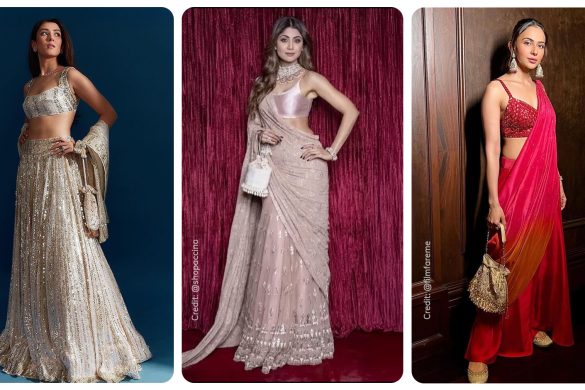
- Lehengas: Bridal lehengas in ivory, champagne, or soft blush with tone-matched embroidery read as both contemporary and timeless.
- Anarkalis: Floor-length anarkalis in muted tones with tonal threadwork offer a graceful alternative to heavily embellished bridal wear.
- Kurta Sets: For festive occasions that call for something refined rather than extravagant, a tone-on-tone kurta set strikes the right note.
Which Indian Designers Are Known for This Aesthetic?
Several designers stocked at Aza Fashions have made tonal embroidery central to their identity:
- Sheetal Batra is known for her nuanced embroidery work, often favoring muted palettes where texture does the talking.
- Seema Gujral brings architectural precision to couture, frequently working in ivory and gold tonal combinations.
- Sahil Kochhar favors fluid silhouettes with surface embellishment that reads as whisper-quiet up close—and stunning from afar.
- Pankaj & Nidhi consistently explore embroidery as surface texture, often in restrained color stories.
How to Style Tone-on-Tone Embroidery
The goal is cohesion without flatness. A few principles to guide you:
Keep accessories minimal. A single strand of uncut diamonds or polki jewelry complements tonal embroidery without competing with it. Over-accessorizing breaks the spell.
Let the fabric lead. Tissue silk, organza, and pure chanderi catch light differently than heavier bases—choose a fabric that enhances the embroidery's subtlety rather than concealing it.
Match your makeup palette. A nude or soft rose makeup look reinforces the quiet luxury effect. Heavy contouring or bold lip colors can feel at odds with the garment's restraint.
Frequently Asked Questions
What is tone-on-tone embroidery in Indian fashion?
Tone-on-tone embroidery uses thread in the same or similar color as the base fabric, creating texture without visible contrast. It is commonly seen in chikankari, zardozi, and mukaish work across Indian couture.
Is tone-on-tone embroidery suitable for bridal wear?
Yes. Many brides choose tone-on-tone lehengas and sarees in ivory, champagne, or blush for their understated elegance—particularly for daytime ceremonies or reception looks.
Which occasions suit tone-on-tone Indian outfits?
This aesthetic suits mehendi ceremonies, intimate weddings, festive lunches, and formal receptions—any occasion where refined dressing matters more than visual spectacle.
Where can I shop tone-on-tone Indian couture online?
Aza Fashions carries a curated selection of lehengas, sarees, and anarkalis from Indian designers who specialize in this aesthetic.
The Case for Wearing Less to Say More
Tone-on-tone embroidery rewards those who look closely. The artistry is real—the hours of hand embroidery, the precision of matched thread—but it doesn't demand your attention. That restraint is exactly the point.
Browse the Aza Fashions celebration edit to explore tonal embroidery pieces from India's leading couture designers.