What you pack for Spain depends on three things: the season, the region, and your plans. A July day in Seville calls for breathable linen, while a winter trip to the Basque Country needs a warm coat and a rain jacket.
Locals dress polished even when casual, so a little planning goes a long way. Here's what you'll learn:
- How to dress for each season and Spain's varied climates
- What works for city breaks versus beaches and outdoor sightseeing
- The best fabrics, colors, layers, footwear, and accessories
- How to blend in and look pulled together
Dress for the Season
Spain has real seasonal shifts, so let the climate guide your travel outfits.
Summer (June–August): Hot and dry, often topping 100°F in the south. Pack summer dresses, linen pants, tank tops, and breezy cotton pieces in light colors.
Spring and fall: Warm afternoons, cooler nights. This is layering season. Bring tees, a light sweater, and a scarf you can add or remove.
Winter (November–February): Cool to cold, especially inland and up north. A well-fitted coat, sweaters, and a rain jacket work best.
Dress for the Region
Spain's weather changes dramatically by area, so match your vacation wear to your destination.
- Southern cities (Seville, Granada): Scorching summers. Stick to loose, breathable fabrics and sun protection.
- Coastal areas (Barcelona, Costa Brava): Milder and breezier. Easy resort wear and light layers shine here.
- Inland cities (Madrid): Hot summers, chilly winters. Pack versatile layers.
- Northern regions (Basque Country, Galicia): Wetter and cooler year-round. A rain jacket and waterproof shoes are essential.
City Breaks vs. Beaches and Sightseeing
Your activity shapes your outfit as much as the weather does.
City breaks: In Madrid, Barcelona, and Seville, lean into smart casual separates. Think high-waisted linen pants, a tucked striped tee, and clean sneakers or flats. Spaniards dress well, so a tailored fit always reads better than gym gear.
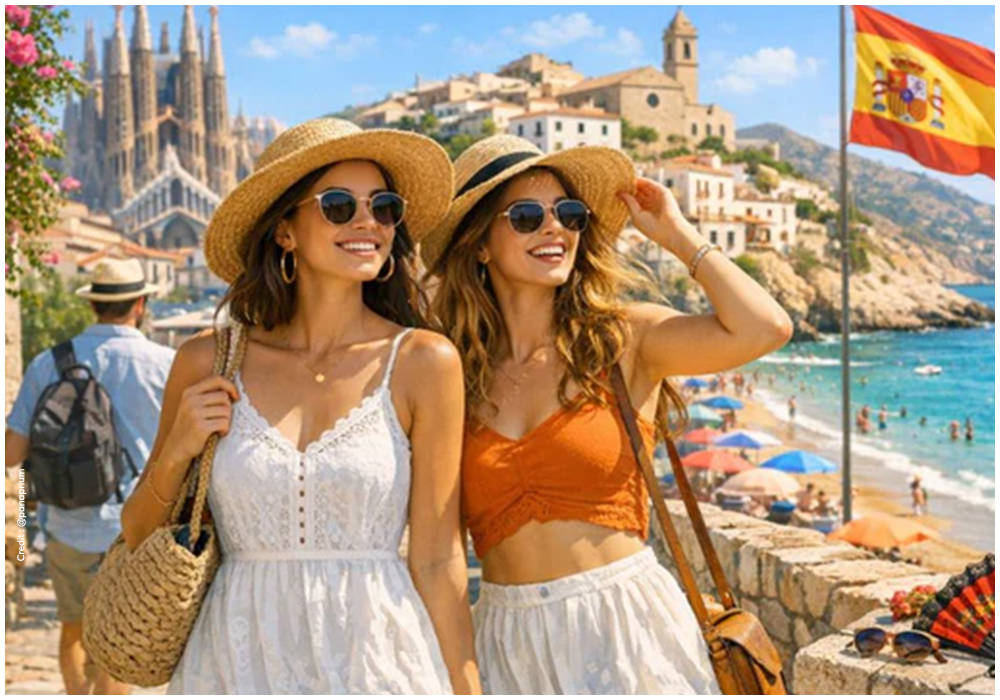
Beach destinations: Pack swimwear, a cover-up, and easy beach outfits like flowy dresses and sandals. Add a tote and a quick-dry towel.
Outdoor sightseeing: Cobblestones and old towns mean comfortable, sturdy shoes win. Choose breathable clothing and a sun hat for long days exploring.
Fabrics, Colors, and Footwear
Fabrics: Cotton, linen, and lightweight blends keep you cool and pack without much fuss.
Colors: Neutrals, crisp whites, and muted tans look effortlessly local. Add stripes or a bold accent for variety.
Footwear: Comfortable walking shoes are non-negotiable. Pack chunky sneakers or leather sandals for day, plus one dressier pair for evenings. Skip the hiking boots in the city.
Day-to-Night Style and Accessories
Spanish nights start late, so choose pieces that carry you from afternoon tapas to a midnight dinner.
A simple day dress dresses up with statement earrings and wedges. A tucked tee and tailored trousers work for sightseeing and dinner alike. This approach keeps your packing tips simple: pick versatile items that mix and match.
For accessories, sunglasses are a year-round must. Add a crossbody bag, a hat for summer, and a light scarf or shawl for cooler evenings.
Respectful Dressing for Churches and Cathedrals
Spain's cathedrals, from Seville to Toledo, are worth visiting, and they expect modest dress. Cover your shoulders and knees, and keep beachwear for the sand. A lightweight scarf in your bag handles this in seconds and doubles as an evening layer.
Final Thoughts
Dressing well in Spain comes down to matching your outfit to the season, the region, and your plans. Keep fabrics light, fits polished, and shoes comfortable, then build a small mix-and-match wardrobe around a few favorites. Check the forecast for your destination, pack versatile pieces, and you'll look stylish everywhere from Madrid's boulevards to the Costa Brava.