For Durga Puja 2026, dress each day with intention—lighter fabrics and pastels on Shashthi, building toward your most elaborate look on Ashtami, then transitioning to white and red for Dashami's sindoor khela. Plan silk, cotton, and linen pieces across the five days to balance comfort with festive dressing.
Durga Puja is five days of devotion, celebration, and, let's be honest, some of the year's most anticipated dressing. Each day carries its own energy—from the quiet anticipation of Shashthi to the emotional farewell of Dashami—and your outfits can reflect that arc beautifully. Here's a day-by-day guide to help you dress with purpose across the entire puja.
Shashthi: Keep It Fresh and Festive
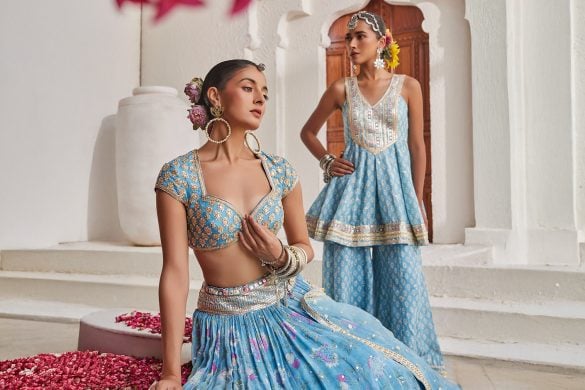
Shashthi marks the goddess's arrival, and the mood is joyful but relaxed. This is the day to reach for lighter fabrics—cotton, chanderi, or linen—in soft, welcoming tones. Pastels work well: powder blue, blush pink, mint green. A well-pressed cotton saree with a simple blouse or a flowy salwar suit strikes exactly the right note.
Save the heavy embroidery for later in the week. Shashthi calls for ease and elegance rather than full-scale glamour.
Saptami: Step It Up with Color
By Saptami, the pandals are buzzing and the energy has shifted. This is the moment to introduce richer color—think marigold yellow, peacock green, or a warm coral. Silk sarees come into their own here, especially traditional weaves like Tant, Jamdani, or Tussar.
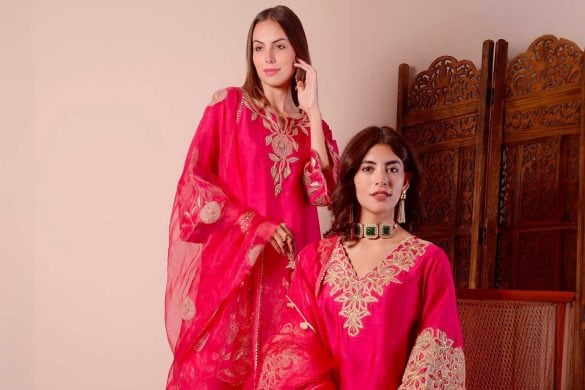
For a more contemporary take, a silk kurta set with a printed dupatta reads festive without being overpowering. Pair with jhumkas or small gold hoops and keep the makeup fresh rather than heavy.
Ashtami: Your Most Elevated Look
Ashtami is the centrepiece of Durga Puja. Anjali happens in the morning, and celebrations continue well into the evening—so your outfit needs to carry through both. This is the day for your most carefully planned look.
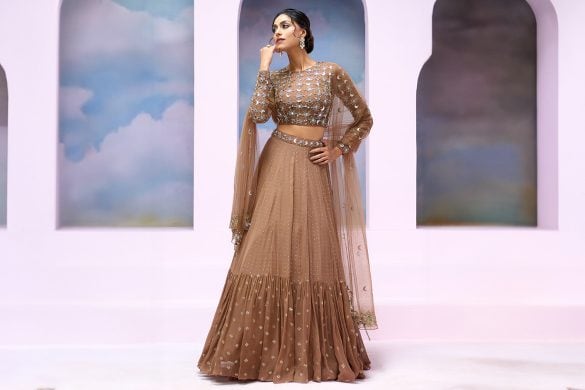
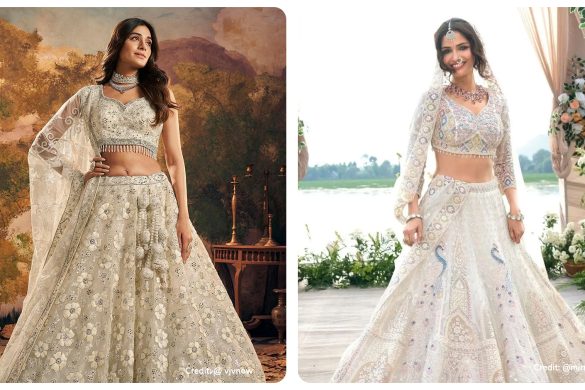
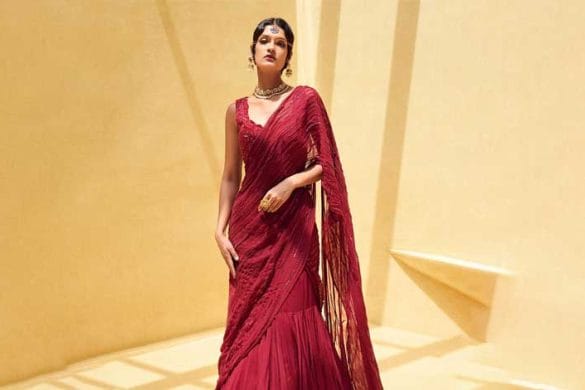
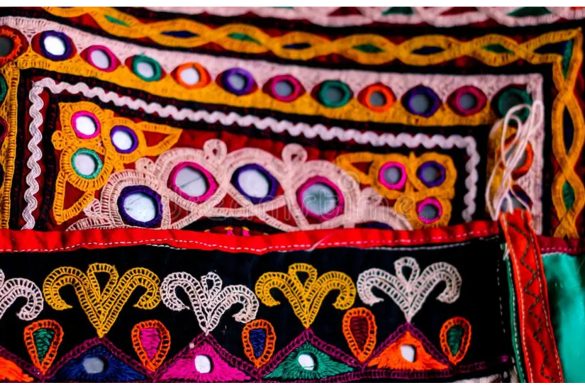
A Banarasi or Kanjeevaram saree in deep jewel tones—crimson, royal blue, or forest green—is a strong choice. Heavily embroidered lehengas work equally well, particularly for evening pandal-hopping. Mirror work and zari detailing photograph beautifully in the warm glow of festival lighting.
Don't hold back on accessories. Chandbalis, layered gold necklaces, and a statement maang tikka all belong here. This is Ashtami—dress accordingly.
Navami: Festive, but Make It Fun
Navami sits between Ashtami's grandeur and Dashami's emotional farewell. The mood is celebratory, often more social than ceremonial, which gives you room to experiment.
Bold prints, fusion silhouettes, and contemporary cuts all work well on Navami. A sharara set, a printed georgette saree with a contrast blouse, or even an embroidered co-ord in a festive color—all are fair game. Navami rewards creativity, so if you've been eyeing something a little more fashion-forward, this is the day to wear it.
Dashami: The White and Red Farewell
Dashami is charged with emotion. It's the day of sindoor khela and Devi Baran—the goddess's departure—and the traditional dress code reflects that bittersweet feeling. Married women traditionally wear white sarees with red borders; the Lal Paar saree, particularly in fine cotton or silk, is the classic choice.
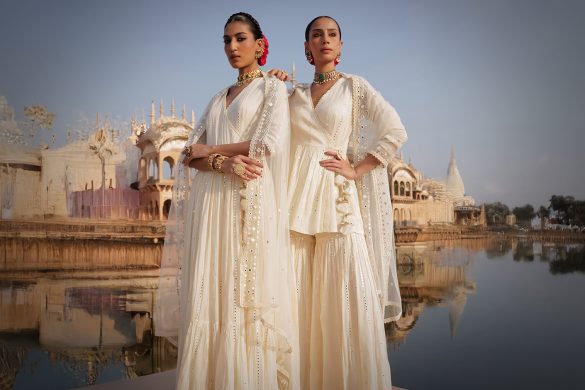
For those who prefer not to wear white, soft tones like off-white, ivory, or pale gold are appropriate. Keep the look simple and meaningful. This isn't a day for maximalism—it's a day for grace.
A Few Practical Notes Before You Plan
Five days of dressing takes planning, especially if you're navigating events across multiple pandals or family obligations.
- Layer thoughtfully. Evenings can cool down depending on your location, so have a light shawl or embroidered dupatta on hand each day.
- Comfort matters. You'll likely be standing, walking, and sitting on the ground during anjali. Choose silhouettes and fabrics that move with you.
- Book custom pieces early. If you're commissioning a blouse or a custom lehenga for Ashtami, start at least 8–10 weeks ahead to avoid rushing.
Dress the Full Five Days with Intention
Durga Puja is one of the few occasions where fashion and feeling align so completely. Each day has its own character—and your outfit is part of how you honor it. Start soft, build toward Ashtami, celebrate freely on Navami, and close the festival with the quiet elegance of Dashami.
Plan the arc, and the individual days will fall into place.