A quiet rebellion is happening at the mehendi table. Brides are looking at hours of dense henna, the smudge risk, the wait for stain to deepen—and asking if there's a cooler way to do this.
There is. It's called Kundan mehendi, and it treats the hands like a canvas for jewellery rather than a background for henna.
Think Kundan stones catching light. Pearls trailing across knuckles. Crystals mapping out a mandala. This is bridal beauty that behaves like an accessory. And it's exactly the kind of detail that makes a bridal look feel personal, editorial, and undeniably now.
Here's how to wear it.
What Is Kundan Mehendi?
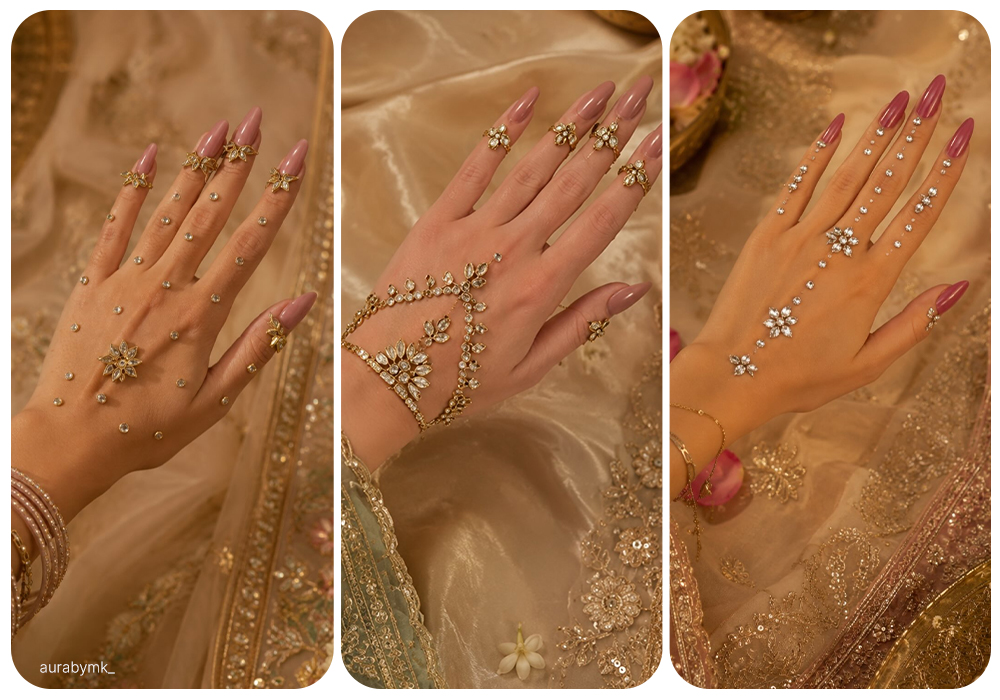
Kundan mehendi is a design technique where stones, crystals, pearls, and tiny embellishments are arranged on the hands to mimic traditional mehendi motifs—or to mirror the patterns of fine jewellery.
Instead of henna paste, artists use a cosmetic-grade adhesive to place each element. Kundan stones form the anchors. Pearls and crystals fill the space around them. The result reads like intricate mehendi from a distance, but up close it glitters.
It's a technique that sits somewhere between hand art and hand jewellery. And that blurred line is the whole point.
Why Is Kundan Mehendi Trending Among Brides?
Because it hands brides control over their look in a way henna never could.
Traditional mehendi is beautiful, but it's fixed. You commit to hours in a chair, then wait for the stain to develop into whatever shade your skin decides on. Kundan mehendi flips that. You choose the stones, the density, the placement—and you see the finished effect immediately.
It's also built for the camera. Kundan stones and crystals reflect light in a way flat henna simply can't, which makes for photographs that feel expensive and contemporary. For brides chasing fashion-forward bridal beauty over tradition-by-default, that photogenic quality is the draw.
The look is glamorous without being heavy. And it's fully customisable—which means no two brides wear it the same way.
The 10-Minute Kundan Mehendi Effect
Here's the part that changes everything: minimalist Kundan mehendi designs take roughly 10 minutes per hand. Compare that to the hours a full henna session demands. You get maximum visual impact for a fraction of the time investment—no sitting still, no smudging, no praying the stain sets evenly.
That speed is what makes Kundan mehendi so wearable. Slot it in before the sangeet. Refresh it between functions. Style it the morning of, when your schedule is already stretched thin. It rewards brides who want to look considered without surrendering their day to it.
Kundan Mehendi Designs to Try
The range here is wide—from barely-there to full statement. Some Kundan mehendi designs for brides worth bookmarking:
- Fine Kundan jaal – A delicate lattice of stones across the back of the hand, mimicking traditional net motifs.
- Minimal floral motifs – Small pearl-and-Kundan blooms scattered with restraint. Perfect for the pared-back bride.
- Statement mandalas – One bold circular design centred on the palm or hand, built from concentric stones.
- Paisley and peacock-inspired patterns – Classic mehendi silhouettes, rebuilt in Kundan and crystal.
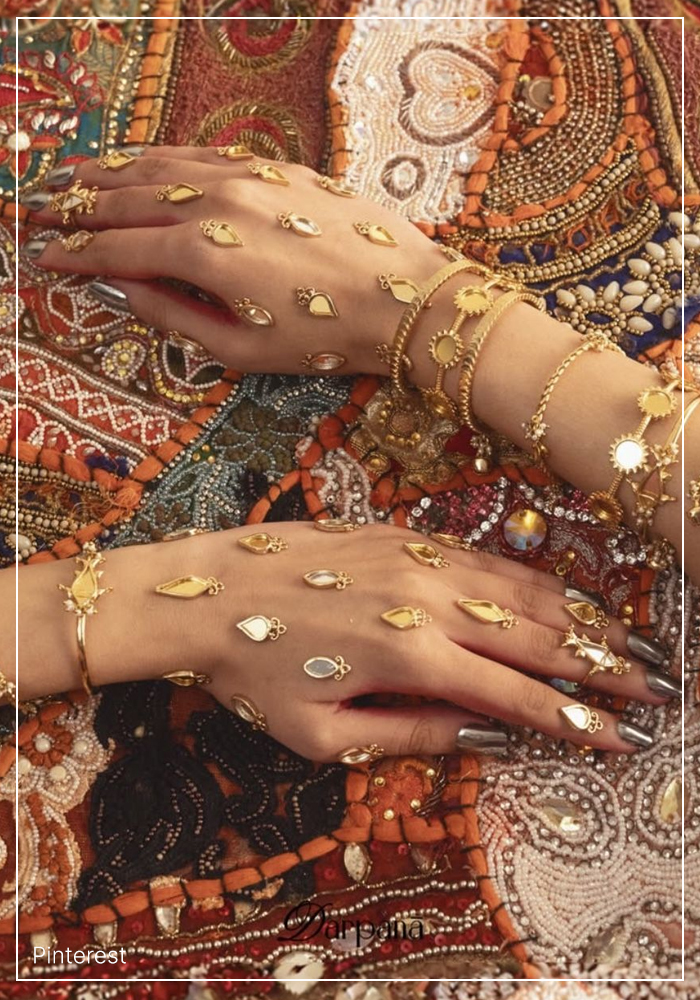
- Bracelet or cuff-inspired designs – A band of stones wrapping the wrist, so your mehendi doubles as a bracelet.
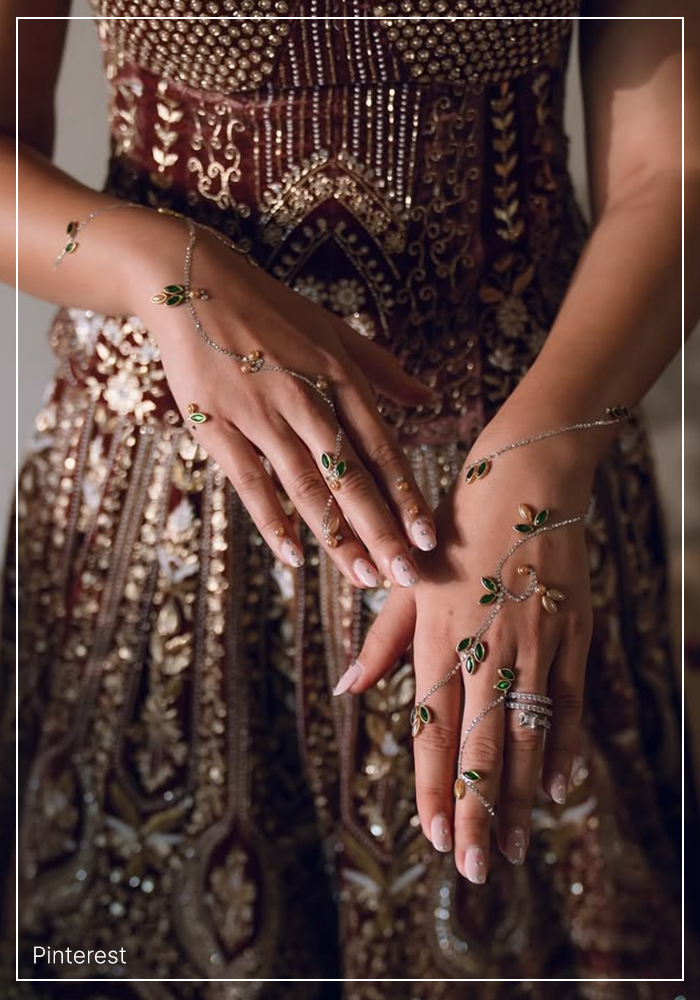
- Ring-and-chain patterns – Delicate stone chains linking a knuckle "ring" to the wrist, echoing a haathphool.
- Jewellery-inspired hand designs – Full compositions that read like layered hand jewellery rather than henna.
- Negative-space Kundan mehendi – Stones placed sparingly, letting bare skin do the styling.
- Linear stone detailing – Clean, graphic lines of Kundan tracing the fingers. Modern and architectural.
- Pearl and crystal combinations – Soft pearls against sharp crystals for a look that shifts in the light.
How to Match Kundan Mehendi With Your Bridal Jewellery
This is where Kundan mehendi earns its status as bridal hand jewellery. The trick is coordination. Match your stone colours to your Kundan jewellery. If your choker leans uncut-diamond white, keep your hand stones in the same cool family. Going for emerald and ruby accents? Echo them in your mehendi.
Placement matters too. Let a ring-and-chain design flow into your actual rings. Sync a cuff-inspired pattern with your bangles so the eye reads one continuous line of stones from wrist to hand. Pull your motifs from your other pieces—the florals in your mathapatti, the shape of your haathphool. When your hands, your bangles, your rings, and your choker all speak the same visual language, the whole look tightens into something intentional.
Kundan Mehendi for Every Bridal Aesthetic
There's a version of this trend for every bride:
- The minimalist bride – Negative-space designs and linear detailing. A few well-placed stones, nothing more.
- The maximalist bride – Full jewellery-inspired hand designs, dense with Kundan and crystal.
- The pastel bride – Soft pearls, milky stones, and crystals that keep the palette gentle.
- The traditional bride – Paisleys, peacocks, and jaal reimagined in stone instead of henna.
- The contemporary bride – Graphic lines and statement mandalas with a fashion edge.
- The destination bride – Lightweight, quick to apply, easy to refresh between beachside functions.
How to Style Kundan Mehendi With Your Wedding Outfits
Your outfit sets the brief for your hands.
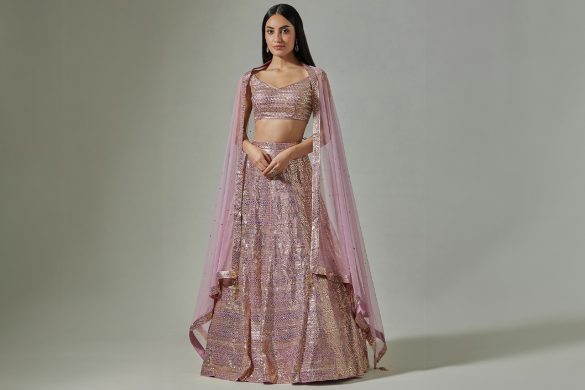
Pastel and ivory lehengas call for soft pearl-and-crystal designs that stay in the same delicate register. Classic red can handle bolder Kundan and jewel-toned stones—the contrast pops.
Jewel-toned bridal wear loves matching stone accents; pull emerald or sapphire tones straight into your mehendi. For heavily embellished outfits, keep the hand design cleaner so it complements rather than competes.
The technique works across silhouettes too—lehengas, sarees, and contemporary bridal looks all read beautifully with Kundan detailing on the hands.
Can You Wear Kundan Mehendi Beyond the Wedding?
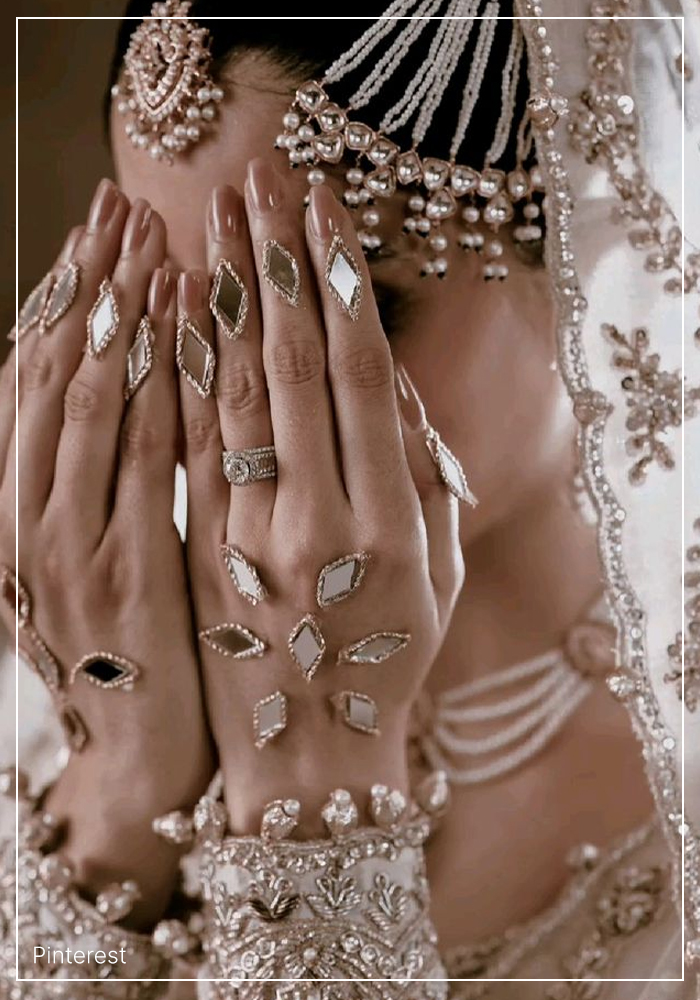
Absolutely—and this is where the trend really opens up. Bridesmaids and guests can wear Kundan mehendi to the mehendi ceremony, haldi, sangeet, and smaller celebrations. It's quick, it's glamorous, and it photographs as well on the wedding party as it does on the bride.
For intimate events where full henna feels like too much, a few minutes of Kundan detailing gives hands a styled, occasion-ready finish.
Is Kundan Mehendi Safe?
For most people, yes. Kundan mehendi relies on cosmetic-grade, skin-safe adhesive and quality embellishments to hold everything in place.
If you have sensitive skin, do a patch test a day or two before your event. Apply a small amount of adhesive to your inner arm and wait to confirm there's no reaction. Choose a reputable artist who uses proper cosmetic products rather than craft-grade alternatives.
How to Remove Kundan Mehendi
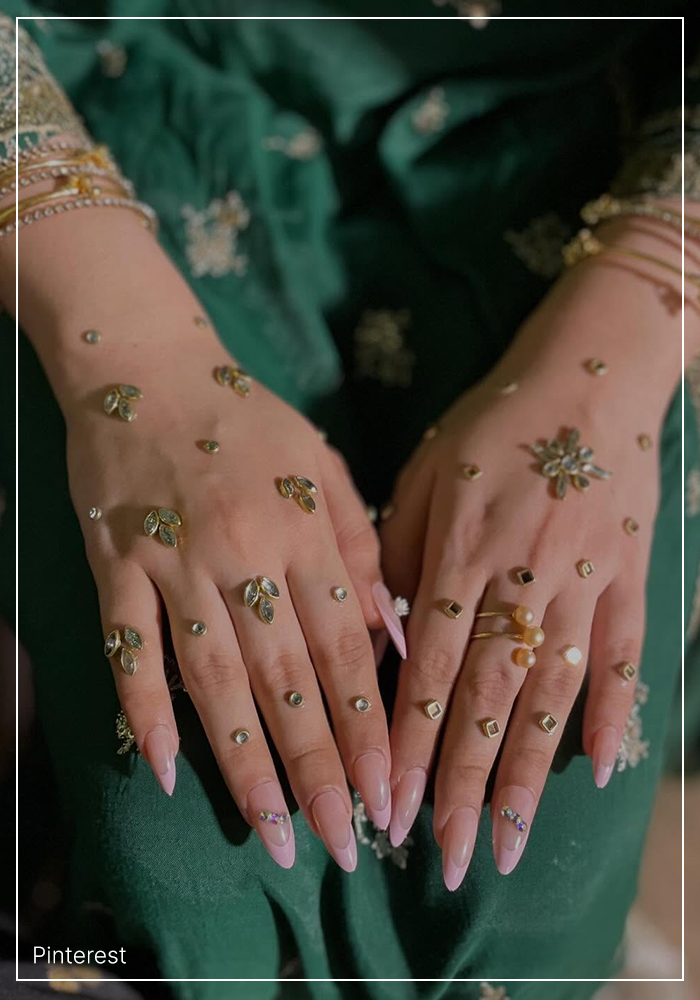
Removal is gentle and fuss-free. Loosen the stones with a little oil or a cosmetic adhesive remover, then ease each element away rather than pulling.
Take your time, work slowly, and your skin stays happy. No stain to fade, no waiting for it to grow out—it's off when you want it off.
Bridal Hands, Reimagined
Kundan mehendi isn't a shortcut around henna. It's a different idea entirely—one that treats the hands as a place to accessorise, styling them the way you'd style your jewellery.
That's why it feels so current. It gives a bridal look its own distinct moment, blurring the line between beauty and adornment until your hands become part of the styling story, not an afterthought.
If you want a bridal look that feels considered, photogenic, and unmistakably yours, start planning your Kundan mehendi designs early. Match them to your jewellery, your outfit, and your aesthetic—and let your hands do the talking.