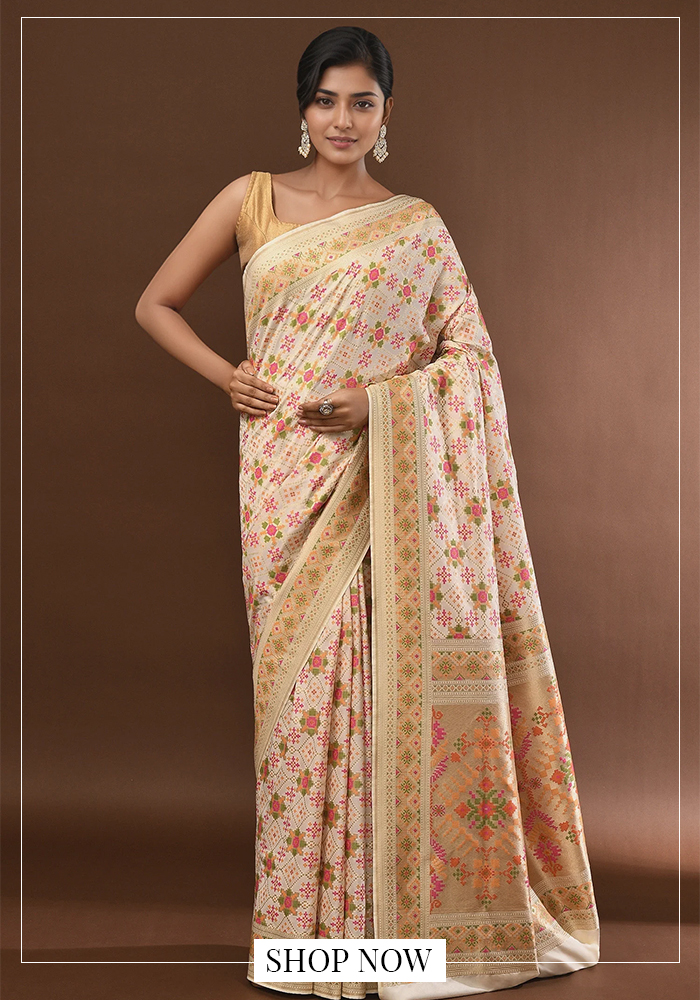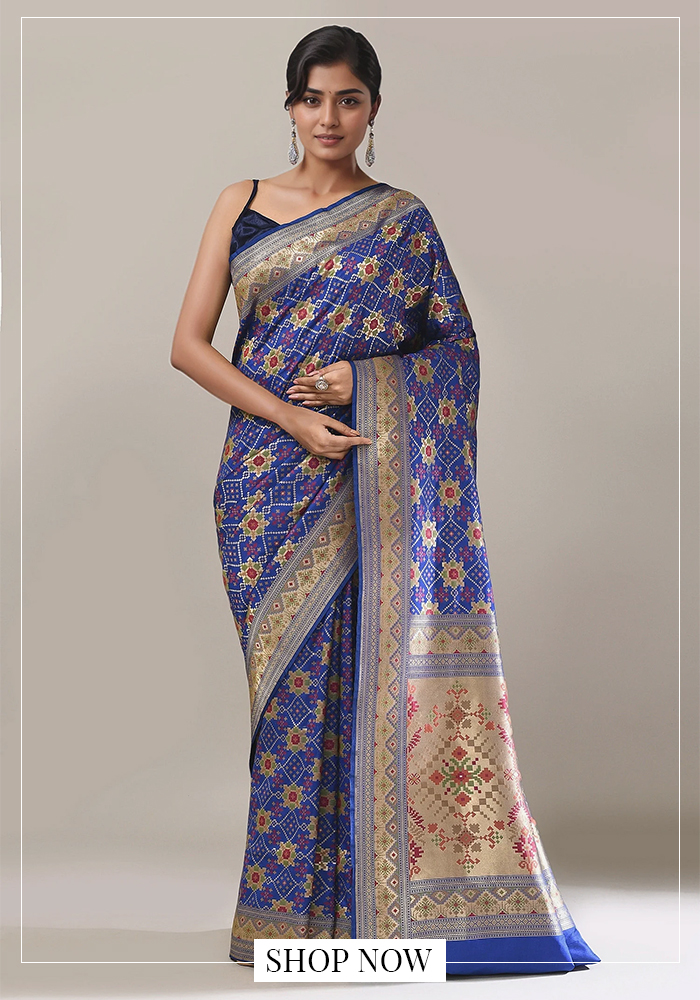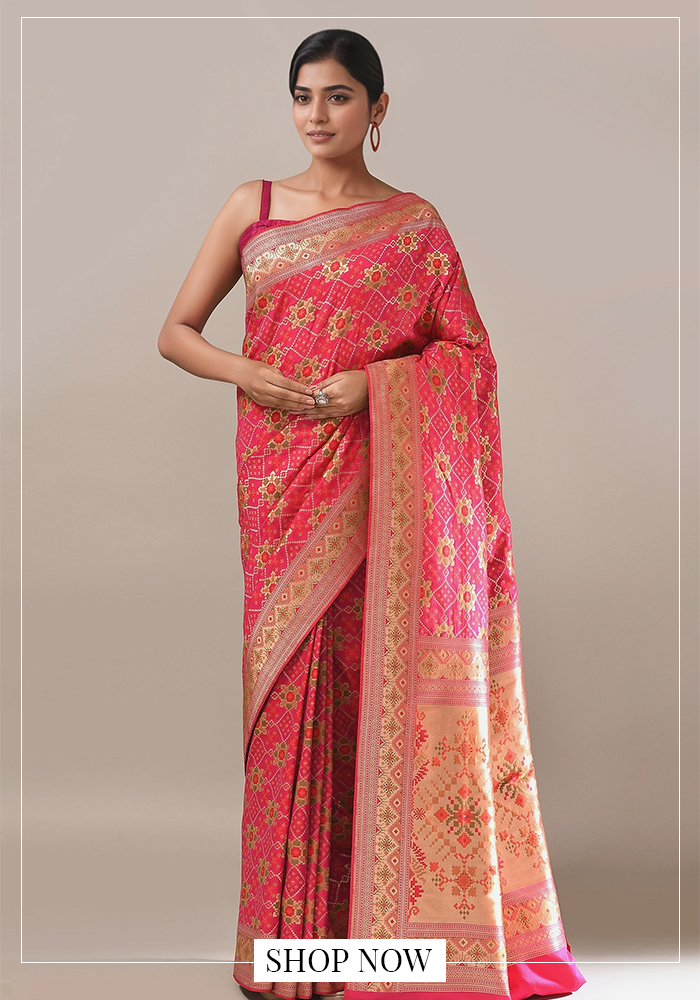
Few textiles carry the weight of history and the ease of modern elegance quite like the Patan Patola saree. At a time when fashion increasingly rewards the considered over the disposable, these handwoven silk sarees have found a new kind of relevance — not just as bridal heirlooms passed down through generations, but as deliberate, fashion-forward choices for women who understand that true luxury is rooted in craft.
The resurgence is visible across Bollywood red carpets, intimate wedding festivities, and the feeds of India's most discerning dressers. And yet, the saree itself hasn't changed. The motifs are the same ones that adorned royalty centuries ago. The weaving technique remains as laborious and exacting as ever. What has changed is how we see it — and why it matters more than ever.
The Legacy Behind Patan Patola Sarees
The story of the Patan Patola saree begins in Patan, a historic town in Gujarat situated along the banks of the Saraswati River, approximately 130 kilometres from Ahmedabad. Patan Patola weaving originated in the 7th century AD and reached its zenith during the reign of King Kumarpal of the Solanki dynasty between 1143 and 1173 AD, when the sarees were exclusively worn by royalty and gifted to nobility.
The artisans behind these textiles are the Salvi community — a name derived from "Sal," the Sanskrit word for loom, and "Vi," referring to the rosewood sword used in the traditional Chhabadi Bhatt loom. For over a thousand years, the Salvi families have guarded the intricate knowledge of double ikat weaving, passing it from one generation to the next with the kind of devotion usually reserved for sacred traditions.
These are not merely garments. They are wearable works of art — each one a testament to patience, precision, and a way of making things that the modern world has almost entirely forgotten.
The Art of Double Ikat Weaving
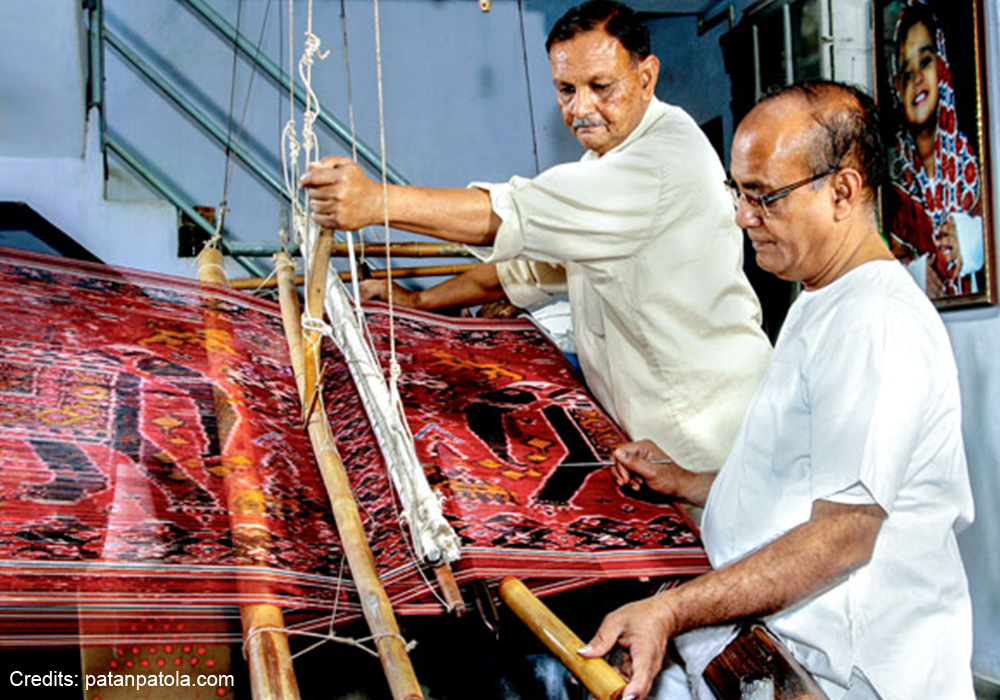
What separates a Patan Patola saree from every other handwoven silk saree lies in its technique. Double ikat weaving requires that both the warp (vertical) and weft (horizontal) threads be individually resist-dyed according to an exact mathematical blueprint before a single thread is placed on the loom.
Every thread must align with absolute precision during weaving. One misalignment means starting the entire section again. The result is a saree with identical, symmetrical patterns on both its front and reverse — a hallmark of authentic double ikat that no machine can replicate and no shortcut can achieve.
A single Patan Patola saree can take anywhere from six months to over two years to complete, depending on the complexity of its design. Today, fewer than 50 master weavers in the world practice this craft at its highest level — a statistic that transforms every authentic Patan Patola saree into something genuinely irreplaceable.
The Timeless Beauty of Patan Patola Motifs
Part of what makes the Patan Patola saree so enduringly appealing is the visual language embedded in its patterns. Each motif carries cultural and symbolic meaning, drawn from the natural world, mythology, and royal iconography.
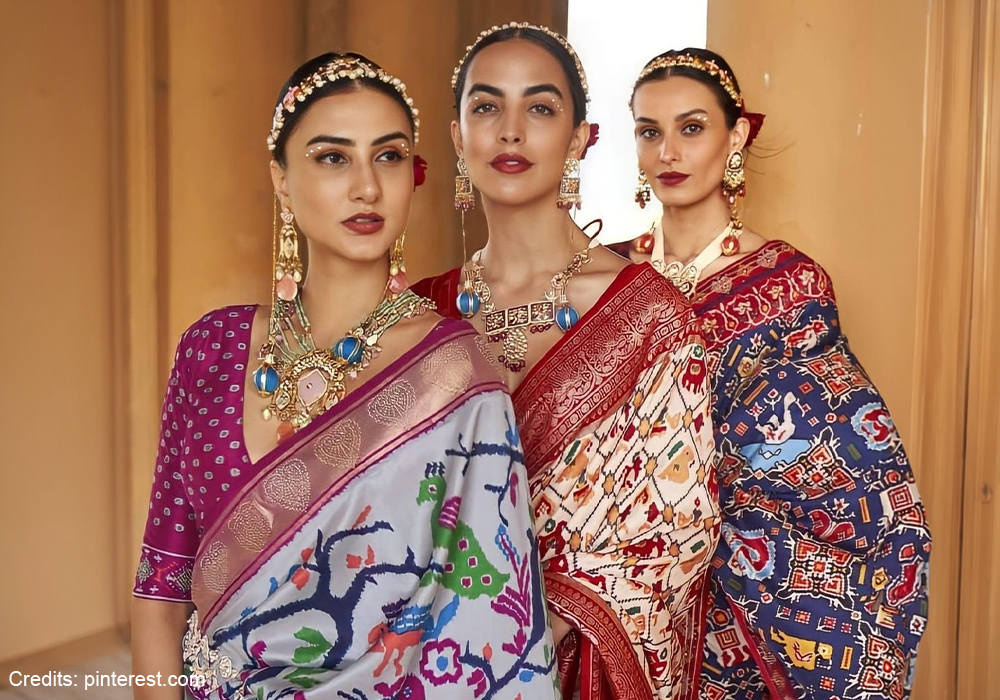
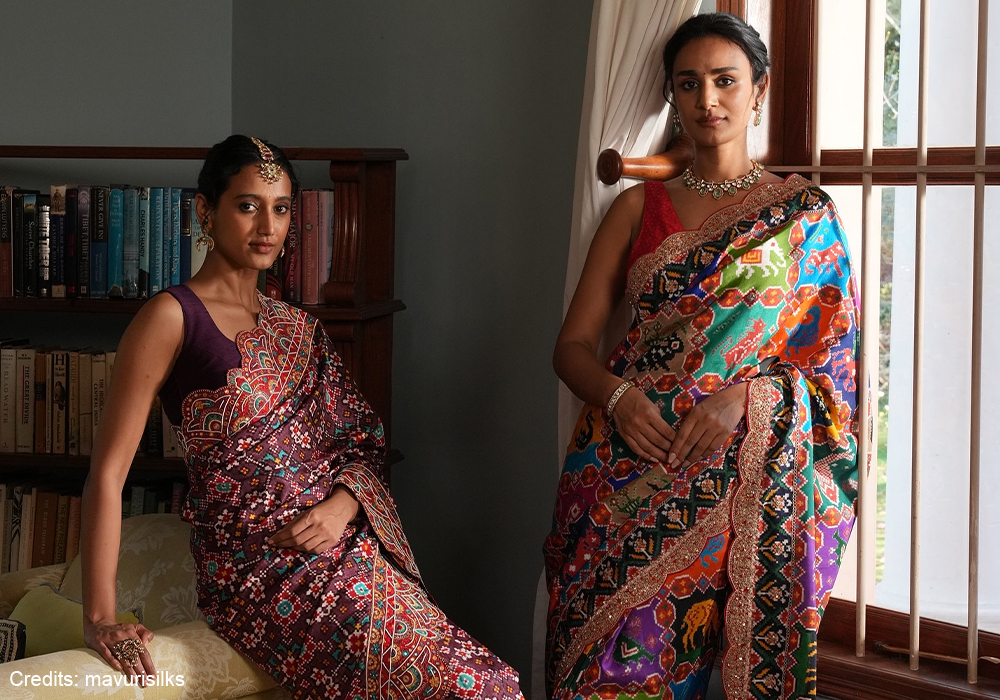
The Nari Kunjar, featuring elephant figures, symbolizes strength and prosperity. The Navratna, or nine gemstone pattern, represents cosmic harmony. The Phoolwadi renders intricate flower gardens across the silk, while the Sukhpakshi motif fills the weave with parrots and flying birds. Hunting scenes in the Shikargah pattern tell narrative stories. Dancing figures, geometric latticework, and floral arrangements complete a visual vocabulary that has remained relevant for centuries — because beauty grounded in meaning does not age.
These motifs translate beautifully to contemporary eyes. Styled against a minimal blouse or photographed in natural light, a Patan Patola saree reads as modern precisely because it was never chasing trend to begin with.
Celebrity Style: Patan Patola Through a Contemporary Lens
Bollywood's relationship with heritage sarees has always been telling — and Patan Patola sarees, in particular, have attracted women who understand the difference between dressing well and dressing with intention.
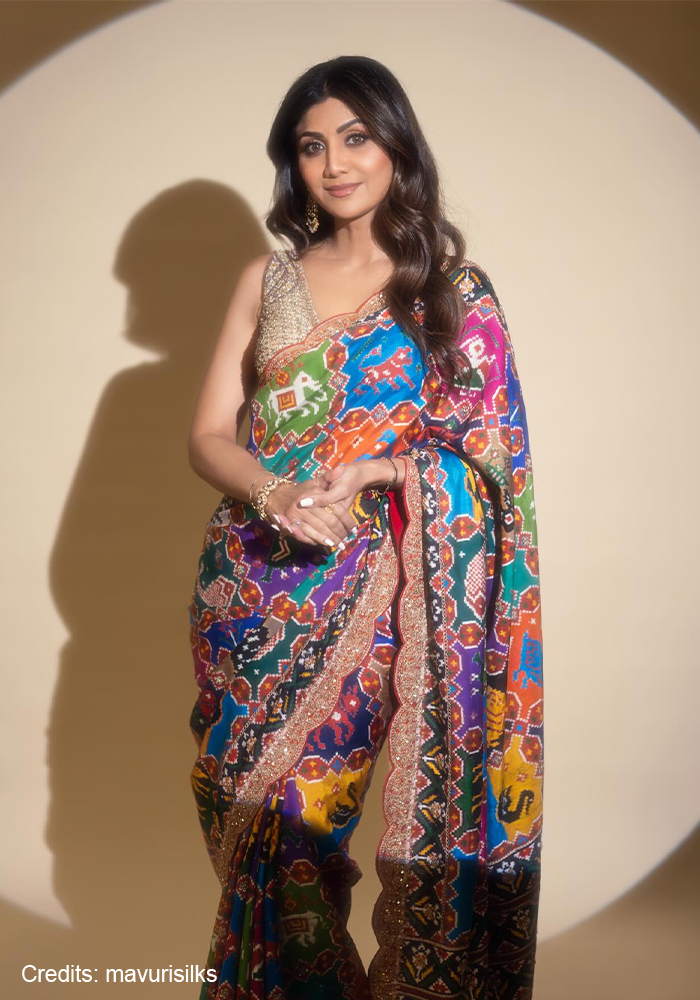
Shilpa Shetty wore a multicoloured Patan Patola saree by Mavuris, its vivid palette offset by an ornate zardosi border — a masterclass in letting heritage textiles carry their own drama without over-styling.
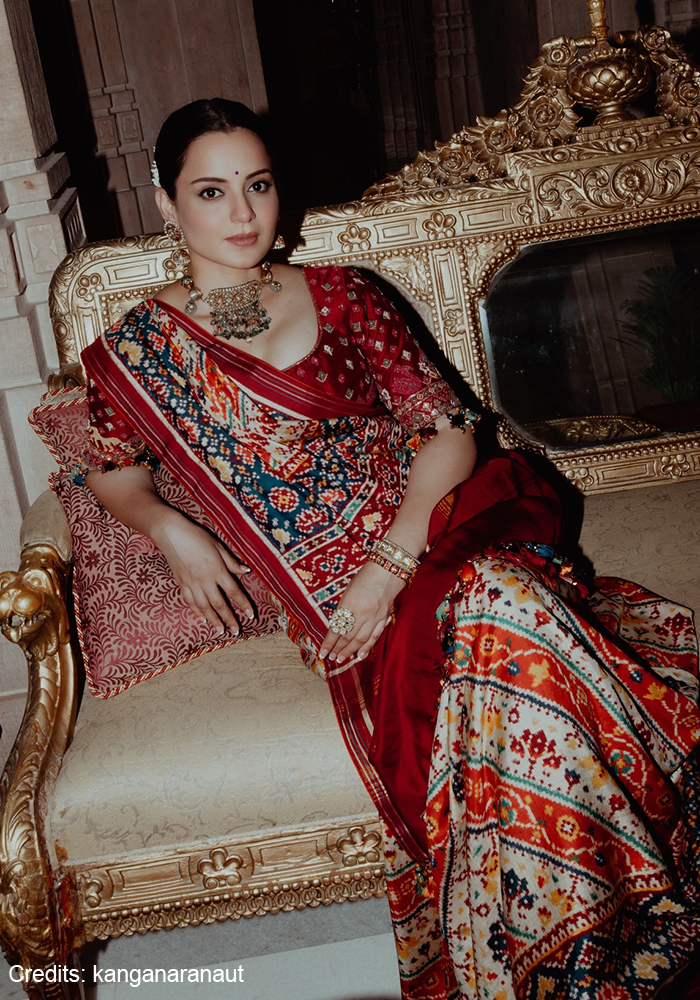
Kangana Ranaut chose a Frontier Raas Patan Patola featuring bold red and blue geometric motifs. She kept the styling deliberately spare: a matched blouse, antique jhumkas, hair pulled back. Nothing competed with the saree, and nothing needed to.
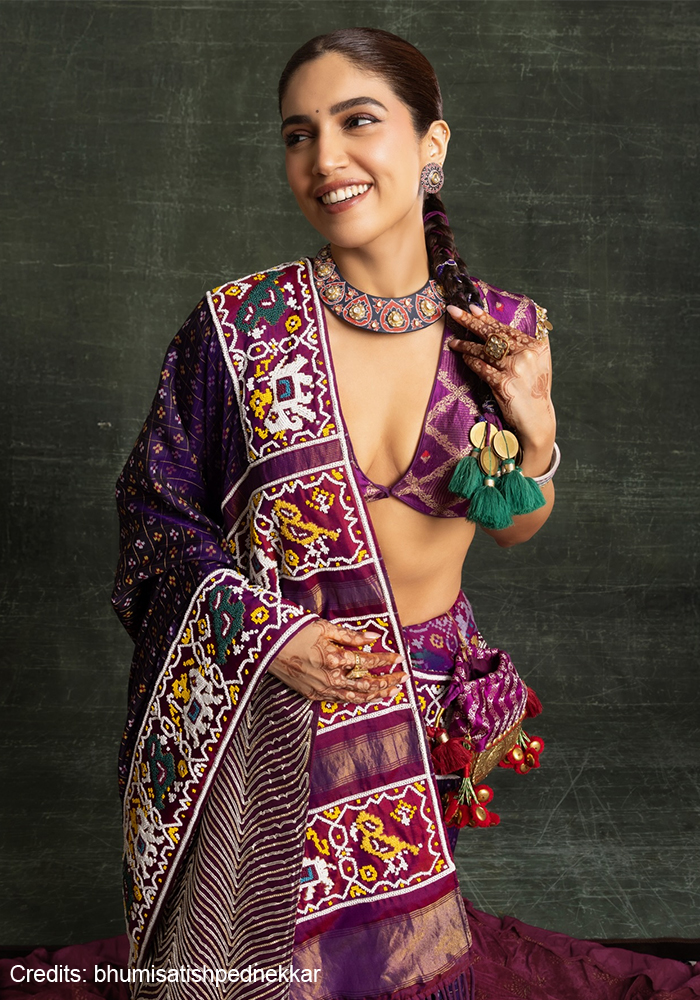
Bhumi Pednekar opted for a deep purple mulberry silk Patan Patola by Swadesh — a combination of color and fabric that felt contemporary and rooted at the same time, demonstrating how handwoven silk sarees can read as effortlessly modern when styled right.
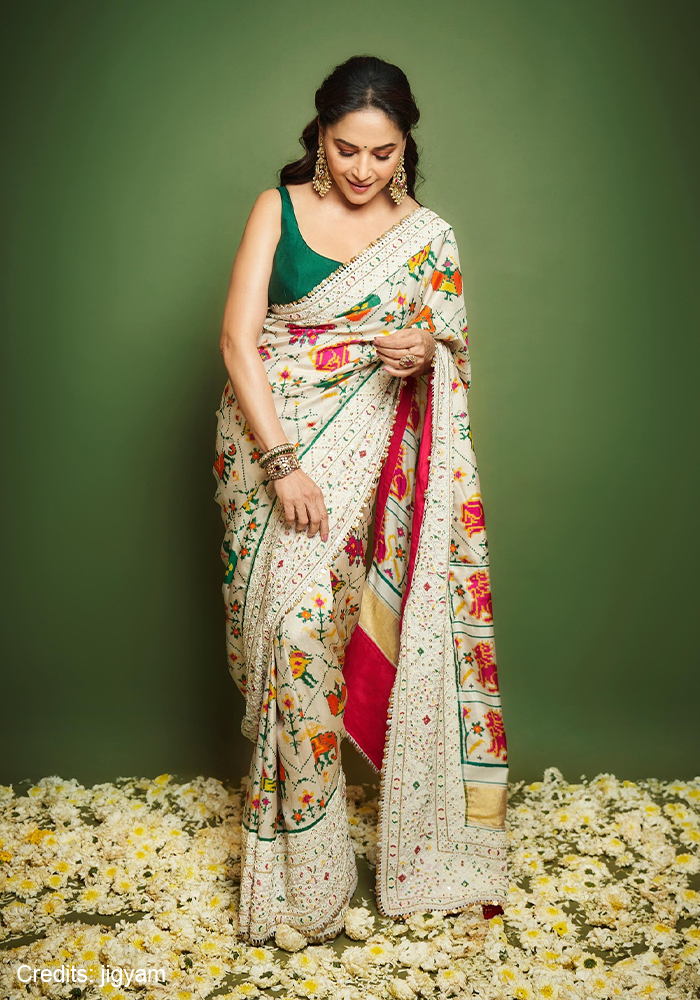
Madhuri Dixit draped herself in a white Patola saree with colorful motifs and a red border, pairing it with a deep green blouse and gold jhumkas. The ivory base allowed the weave to take centre stage — proof that restraint, when applied correctly, is its own kind of confidence.
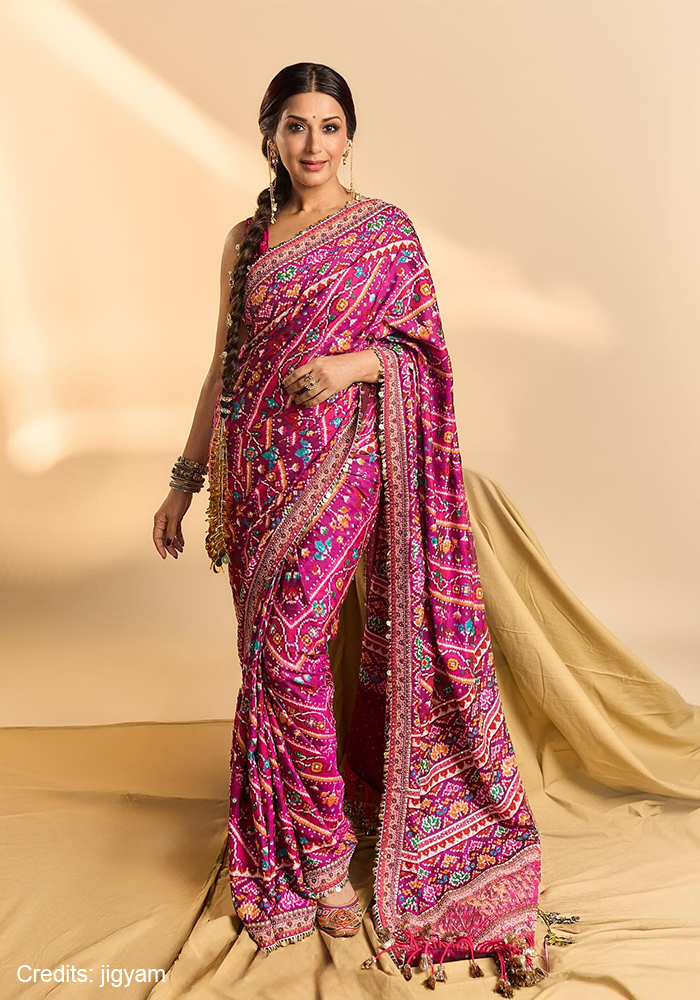
Sonali Bendre wore a custom Rani pink Patan Patola embellished with mirror work and signature Mochi embroidery. The jewel-toned weave with its regal detailing positioned the saree as a couture love letter to Indian artisan craftsmanship — one that worked equally well as fashion and as cultural statement.
Why Patan Patola Sarees Never Go Out of Style
There is a particular kind of staying power that belongs only to things made with genuine skill. Patan Patola designer sarees possess it in abundance.
The sarees are not built on embellishment alone. Their beauty comes from the weave itself — from the luminous quality of mulberry silk dyed with high-quality natural dyes that hold their richness for decades, and from the extraordinary symmetry of patterns achieved entirely by hand. That kind of beauty does not respond to changing hemlines or seasonal palettes. It simply continues.
There is also the matter of what the slow fashion movement has confirmed: that things made carefully, made to last, and made with a story behind them hold value in a way fast fashion never can. A Patan Patola saree — priced typically between ₹60,000 and ₹3,00,000 or more — represents investment dressing in the truest sense. It can be worn, treasured, and passed on. The emotional and cultural weight it carries only deepens with time.
How to Style Patan Patola Sarees Today
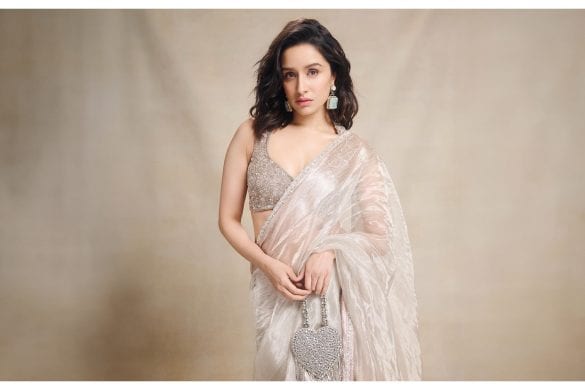
The most common mistake with luxury sarees is over-styling them. A Patan Patola saree already commands attention — the goal is to complement, not compete.
Blouses: Contemporary silhouettes work beautifully here. A structured sleeveless blouse, a deep V-back, or a cropped design in a tone drawn from the saree's palette feels fashion-forward without distracting from the weave. Tissue silk, raw silk, or velvet in a contrasting shade can add subtle richness.
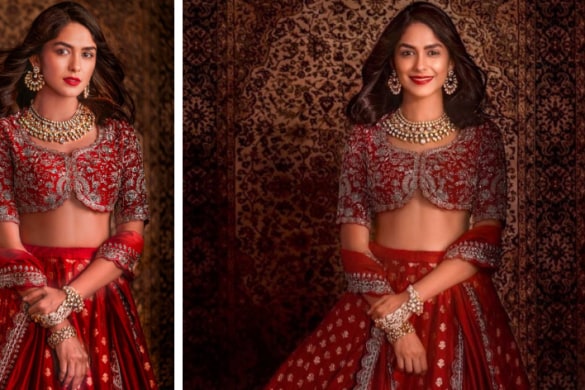
Jewellery: Go minimal or go heritage — both work. Polki sets, antique gold jhumkas, and temple jewellery honour the saree's origins. For a more pared-back look, a single statement piece — a long necklace or sculptural earrings — is enough.
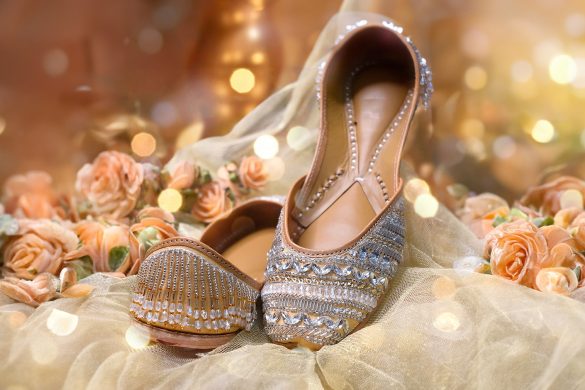
Bags and footwear: A structured clutch or a compact brocade bag keeps proportions balanced. For footwear, embroidered juttis offer an authentic complement; block heels or strappy sandals work well for contemporary saree styling.
Hair and makeup: A sleek bun or low ponytail keeps the focus on the saree. Soft waves draped over one shoulder are equally elegant. For makeup, a clean base with a bold lip — especially in red or berry — finishes the look without overcrowding it.
Beyond Weddings: Where to Wear a Patan Patola Saree
The assumption that heritage sarees are reserved exclusively for weddings has shifted considerably — and rightly so.
Patan Patola sarees are ideal for wedding festivities, from mehendi functions to sangeet evenings, where their jewel-toned palette and intricate weave fit the celebratory mood naturally. Festive occasions like Navratri, Diwali, and Pongal call for exactly this kind of considered dressing.
Beyond the obvious, Patan Patola sarees translate beautifully to formal receptions, art gallery openings, cultural events, and literary evenings — anywhere that rewards an aesthetic that is thoughtful, layered with meaning, and visually distinct. A Patan Patola worn to a dinner party or a luxury soirée makes a quiet but unmistakable statement about taste.
Why Every Wardrobe Deserves a Patan Patola Saree
There are garments you buy for a season and garments you buy for a lifetime. A Patan Patola saree sits firmly in the second category.
The handcrafted artistry embedded in every thread represents something increasingly rare: making that cannot be accelerated or automated. The natural dyes and premium mulberry silk ensure decades of wear without deterioration. And the cultural significance — the connection to a living tradition maintained by fewer than 50 master weavers — lends the saree a weight no trend-driven piece can replicate.
To own a Patan Patola saree is to participate in the preservation of a craft that has survived kingdoms, centuries, and the pressures of industrialization. That is not a small thing. It is, arguably, one of the most meaningful reasons to add a textile to your wardrobe.
The Heritage That Fashion Always Returns To
The Patan Patola saree endures because it was never built to be of its moment. It was built to outlast moments — to carry a story forward through generations of women who recognized that the finest things are made slowly, carefully, and with an understanding of what they mean.
Explore Aza's curated collection of Patan Patola sarees, handwoven silk sarees, and heritage weaves — each piece selected for its artistry, its authenticity, and its capacity to become part of your own story.